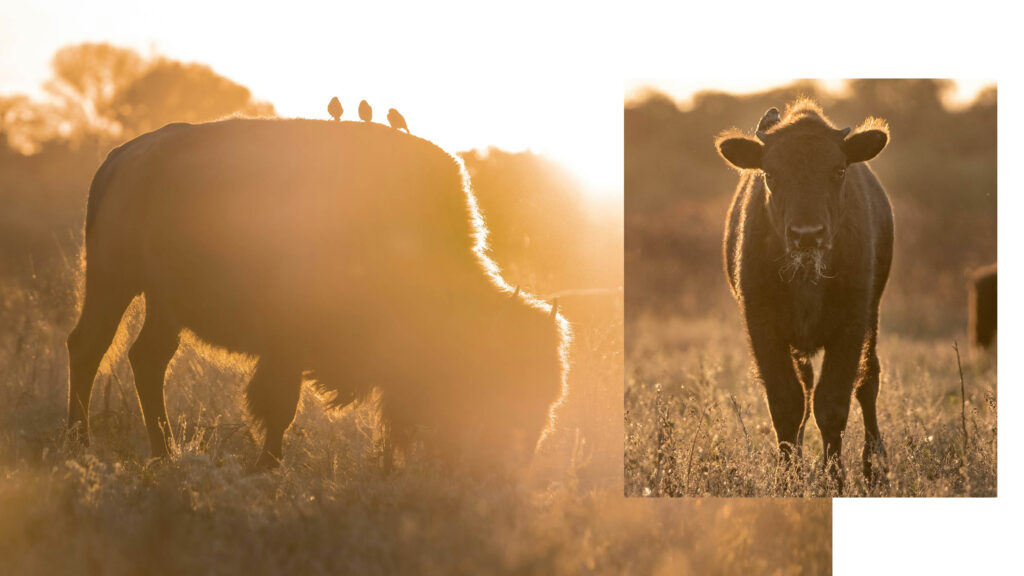
The bison was saved by visionary ranchers. More than a century later, the federal government aims to use the Taylor Grazing Act—the 1934 law that has governed the American West ever since—to prevent bison ranching from restoring the American prairie. Bowing to politics, the Bureau of Land Management has used a short-sighted and ahistorical interpretation of that law to declare that ranching and conservation are fundamentally in conflict. In doing so, it not only set back voluntary conservation but also planted the seed for future threats to ranching on public lands.
In 2001, the nonprofit American Prairie Foundation set out “to create the largest nature reserve in the continental United States.” Its plan: to conserve three million acres of prairie grasslands in central and northeastern Montana, reintroduce and graze bison, and manage the land to maintain and enhance ecological integrity. If it reaches that goal, it will have created a reserve larger than Yellowstone National Park.
What makes American Prairie different from many other environmental groups is that it seeks to pay for conservation rather than demand it from others through the legal or political processes. Over the last 20 years, it has purchased more than 150,000 acres of private land from willing sellers. In eastern Montana, ranches typically have privileges to graze neighboring federal lands. When American Prairie purchases a ranch, it pays for the leases too. In a recent purchase, for instance, the organization acquired rights to roughly 2,000 acres, of which 1,762 were private acres and 320 were leased public acres.
Despite its voluntary, market-based approach, American Prairie has been a political and cultural lightning rod in Montana. Signs reading “Save the Cowboy, Stop American Prairie Reserve” dot roadsides. A Montana state senator once wrote an op-ed expressing his desire to “legislate” American Prairie “out of existence,” and followed up with attacks on the group’s property rights and nonprofit status. To many, the group threatens the fragile economy and culture of small, rural communities.
Some of the damage was likely self-inflicted. When a project starts with a map with an oval around the area it aims to conserve, it’s reasonable to expect families who have lived there for generations to perceive you as telling them to get out. That sense seemed to be confirmed when the founder, in an interview with National Geographic, said, “Time is on our side.” Local ranchers (perhaps uncharitably) took that to mean that the group didn’t need to worry about ranchers’ concerns because it could wait them out. American Prairie now credits “the good stewardship of landowners in northeastern Montana” with making this region so special. But first impressions are hard to overcome—especially in a state where second-generation residents can still feel like newcomers.
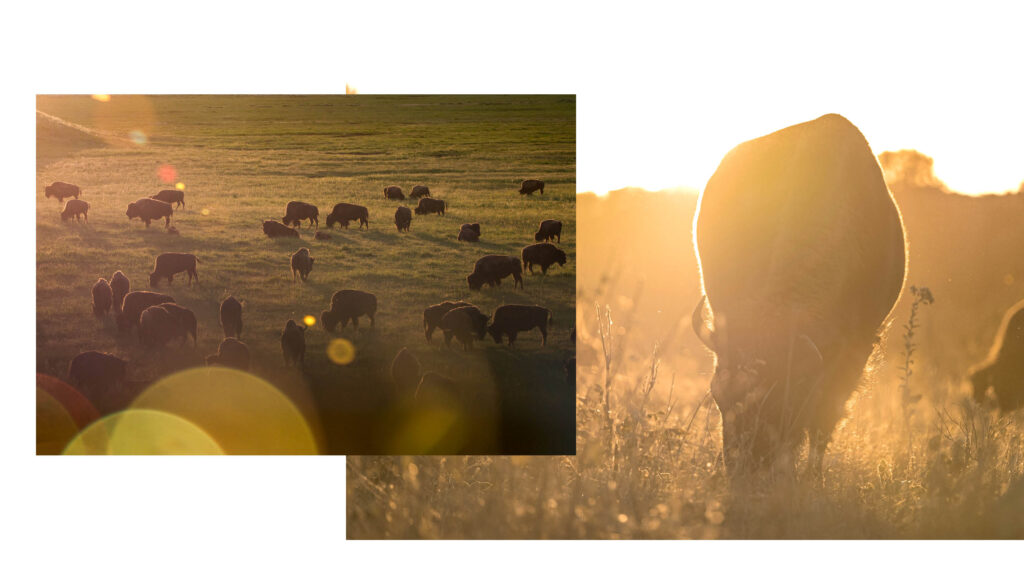
In a recent decision, the Bureau of Land Management chose to take a side in this simmering conflict, announcing that American Prairie cannot graze bison under any of its federal grazing permits. It did so by adopting an unprecedented and strained interpretation of grazing law to legally bar conservation ranching.
The Taylor Grazing Act authorizes the BLM to lease federal land “to graze livestock.” Under both federal law and state law, bison are livestock in Montana. But the BLM announced that eligibility turns on the agency’s judgment about the grazing’s primary purpose—if the rancher is motivated by conservation, their leases are forfeit. In effect, the BLM rejects the notion of conservation ranching by defining conservation and ranching as in conflict with each other. That’s a disservice to the real conservation ranchers do across the country every day.
There’s nothing in the Taylor Grazing Act that requires this subjective analysis, and it appears that the BLM has never asked any lessee about their purposes for grazing or for information needed to implement such a vague standard. Ordinarily, a new standard like this would be developed through regulation with the benefit of public input. In this case, however, the standard was rushed to invalidate a specific holder’s permits, which makes unintended consequences all but inevitable.
The decision opens the door for a future administration to demand intrusive information about ranchers’ operations and motivations—and to deny leases based on its subjective evaluation of that information. A ranch’s small profit margin, for instance, might be deemed evidence that the operation is primarily motivated by tax strategies, lifestyle preferences, or other considerations rather than mere production.
The new standard may have other, more immediate consequences. The Departments of Agriculture and Interior recently agreed to work together “to sustain and protect America’s ranching heritage.” A key plank of their plan is to use grazing as a wildfire risk-reduction strategy. “To further enable fuels reduction,” the agreement explains, the agencies will make vacant allotments available for grazing “in advance of the allotment’s typical wildfire season.” But under the agency’s new rationale, this appears to be an improper conservation purpose for grazing federal lands.
Perhaps American Prairie’s decision to concentrate on an area with such a high proportion of public lands—which PERC co-founder Richard Stroup was fond of calling “political lands”—made it inevitable that its project would become mired in political conflict. But it’s nonetheless unfortunate. It would be better for the organization, the ranchers who oppose it, and both bison and cattle if competing demands for these lands were resolved instead through markets, compromise, and cooperation.