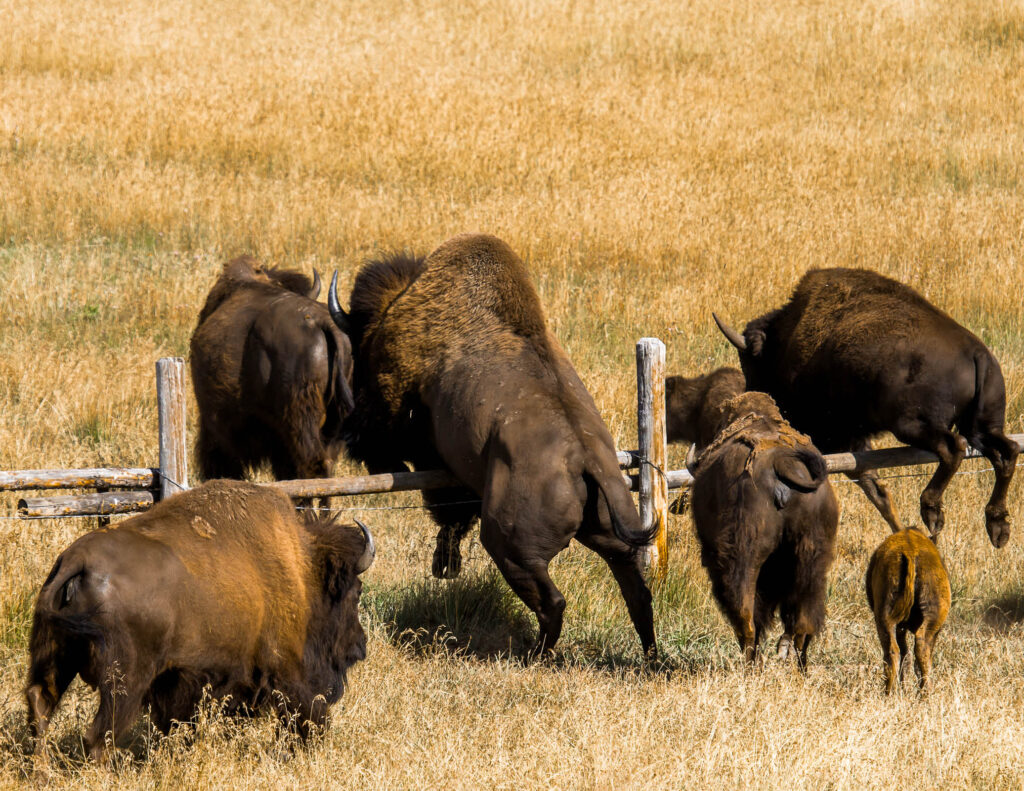
In fall 2025, Wyoming rancher Mitch Benson sighed and watched out his window while a roaming bison wandered through his alfalfa field. The animal was too big and strong to handle the way he would a neighbor’s stray cow or horse, so instead of corralling, feeding, and watering it until its owner could pick it up, Benson watched the large mammal bed down in his crop for the night. This was not an isolated event. Previously, bison from Benson’s neighbors had torn through their fences, damaged crops and infrastructure, and, on one occasion, charged two neighbors.
Benson called the district brand inspector to officially identify the animal and start the process of returning it to its owners, but quickly realized he was on a jurisdictional merry-go-round. The bison had no brand or identifying mark, leading Benson to believe it belonged to the neighboring Wind River Reservation, which classifies and manages its bison as wildlife. The lack of a way to identify the animal, however, left the brand inspector with no authority to determine its owner. Benson then turned to the state wildlife agency, which has a policy to address bison that stray out of national parks or wildlife management areas. But because this animal had escaped a private enclosure, it was considered livestock—and therefore not under the authority of the state wildlife agency. Caught in a gray area, Benson was left to deal with the wandering bison—and the damage it caused—on his own.
The way bison are classified can change once an animal crosses a state border or, in some cases, a property line.
Whether American bison are designated as livestock or wildlife may appear to be a simple matter, but the decision has wide-reaching implications. The way bison are classified can change once an animal crosses a state border or, in some cases, a property line, leading to complex management even within state lines. The classification affects a range of people, from tribal members, landowners, and ranchers to wildlife managers, hunters, and government officials. Episodes such as the one that played out on Mitch Benson’s place highlight the need for states to clarify gray areas around how bison are designated in policy and treated in practice. Growing interest from conservation groups and tribal nations to see bison freely inhabiting western landscapes, similar to the way their ancestors did, only adds to the need for clarity.
The majority of bison in the West exist on privately owned ranches and are classified as livestock. These animals are sold in meat and hide markets, and their skin, bones, hair, and horns are sometimes used for things like home decor, furniture, crafts, or tools. Bison ranchers follow similar identification, disease-testing, and transportation regulations that cattle ranchers do, with exceptions that account for the size, strength, and demeanor of buffalo. Additionally, bison that are classified as livestock are subject to state livestock board “estray” policies, which outline the protocol to follow when a livestock animal breaches its containment.
While each state has differing specifics, in general, when a livestock animal is found wandering, a brand inspector identifies and then notifies its owner, and the livestock board or the animal’s finder keeps it in a holding facility until the owner can retrieve it within a specified amount of time. Escaped bison, however, pose a larger risk than most other types of livestock because of their size, strength, and potential to transfer disease to cattle, so the process used to identify and return a cow, horse, or goat to its owner is not conducive to a buffalo. When a buffalo breaches its bounds and poses a health or safety risk to livestock or people, the animal can legally be destroyed.
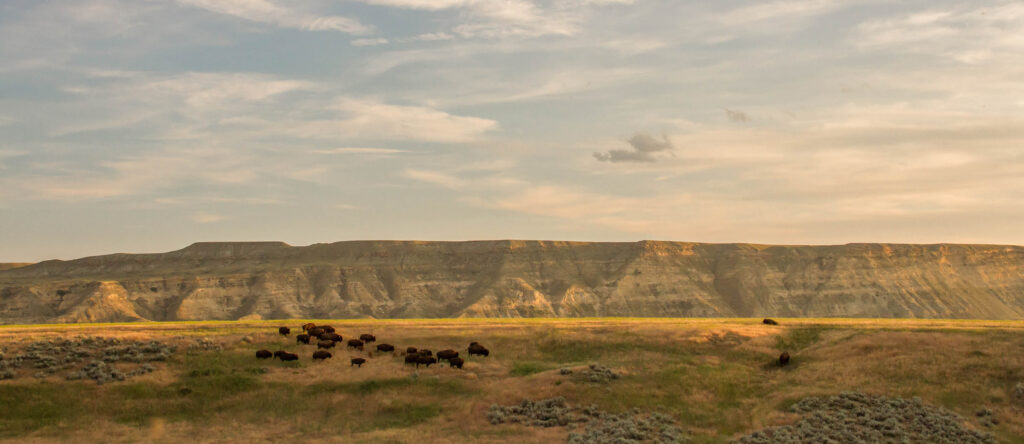
Although relatively rare, several herds of wild bison exist in the United States. Such free-ranging bison are not considered livestock, are often not bound by fences, are not regularly in contact with humans, and are responsible for finding their own food, water, and shelter. Among these is the well-known Yellowstone National Park herd, whose ancestors escaped eradication at the end of the 19th century and were preserved in the park. Similarly, various government agencies supervise bison on federal lands and in state parks across the country.
In eastern Utah, state biologists manage a free-ranging population of bison in the Book Cliffs. These animals are managed as a big-game species akin to deer and elk, meaning the herd is open to hunting according to state regulations. Since the herd is not bound by fences, bison occasionally wander across the border into Colorado. In late 2025, the Colorado state legislature classified free-ranging bison as big-game wildlife, creating opportunities to hunt them, while fenced bison on ranches are still designated as livestock.
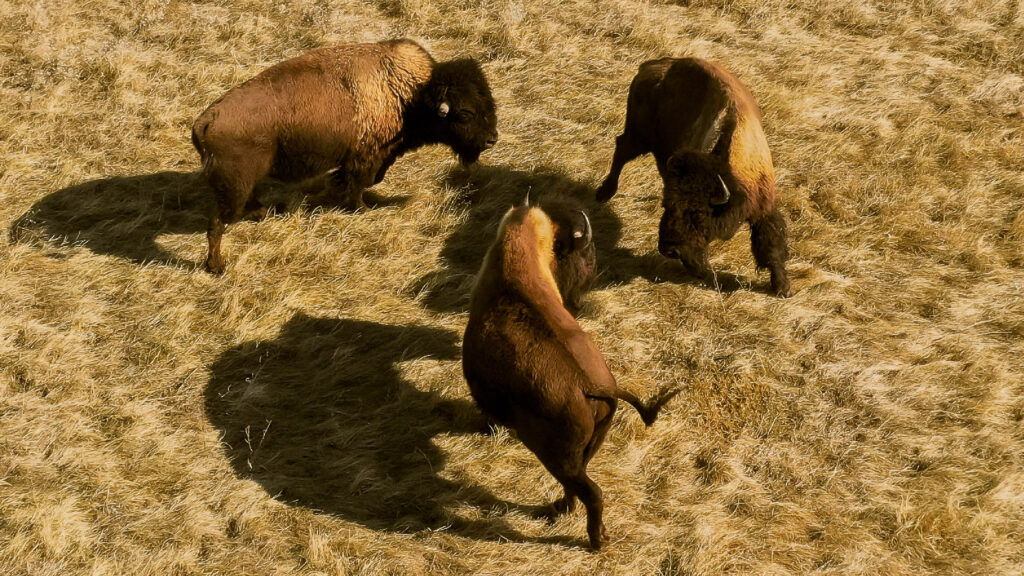
Although bison wandering from Utah into Colorado are currently few and far between, the legislation created clear policy guidelines in anticipation of a larger population eventually settling there. Colorado’s designation demonstrates the growing recognition that as bison populations expand, so does the need for clarity in their classification. As Utah wildlife biologist Clint Sampson puts it: “There is no crystal ball when it comes to bison.” The uncertainty is most consequential for a growing class of animals that are treated as wildlife by herd managers, but that states, by default, designate as livestock.
So-called “conservation herds” are owned by tribal nations or conservation groups that strive to manage bison as wildlife for their cultural, historic, and ecological qualities. In the United States, approximately 25,000 bison are managed in tribal herds, with thousands more managed by conservation organizations such as The Nature Conservancy and American Prairie. Managers typically prefer to treat these herds as wildlife rather than livestock, as they want to see them exist on the landscape in ways that mimic how their ancestors did. But the fact that such animals are in practice treated as wildlife by land managers yet in state statute designated as livestock can create legal or policy confusion, especially in cases of escape.
The bison that entered Benson’s property was a member of the Wind River Reservation’s tribal buffalo herd. While inside tribal fences, the animal was classified as wildlife, but it shed that classification once it left its enclosure, becoming an escaped privately owned animal, or an estray. Currently, the best way to tell who such a bison belongs to is to judge by the location where it was found, a rule of thumb that may become ineffective as populations grow and ranges expand. Benson noted that there are nearby property owners who raise bison unrelated to the tribal herd, so while he assumed that the animal came from Wind River, he did not want to release it to an owner he and the brand inspector could not confirm. The incident was ultimately resolved when the Wyoming Game and Fish Department director authorized a tribal buffalo manager to enter the property and haze the animal back into its enclosure.
After the incident, Benson wrote a letter to Wyoming Governor Mark Gordon expressing his concern and frustration. “If the State and its State Agencies do not bring resolution to this issue … I will be left with no other choice but to defend my privately owned deeded land, livestock and my livelihood,” he wrote. Still, he spent the weeks that followed fixing damaged fences, which he considered a cost of doing business, and he decided not to submit a bill to the owners of the animal.
Since European colonization of America, bison have held a complicated position in the United States. A range of factors are pushing against the status quo that has been upheld for decades, emphasizing the need for livestock-or-wildlife designation issues to be directly addressed in each state. As long as wildlife, cattle, and humans share the landscape, there will always be a need to adapt law and policy to changing dynamics.