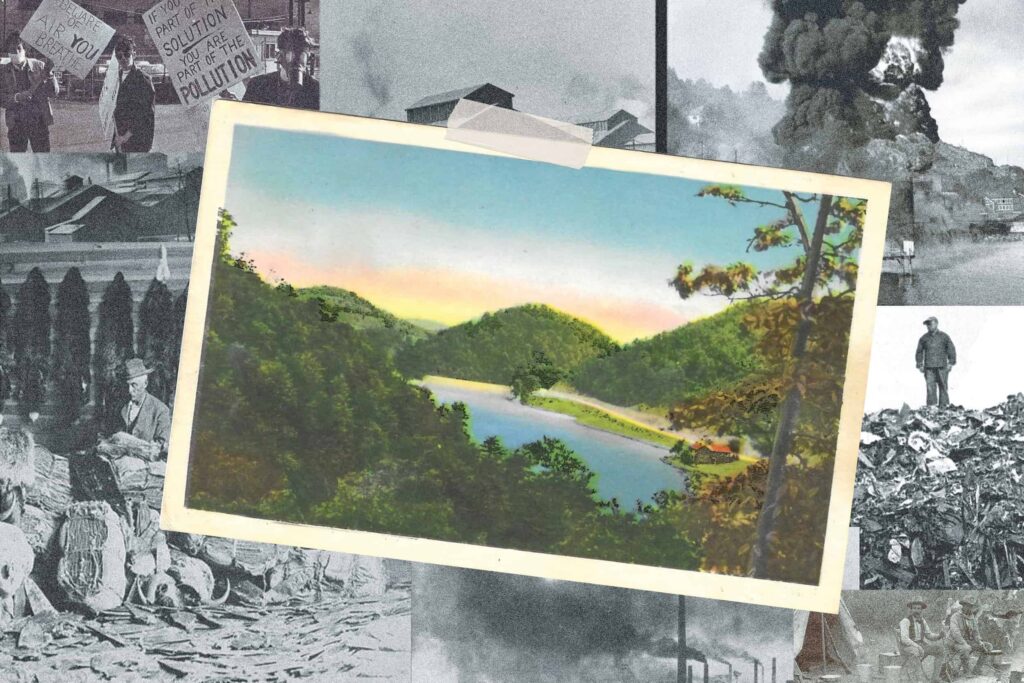
In honoring America’s 250th birthday, environmentalists often point to the creation of national parks during the late 19th century or to the inaugural Earth Day in 1970. No doubt those are important milestones. But a focus on them overlooks enduring forces less visible, yet fundamental, to environmental progress: the constitutional framework the Founders left behind.
The Founding Fathers did not envision environmental problems that came centuries later, like severe overhunting during the 19th century and rivers ablaze with chemical fires during the 20th. But they did enact a constitution with guideposts for how later Americans could grapple with such challenges. Those guideposts—respect for rule of law, property rights, federalism, and private markets—have at times frustrated interest groups who would prefer top-down environmental mandates. Over the long run, however, holding to these principles has delivered environmental successes while balancing trade-offs with other American priorities, including economic growth, individual freedom, and local governance.
America’s three main episodes of environmental crisis and recovery—wildlife decimation, water contamination, and air pollution—are cases in point. Their histories feature first the violation of, and then the return to, our constitutional principles. Notable regulatory mandates aided recoveries, but only in combination with property rights and market-based innovations that are quintessentially American.
Wildlife to the Brink—and Back
Our nation’s rollercoaster ride from wildlife abundance, to decimation, to recovery begins through the eyes of colonial settlers. Arriving from European landscapes barren of fauna, a 1600s settler to Virginia marveled at “woods abounding with deer and songbirds of every kind” while a 1700s settler to Massachusetts wrote of “passenger pigeons so thick I could see no sun.”
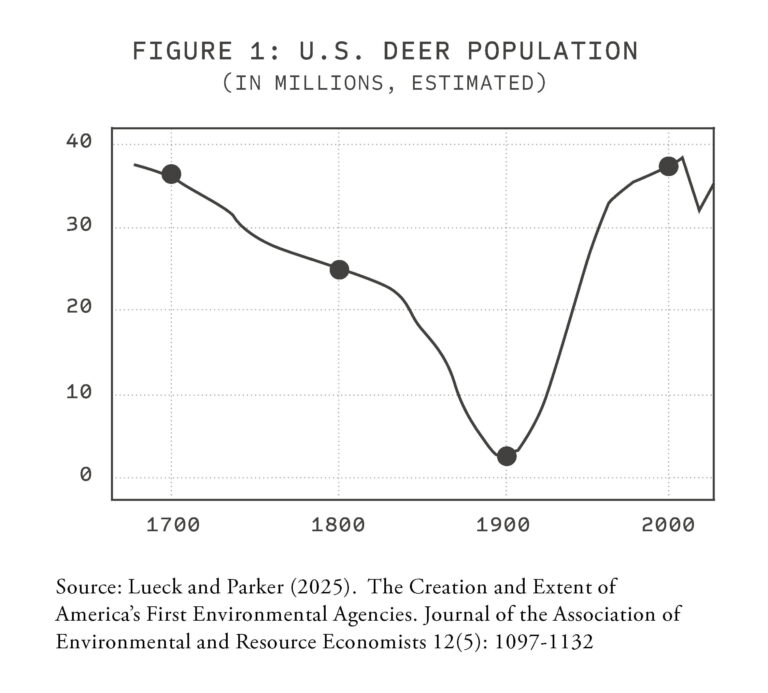
By the middle of the 19th century, abundance began to give way to scarcity. Populations of beaver, turkey, and geese were nearly extinguished from eastern states by 1850. But the most dramatic changes happened from 1850 to 1900, America’s infamous “age of extermination.” The slaughter of bison on the plains is well known: from tens of millions prior to 1850, down to roughly a thousand by 1890. Passenger pigeons were driven to extinction. Perhaps most stunning, the now ubiquitous white-tailed deer was driven from an estimated 35 million in 1700 to less than 500,000 by 1900.
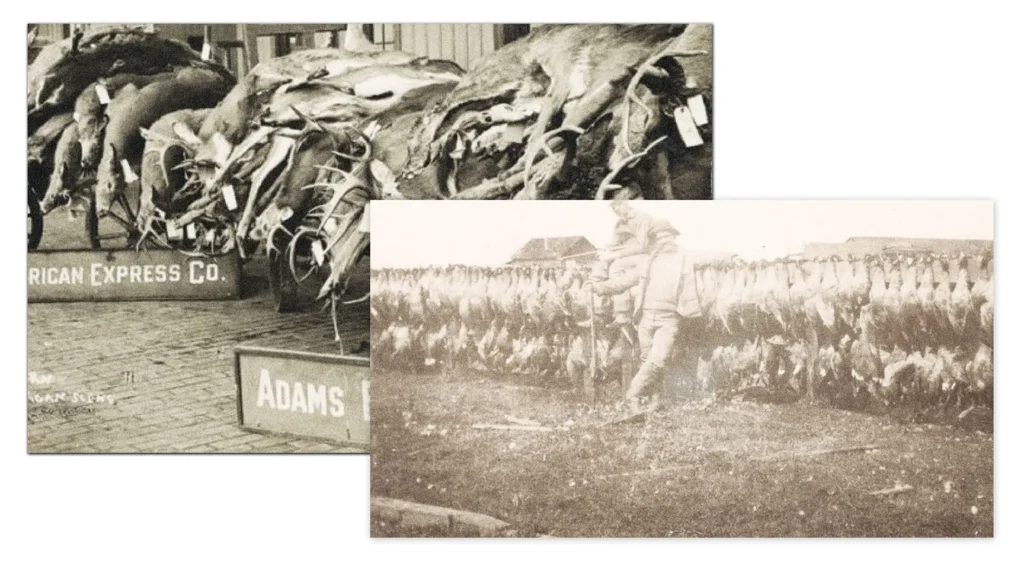
The proximate reason for mass extermination was over-hunting, especially through commercial markets. America’s largest cities—New York, Philadelphia, Chicago—had major markets for fur, meat, hides, and feathers. Restaurants and grocers sold venison and geese. Vendors sold pelts, hats, robes, and skin. Subsistence hunting was also a factor, as logging and mining camps fed off elk and venison, and rapid population growth meant mouths to feed with wild birds and mammals.
The underlying problems, however, emanated from breaches in constitutional principles that helped ensure wildlife remained open access for most of the 19th century. (Thomas Jefferson recognized this dynamic, as Jonathan Wood explores in this issue.) Property rights against trespass were successfully opposed by populists who thought wildlife ought to be freely available to all. Courts and politicians ensured that hunters had unrestricted access to “unimproved” private land, leaving most of the country open for shooting. And while plenty of hunting regulations imported from England were on the books, few were enforced.
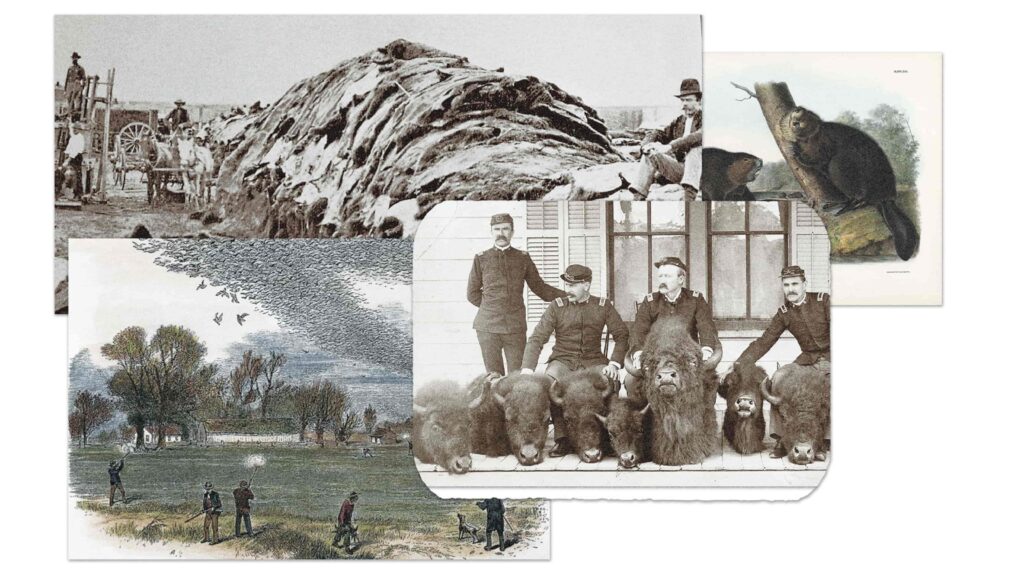
As wildlife populations continued to plummet, there was eventually a will to consolidate law enforcement authority. The first state-run game departments were created in California and New Hampshire in 1878 and the last in Mississippi in 1932. The new systems restored rule of law by implementing hunting licenses to fund game wardens—specialized police who enforced hunting regulations. The wardens also helped enforce the 1900 Lacey Act, an effective ban on the commercial sale of wildlife products that still stands today.
Federalism was also wielded to promote conservation in the early 20th century. In response to the new flow of hunting license sales, some states began to divert the revenue toward roads, schools, and other purposes unrelated to wildlife. To address the threat, wildlife interests successfully lobbied for a federal tax on hunting rifles, with tax revenues distributed to states under the condition that states not divert license revenue. (For more on the history of wildlife conservation funding, see Whitney Tilt in this issue.) The result was increased spending on habitat and conservation.
Relatedly, throughout the 20th and early 21st centuries, property rights against trespass were strengthened in ways that promoted conservation. Over time, more farmland became enclosed, more states passed statutes requiring landowner permission, and more courts upheld private rights. Stronger property rights led to more private effort to enhance habitat.
The resulting rebound in game species has been nothing short of remarkable. American deer populations rebounded to over 20 million by 1950. (See Figure 1.) Even as U.S. human populations swelled, deer continued their determined ascent, to 35 million by present day. Most other hunted species, including pronghorn, elk, geese, and turkeys, rebounded as well.
From Burning Rivers to Fishable Waters
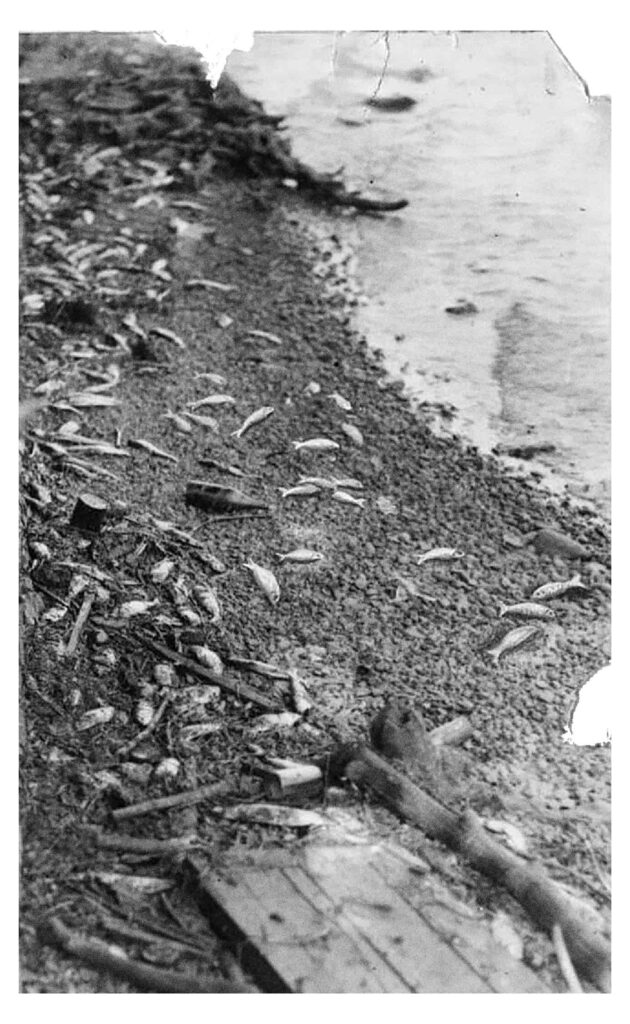
Another major American environmental challenge was polluted water, with burning rivers serving as bleak milestones. Wastewater treatment was limited in many cities, and factories lined the banks of rivers and lakes, discharging waste directly into them. During the 1930s a health official described the Mississippi River near Minneapolis as a “slimy, sludge-filled septic tank” while a New Jersey citizen called the Raritan River during the 1940s an “open sewer.” Cleveland’s Cuyahoga River, made famous by a 1969 National Geographic story describing a fire, was polluted since the 1860s, catching fire nine times between 1868 and 1952.
Data for the entire U.S. provides a comprehensive account. In 1962, the first year of national measurement, only about 58 percent of U.S. rivers were deemed fishable, compared to 85 percent in recent years. On one hand, the mid-20th-century pollution reflects that period’s prioritization of manufacturing jobs, wages, and economic growth over environmental quality, whereas the later improvement reflects changing priorities. This explanation is consistent with economic research indicating that demand for environmental quality tends to increase with income across countries, time periods, and cultures. In 1960, U.S. real income per capita was only one-quarter of what it is today. This implies the mid-century emphasis on economic growth was a choice, rather than simply a problem.
On the other hand, the rapid rise in pollution also reflects breakdowns in America’s rule of law. Our common law did not keep pace in assigning liability, whether to businesses that discharged, or to households who wished to be free of discharge. Uncertain liability meant property rights to water quality remained unclear for decades. The absence of clear property rights made it difficult for private parties to bargain for pollution reductions in market exchanges.
Unclear liability stirred demand for local water regulations, which states implemented during the 1940s, 1950s and 1960s, before the federal mandates of the 1970s. Early adopters of water pollution policies included manufacturing states like Pennsylvania, Indiana, Michigan, and Ohio while late adopters like New Mexico, Arizona, and Nevada had less manufacturing and fewer waterways to protect. Thanks to federalism, states were effectively governing water prior to the 1972 Clean Water Act, which explains why water quality was already trending in a positive direction: America’s percentage of fishable rivers improved from about 58 to 72 percent from 1962 to 1972.
From Choking Smog to Clean Air
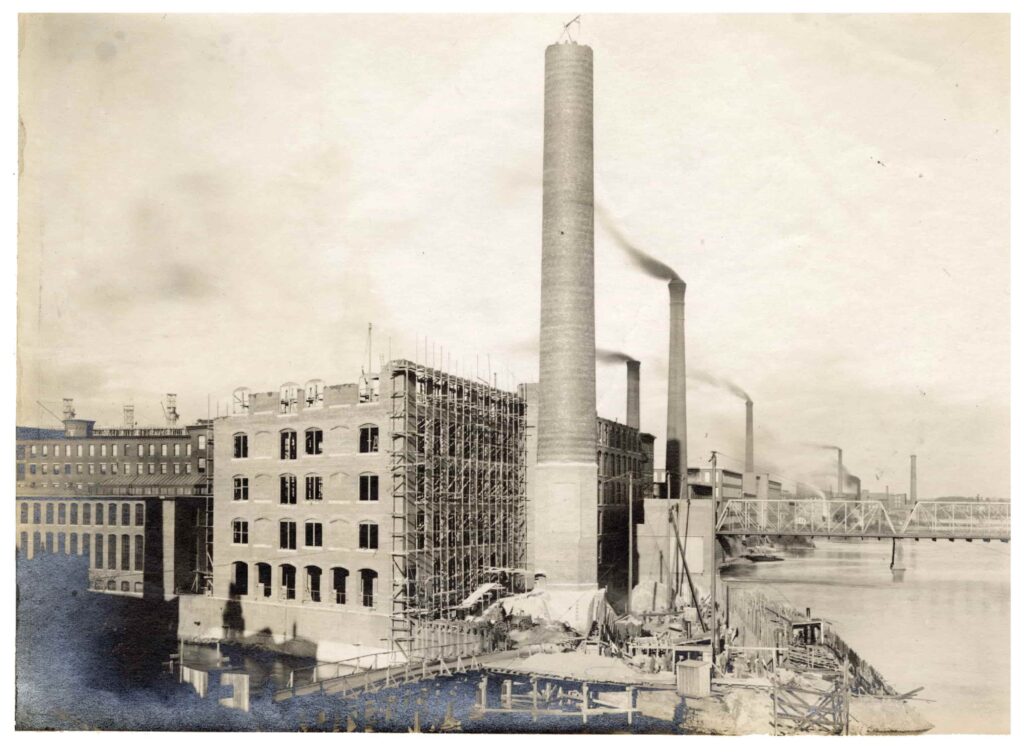
The story of air pollution is similar. Pollution tended to be worst in manufacturing hubs like Cleveland, Pittsburgh, and Detroit where factories relied on burning soft bituminous coal, which released sulfur dioxide, carbon monoxide, and soot. In other cities, like Los Angeles, vehicle exhaust from engines lacking catalytic converters contributed to dense smog in basins where air inversions were common. A firefighter outside of Pittsburgh explained a 1948 weather inversion as creating air thick enough to “chew” while an L.A. resident said that stinging smog during the 1950s felt like “the entire world was peeling onions.”
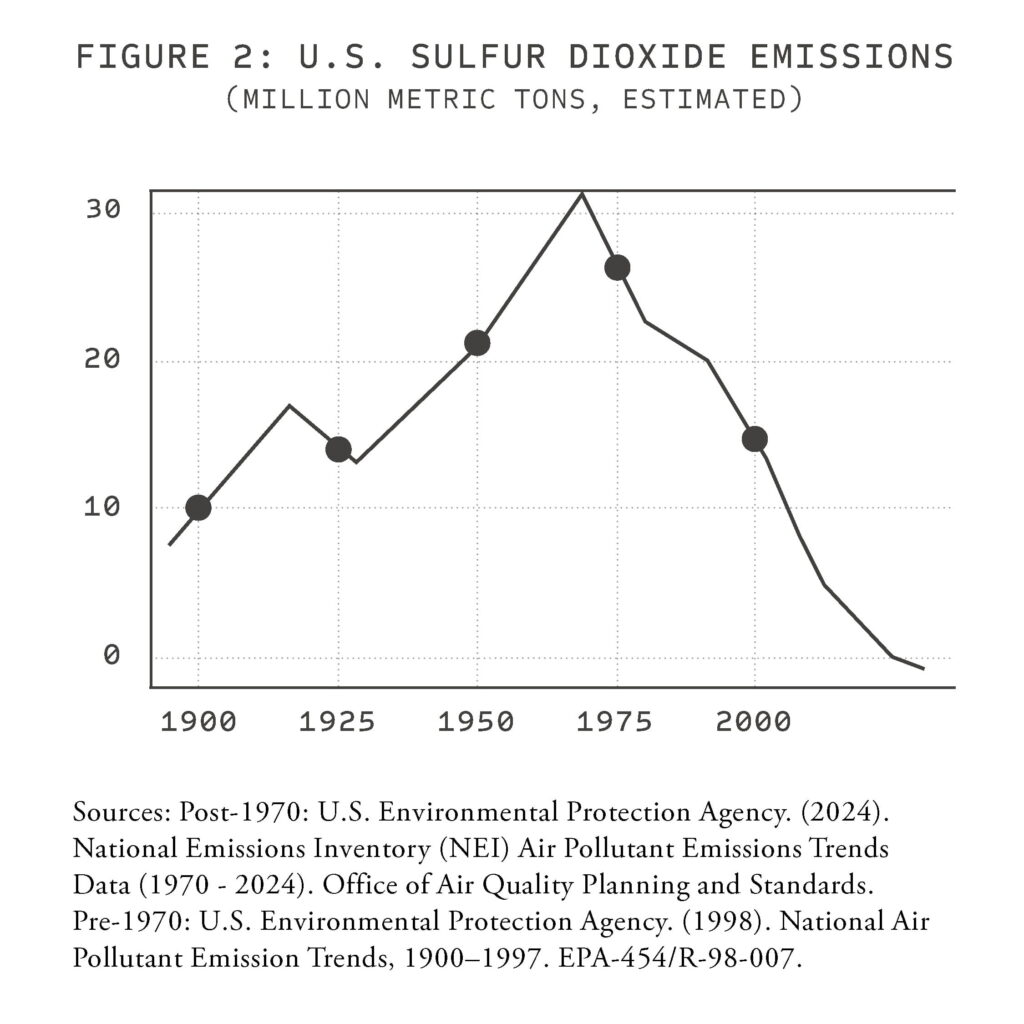
Sulfur dioxide emissions increased from 15 million to over 30 million tons annually by the late 1960s. Today, they measure under two million. (See Figure 2.) Fortunately, like burning rivers, choking smog is in the past.
Explanations for improved air quality that point to federal mandates have merit—the 1970 Clean Air Act’s standards that led automakers to install catalytic converters in new vehicles was certainly effective—but are incomplete. As with water, they overlook progress made prior to 1970 from state regulations, and they ignore market forces occurring since then. States with large populations like New York, California, Florida, Pennsylvania, and Illinois were already regulating air quality by the early 1960s, thanks to the constitutional principle of federalism.
Even within the federal regulations of the 1970s, there remained important room for the constitutional principles of property rights and free enterprise to operate. The evolution of the Clean Air Act is a case in point. Due to lobbying pressure from industry, the act initially used command-and-control mandates to force new plants to install a particular abatement technology—smokestack scrubbers—rather than allowing producers to reduce pollution through cheaper alternatives, such as burning low-sulfur coal. The perverse result was that existing plants had incentive to delay upgrading to burn cleaner coal, and the effect was worse air quality in some places.
Amendments to the law in 1990, however, introduced significant market incentives, implementing emission standards rather than specific technology requirements and creating a cap-and-trade system. By giving power plants the flexibility to sell emission-reduction credits, the law incentivized companies to not only meet but exceed standards by harnessing cheaper, innovative technologies.
Market-driven technological advances also further reduced pollution within U.S. sectors traditionally labeled “dirty,” like fossil-fuel production. The fracking revolution is a literal ground-breaking example. By enabling U.S. power plants to swap coal for cleaner natural gas, the shift has improved air quality enough to generate billions of dollars in health benefits and save thousands of lives since 2005. I suspect this innovation flourished in America, rather than abroad, due to our unique system of private property rights to underground resources; because landowners—rather than distant bureaucrats—collect production royalties, they had a financial incentive to embrace the technology.
The Enduring Constitutional Toolkit
The collapses of American wildlife populations, water purity, and air quality were partly choices of the times—to trade off conservation and environmental quality for economic growth—and partly results of open-access regimes. In each case, the recipe for recovery involved tablespoons of federal mandates and cups of constitutional principles: federalism, improved property rights, and market incentives. Today, we should celebrate our progress but should not lose sight of the principles that will remain critical for addressing environmental trade-offs ahead.
As America marks its 250th year, wildlife conservation offers a striking example of what that looks like. Once nearly extinct, white-tailed deer now number 35 million—and overabundance has become its own crisis. Deer-vehicle collisions account for roughly 2 million accidents, 30,000 injuries, and 200 deaths each year. Two potential solutions are consistent with American constitutional principles. First, rescinding the 19th-century ban on commercial venison markets could harness consumer demand to reduce herds while providing a lean, affordable protein at a time when beef prices have risen over twice the rate of inflation since 2000. Second, based on my research with colleagues, wolf reintroduction in suitable habitat could save the economy $6 billion a year in vehicle-collision losses alone. Both decisions would be best made at the state level, in keeping with the federalism and respect for landowner property rights that have always defined American conservation.
The lesson of 250 years is that America’s environmental successes have rarely come from Washington, D.C., alone. They have come from a mix of state experimentation, private incentives, and public enforcement. That combination—messy, contested, and distinctly American—remains our most powerful conservation approach.
Dominic (Nick) Parker is a PERC senior fellow and the Anderson-Bascom professor of applied economics at the University of Wisconsin-Madison. Nick is also the Ilene and Morton Harris senior fellow at Stanford’s Hoover Institution and a regular faculty lecturer for the Ronald Coase Institute.