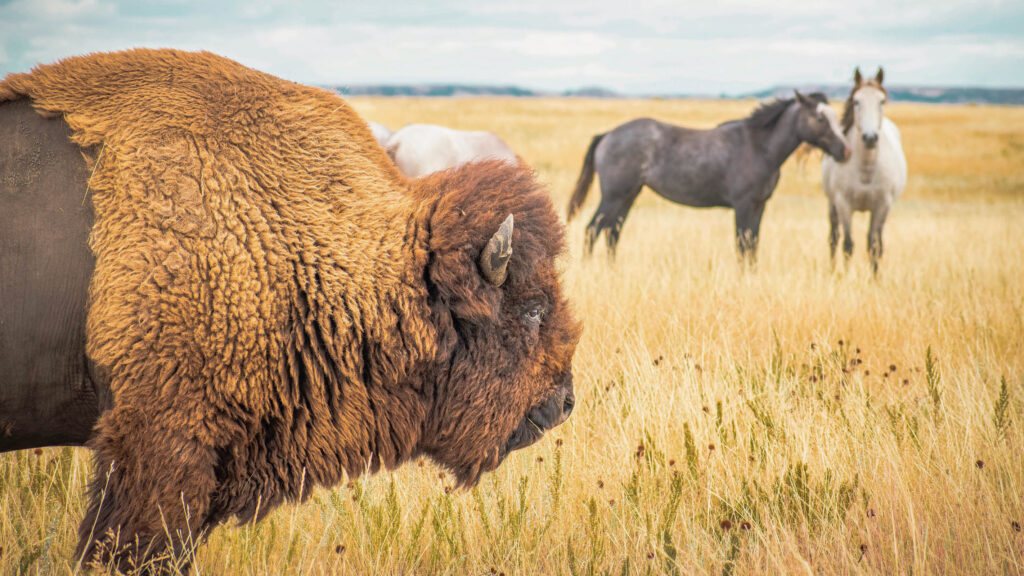
Today, more than 400,000 bison grace North American landscapes. Those magnificent animals represent a victory for people who care deeply about preservation of the species, a feat shaped by rapid economic and technological change on the western frontier.
European colonization of the continent brought two transformative technologies that had momentous ramifications for Native Americans: the horse and the cow. (The even more consequential introduction was novel communicable disease, especially smallpox.) Their arrival on the Great Plains transformed how people moved and how grass was converted into meat. Both had dramatic consequences for the American buffalo.
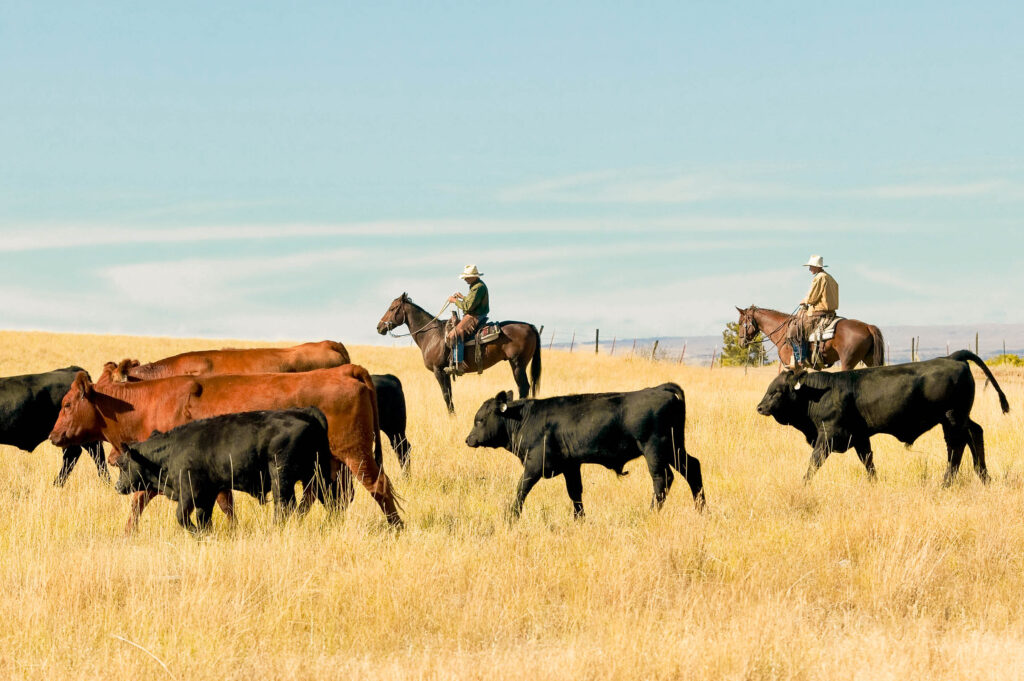
Once mounted on horseback, settlers could control grazing land, and cattle were swiftly introduced to the Plains. Their numbers expanded just as quickly. Former PERC Visiting Fellow Dean Lueck has estimated that by 1880 there were four-and-a-half million cattle on the Great Plains, and 16 million by 1900. The North American bison population, by contrast, plunged from a peak of perhaps 30 million before European settlement to roughly 1,000 by 1890.
Native Americans drove much of the change by adopting the horse into the American economy and subsequently capturing, processing, and selling bison robes, the heavily coated hides especially prized on the colder Northern Plains. Yet those same Native people were excluded from the later hide trade that replaced the robe trade in the 1870s, and had little control over the bison’s eventual removal—an outcome also sought by the U.S. Army as a means of forcing Plains tribes onto reservations. While those restrictions changed the speed of population declines, they likely had little impact on the result: cattle replacing bison on the Plains.
The horse and the cow entered a world of decentralized control of resources. While Native tribes did not own bison, they did try to control hunting territories for them, especially once the robe trade became gainful. The introductions of horses and cattle upended such communal property rights, ultimately enabling widespread slaughter of the bison. The same economic forces that drove the species to near extinction, however, also seeded its recovery.
Eventually, perceptive ranchers, tribal members, and even some buffalo hunters preserved remnant populations. Today, the bison is a revered national symbol that persists in the heritages of many tribes, for meat production to satisfy consumers, and for their conservation value. The story of the bison is not simply one of loss, but one of how changing incentives and institutions shaped both its destruction and its recovery.
The story of the bison is not simply one of loss, but one of how changing incentives and institutions shaped both its destruction and its recovery.
The Horse
The rapid adoption of the horse demonstrated the economic rationality of Native Americans and their responsiveness to market incentives. Horses came from Spanish incursions into what is now the southwestern U.S. In their Historical Atlas of the American West, Warren Beck and Ynez Haase date the first recorded Native ownership to 1659, when the Navajos were observed on horseback. They also note that horse possession moved northward at roughly 10 miles per year, reaching the northern tribes by 1770.
The horse dramatically changed life for the Plains tribes, in terms of residence and diet. “When semisedentary Native Americans on the fringes of the Plains acquired horses in the eighteenth century,” historian Andrew Isenberg wrote in The Destruction of the Bison: An Environmental History, “they began to transform themselves into equestrian nomads. That transformation necessitated an almost total reliance on the bison, a new dependence on trade, and the adoption of a decentralized social structure.”
The migratory life of small bands of bison-hunting tribes initially limited the spread of communicable diseases. Over time, however, smallpox and cholera devastated some communities. Survivors lived relatively healthy lives, sustained by bison and by trade with more sedentary tribes on the periphery of the Plains.
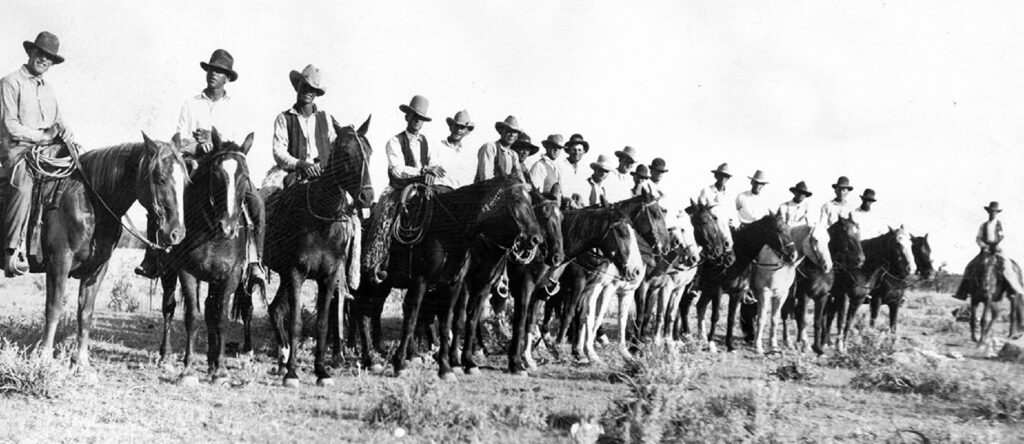
Anthropometric data on 1,123 individuals from eight Great Plains tribes has allowed researchers to estimate their health in the 1840s and 1850s. In a 2024 paper, economists Donn Feir, Rob Gillezeau, and Maggie Jones noted that the evidence suggests “bison-reliant societies had living standards comparable to or better than their European contemporaries.” In a 2001 paper in the American Economic Review, Richard Steckel and Jordan Prince compared the heights of populations of the period and labeled the Plains Native Americans the “tallest in the world.”
The high living standards were the result of Native peoples’ responses to market opportunities. Horses made it much cheaper to hunt bison, enabling the growth of the fur and robe trade. For the first few decades of the 19th century, Native Americans pursued beaver and river otter. As trappers depleted these small-mammal populations in the 1830s, bison robes replaced furs. Steamboats had ascended the Missouri River in the 1820s, cutting transportation costs and making the robe harvest a major source of tribal income. Isenberg noted that between 1825 and 1830, roughly 130,000 bison robes were shipped through New Orleans each year.
The robe market reshaped the hunt. Mounted hunters could kill bison in numbers far beyond subsistence needs, and the scale of slaughter grew accordingly. Harvesting was carried out by men and boys in the fall, once the buffalo coats had thickened. Tribal women usually transformed the harvested hides into marketable robes, a labor-intensive endeavor that changed tribal organization. Isenberg documented that one woman could prepare 10 robes a year. Women shifted labor from food preparation to robe production and became more valued in the process, including as captives in tribal warfare.
The Cow
The other pivotal factor, particularly once livestock could be shipped to eastern markets by rail, was a more efficient means of converting shortgrass prairie into meat: cattle. The swift slaughter of the buffalo may have been distasteful, even disgraceful. But in light of competition from cattle, there was little argument for maintaining bison herds as producers of meat beyond local consumption. And while Native Americans had established tribal claims to bison hunting grounds beginning in the 1700s, when cattle arrived en masse, there were no serious efforts to raise bison as livestock.
After the Civil War, cattle owners moved rapidly to populate the Great Plains. Historian Terry Jordan has recorded that “in all, over 5 million cattle were reportedly driven north between 1866 and 1884, involving the largest short-term geographic shift of domestic herd animals in the history of the world.” Even where bison still thrived, and in conditions that seemed to favor them, cattle won out. For example, the harsh winter of 1886 to 1887 devastated the open-range cattle industry. The large-scale losses did not, however, spur ranchers to replace cattle with bison, even though they were much more suited to the conditions.The migratory life of small bands of bison-hunting tribes initially limited the spread of communicable diseases. Over time, however, smallpox and cholera devastated some communities. Survivors lived relatively healthy lives, sustained by bison and by trade with more sedentary tribes on the periphery of the Plains.
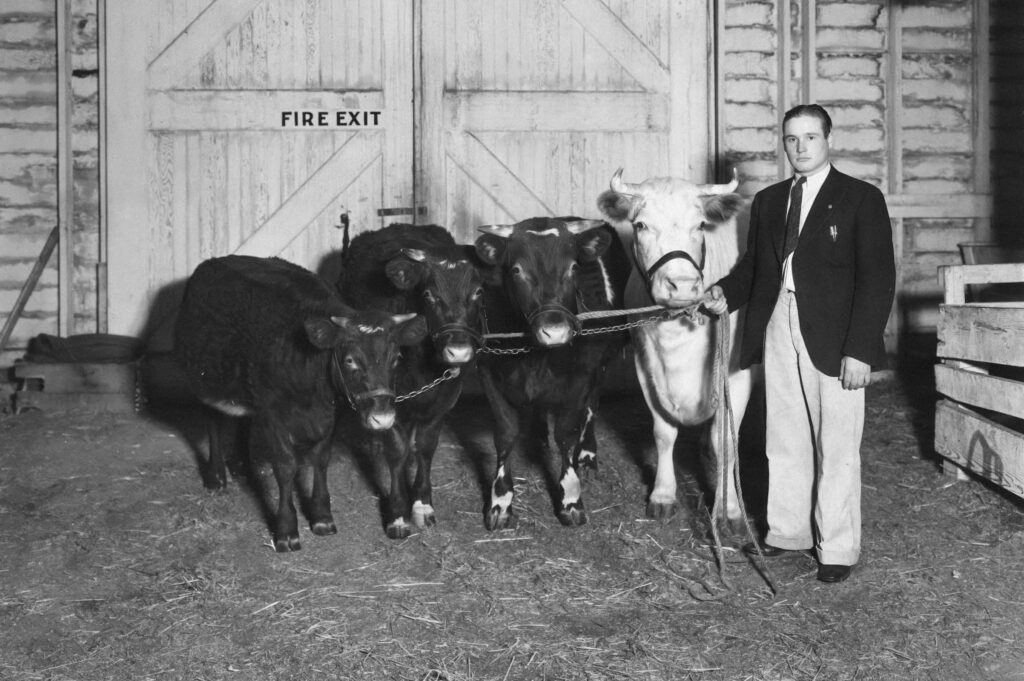
Railroads were crucial to the expansion of the beef herds. The first railroad reached Cheyenne in 1867 and Salt Lake City by 1869. Lines reached Denver in 1870, Dodge City in 1872, Bismarck in 1873, and Miles City by 1881. The superiority of cattle to bison for eastern markets quickly became obvious. Cowboys could trail cattle herds to a railhead. By contrast, bison, because of their intractability, had to be slaughtered and then transported to a railroad. Getting bison meat to the rail cost roughly 30 cents per ton-mile—compared to two cents for cattle.
The fierce nature of the buffalo made the creatures difficult to handle, destructive to fences, and often dangerous to those who tried to move them. As railroads extended across the Plains and cattle herds multiplied, the economic center of gravity shifted decisively. A landscape once organized around migratory hunting and trade was quickly reorganized into settled ranching and agriculture. Within that transition, bison were not simply overhunted, they were displaced.
The robe market reshaped the hunt. Mounted hunters could kill bison in numbers far beyond subsistence needs, and the scale of slaughter grew accordingly. Harvesting was carried out by men and boys in the fall, once the buffalo coats had thickened. Tribal women usually transformed the harvested hides into marketable robes, a labor-intensive endeavor that changed tribal organization. Isenberg documented that one woman could prepare 10 robes a year. Women shifted labor from food preparation to robe production and became more valued in the process, including as captives in tribal warfare.
The Bison
Beyond the expansion of railroads, innovations in hide tanning also accelerated the bison’s removal from the Plains. Bison hides, thicker and tougher than cattle hides, had not proved suitable for industrial purposes. Then, in 1870 and 1871, European tanners perfected the tanning of bison hides into pliable leather. Economist Scott Taylor has noted that the leather became useful as soles in shoemaking and belts in industrial machinery. Previously, only haired robes were marketable—laboriously prepared in Indian villages using buffalo brain, liver, and tallow. The new techniques vastly increased pressure on the herds. Where hunters had once taken a few animals at a time for local preparation, hides could now be shipped in bulk. Hide hunters flocked to the Plains. A team—one rifleman and several skinners—could establish a stand and kill dozens of bison in a day. The primary constraint was the skinning, which had to be done the day of the kill. Otherwise, wolves would ravage carcasses left overnight by hunters.
Hide hunting swiftly diminished the herds. In 1850, there were still more than 10 million bison roaming the Great Plains. By 1874, populations had declined so rapidly that Congress passed a bill to “prevent the useless slaughter of the buffaloes,” which President Ulysses S. Grant pocket vetoed. His choice was consistent with a view shared by U.S. military leaders: destroying the bison herds would force the Plains tribes onto reservations. (In the same 2024 paper, Feir, Gillezeau, and Jones documented the lasting economic damage that the destruction inflicted on Plains tribes.) In 1889, when Smithsonian Chief Taxidermist and bison chronicler William Hornaday published The Extermination of the American Bison, his census estimated the total number of surviving bison in the wild and captivity to be 1,091.
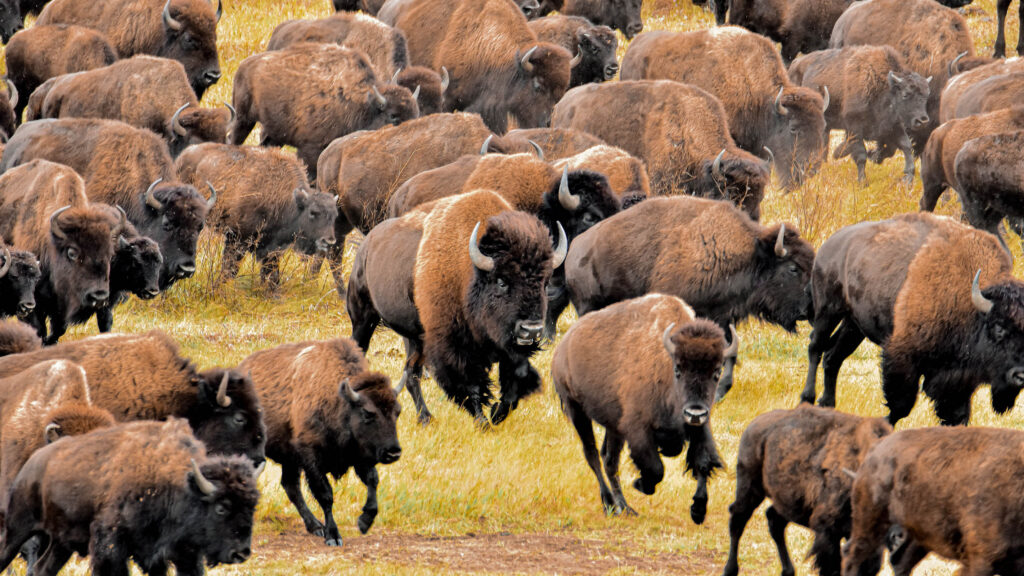
Lueck has described the tribal property-rights regime that prevailed until 1870 as “common property”: Tribes aimed to govern herds by controlling hunting grounds. After 1870, he argues, herds shifted to open-access exploitation. Native Americans lost their ability to control access to bison during the Indian Wars of the 1870s; thus, the hides were taken almost exclusively by non-Native hunters.
With tribes losing control of the landscape, the replacement of bison by cattle was led by settlers. Yet where Native control persisted, numerous tribal members took up cattle ranching themselves. In When Indians Became Cowboys, Peter Iverson describes several Native cattle operations in the Southwest, where landscapes had not been subdivided into allotments as on the Northern Plains. In Oklahoma, Comanche leader Quanah Parker famously ran his own cattle herd and leased land to other ranchers. In Montana, both the Blackfeet and Cheyenne attempted to move into cattle ranching. But the Dawes Allotment Act of 1887, with its 160-acre parcels and checkerboarded Indian and non-Indian land, made it difficult to assemble a working ranch from fragmented allotments.
By the late 1880s, bison herds that once numbered in the tens of millions had been reduced to scattered remnants. Extinction appeared imminent.
The fierce nature of the buffalo made the creatures difficult to handle, destructive to fences, and often dangerous to those who tried to move them. As railroads extended across the Plains and cattle herds multiplied, the economic center of gravity shifted decisively. A landscape once organized around migratory hunting and trade was quickly reorganized into settled ranching and agriculture. Within that transition, bison were not simply overhunted, they were displaced.
The robe market reshaped the hunt. Mounted hunters could kill bison in numbers far beyond subsistence needs, and the scale of slaughter grew accordingly. Harvesting was carried out by men and boys in the fall, once the buffalo coats had thickened. Tribal women usually transformed the harvested hides into marketable robes, a labor-intensive endeavor that changed tribal organization. Isenberg documented that one woman could prepare 10 robes a year. Women shifted labor from food preparation to robe production and became more valued in the process, including as captives in tribal warfare.
The Remnant
As bison became scarcer, their economic, cultural, and symbolic value rose. While there was public and private sentiment to conserve the species, several intrepid entrepreneurs were the first to act. Unlike open-access hunters, early preservationists could control and grow their herds. Private ownership gave them the means and the motivation to capture those values rather than watch them vanish.
In the 1860s and 1870s, Charles and Mollie Goodnight, successful cattle ranchers in Texas, undertook some of the earliest preservation efforts by capturing bison calves. They succeeded in establishing a permanent herd, which grew to 125 by 1910. Some later supplemented the dwindling herd at Yellowstone National Park, as did animals from other private herds.
Another effort began in the 1870s with “the most enigmatic of the preservers of the bison,” as historian Ken Zontek has called them. Pend d’Oreille Indians Samuel Walking Coyote and wife Sabine captured seven or eight bison calves in northern Montana one spring. Only six survived the trip to their home among the Flathead Indians, but those animals, plus several purchased later, formed the nucleus of what became one of the largest subsequent herds.
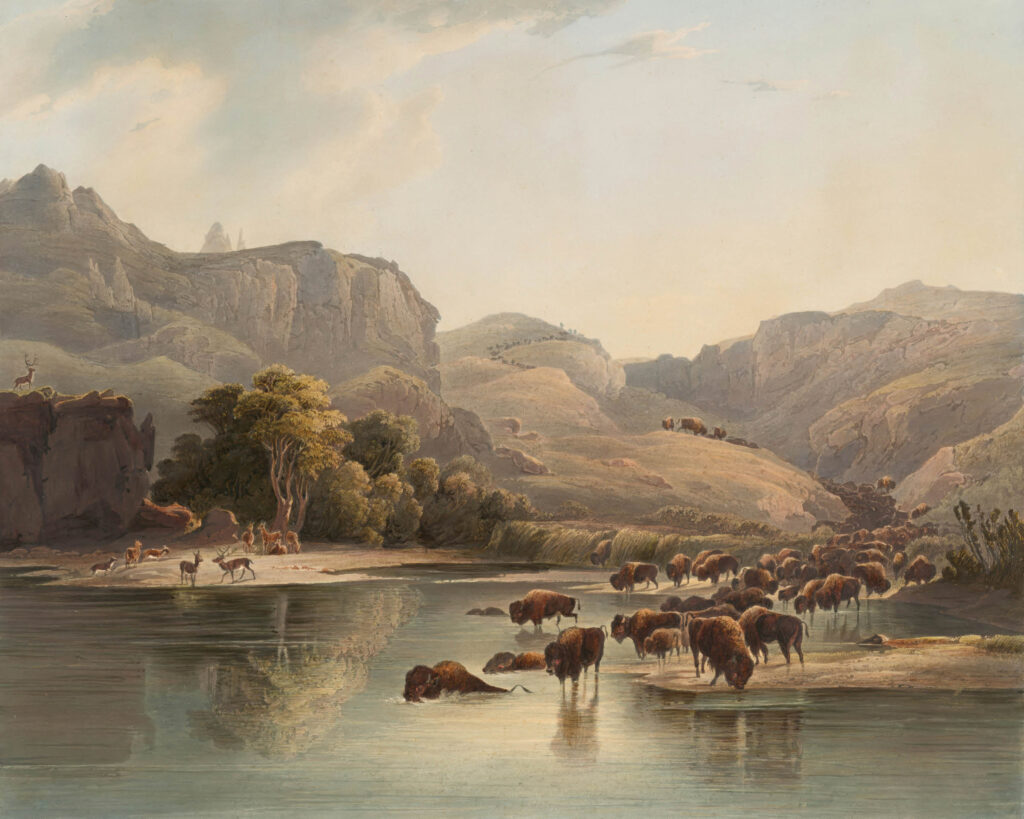
In 1884, Coyote sold 13 bison to Charles Allard and Michael Pablo for $2,000 in gold, or more than $150 per head. At the time, a decent saddle horse cost about one-third as much. By 1896, when Allard died following a fall from a horse, the herd had grown to 300 head. Pablo managed it until 1906, when he decided to sell amid increased settlement pressure on the Flathead Reservation. A purchase by the U.S. government was proposed, but Congress refused to appropriate funding. After several delays, Pablo, in disgust, decided to sell to the Canadian government at $250 per head for what he believed was a 300-head herd. It took three years to round up and transport the bison, which ultimately numbered closer to 700.
Other colorful figures contributed to the early conservation story. C.J. “Buffalo” Jones, a prominent bison hunter, set out to preserve the animal even as he still hunted it for a living. He captured 60 calves during four missions to the Texas Panhandle between 1886 and 1889. Those bison seeded private and public herds throughout the United States, and Jones even went on to work as a game warden in Yellowstone for several years. Frederick Dupuis, a French-Canadian who became a rancher in South Dakota, went to Montana in the early 1880s and captured a handful of napping calves. They formed the basis of a viable herd that eventually helped seed the Custer State Park herd.
The motivations of the early bison preservationists were mixed. Some saw commercial promise: Charles Goodnight called bison “the most profitable farm animal in America” and pursued cattle-bison crossbreeding, buffalo-tallow soap, and a buffalo-hair textile. While these ventures mostly failed, they signaled his conviction that the animals were worth raising. Nonetheless, scarcity drove up live-bison prices: Canada’s $250-a-head purchase of the Pablo herd is one example. Yet financial calculation was only part of the story. Mollie Goodnight impressed upon her husband “the advisability of preserving to Texas and the nation a few of the buffalo.” And Pablo’s roundup turned up more than twice the 300 head he had assumed he was selling, a discrepancy that no rancher tightly managing a commercial herd would tolerate. Private ownership did not supply the motive to conserve bison—it supplied the means for people to act on diverse motives.
The Legacy
The conservation of the bison by private parties preceded government efforts by several decades. Even in Yellowstone, there was no concerted effort to maintain bison—nor the resources to do so—in the park’s early days. The persistent presence of buffalo at the park’s founding in 1872 was practically accidental. Hornaday’s 1889 census recorded 200 head in the park. By 1902, poachers had reduced them to just a couple dozen, before the park herd was replenished from private sources.
It wasn’t until 1905 that concerted public preservation began. That year, Hornaday and President Theodore Roosevelt founded the American Bison Society. Between 1905 and 1914, private bison herds seeded public preserves that were established in Oklahoma, Montana, South Dakota, and Nebraska. By 1935, the society declared its work of securing bison populations complete and effectively dissolved. It marked a milestone along the path from the brink of extinction toward recovery.
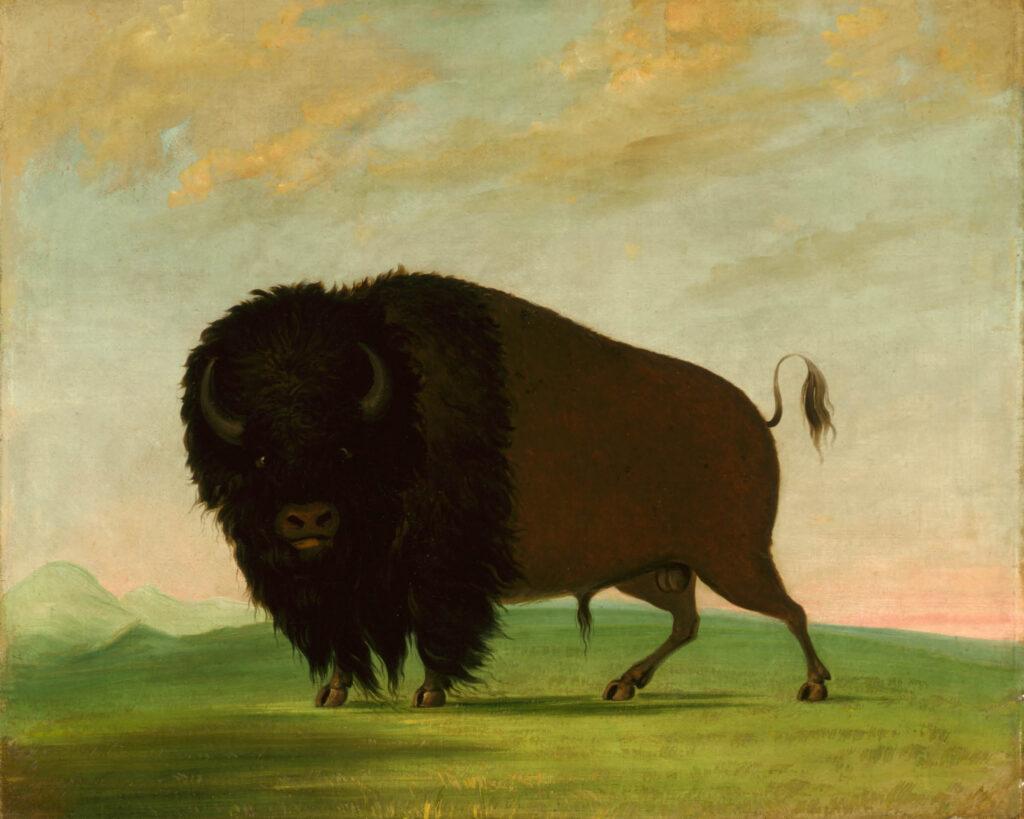
The legacy of the bison is one of rapid adaptation. The introduction of settled ranching and agriculture to a hunter-gatherer world caused a seismic shift in the use of shortgrass prairie on the Great Plains. Bison numbers plummeted from 30 million to about a thousand. Yet successful private efforts conserved a permanent population, and continued tribal, private, and public stewardship of the species has ensured bison remain common today, although primarily in herds that do not freely roam across vast areas as they once did.
The same forces that nearly erased the bison from the Plains ultimately created the conditions for the species’ survival. They have not diminished since. Today, roughly nine in 10 of North America’s bison live in private hands—many of them descendants of animals captured by ranchers, tribal members, and conservationists who acted before any government would. The bison’s recovery began with private efforts. It still depends on them today.