
Introduction
As American summers grow drier and hotter, the institutions built to manage lands, water, and wildlife have not kept pace. These institutions, made up of laws, policies, contracts, and other rules that govern how we allocate water, manage forests, prevent wildfire, and conserve wildlife, were designed for a cooler, wetter, and more stable environment. This report focuses on helping institutions adapt to our changing reality. It proposes practical recommendations within five topical areas that can help people and ecosystems weather this summer as well as the years ahead.
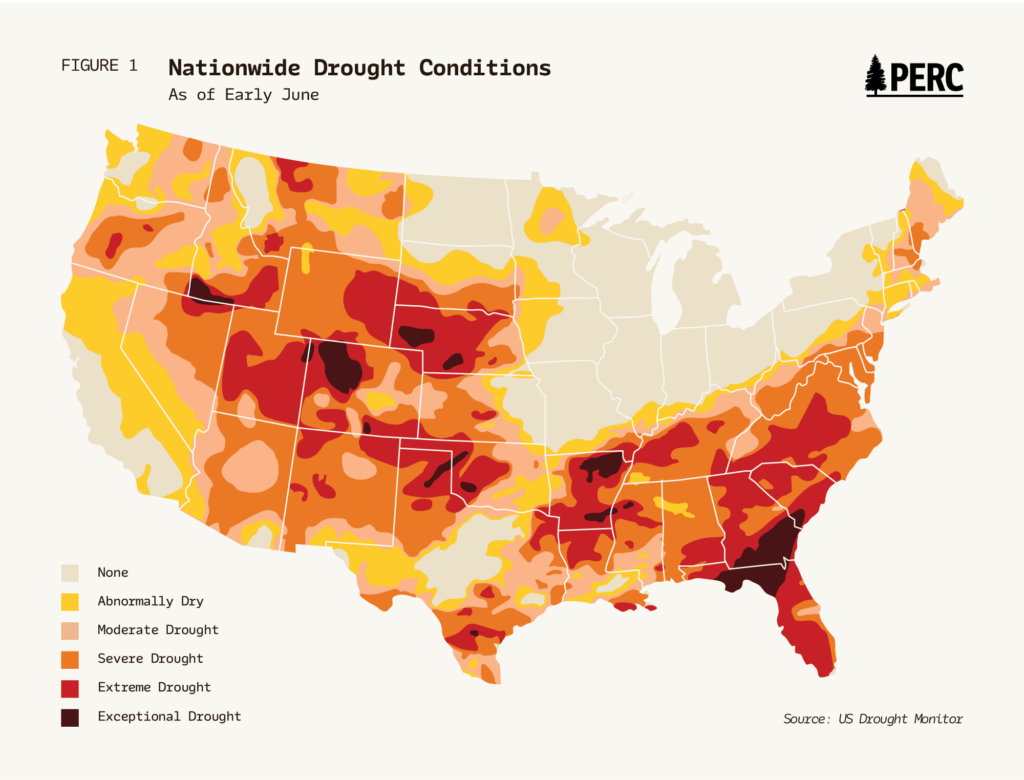
This year, the summer has come in hot, dry, and dangerous. By early spring, more than 60 percent of the lower 48 states were already in moderate to exceptional drought, the highest share for that time of year since the U.S. Drought Monitor began in 2000. NOAA recorded its worst March drought reading since 1895—surpassed only by the Dust Bowl months of July and August 1934. In the West, eight states— Arizona, Colorado, Idaho, Nevada, New Mexico, Oregon, Utah, and Wyoming—set record lows for spring snowpacks. The meager snowfall, combined with early melt, has raised alarms about water supplies and wildfire risk. California saw its driest March on record, with snowpack just 18 percent of average as of April. The Colorado River Basin had its warmest March on record, running 13.7 °F above the historical average. In much of the Southeast and Texas, more than a foot of rain in a single month would have been needed to break spring drought conditions.
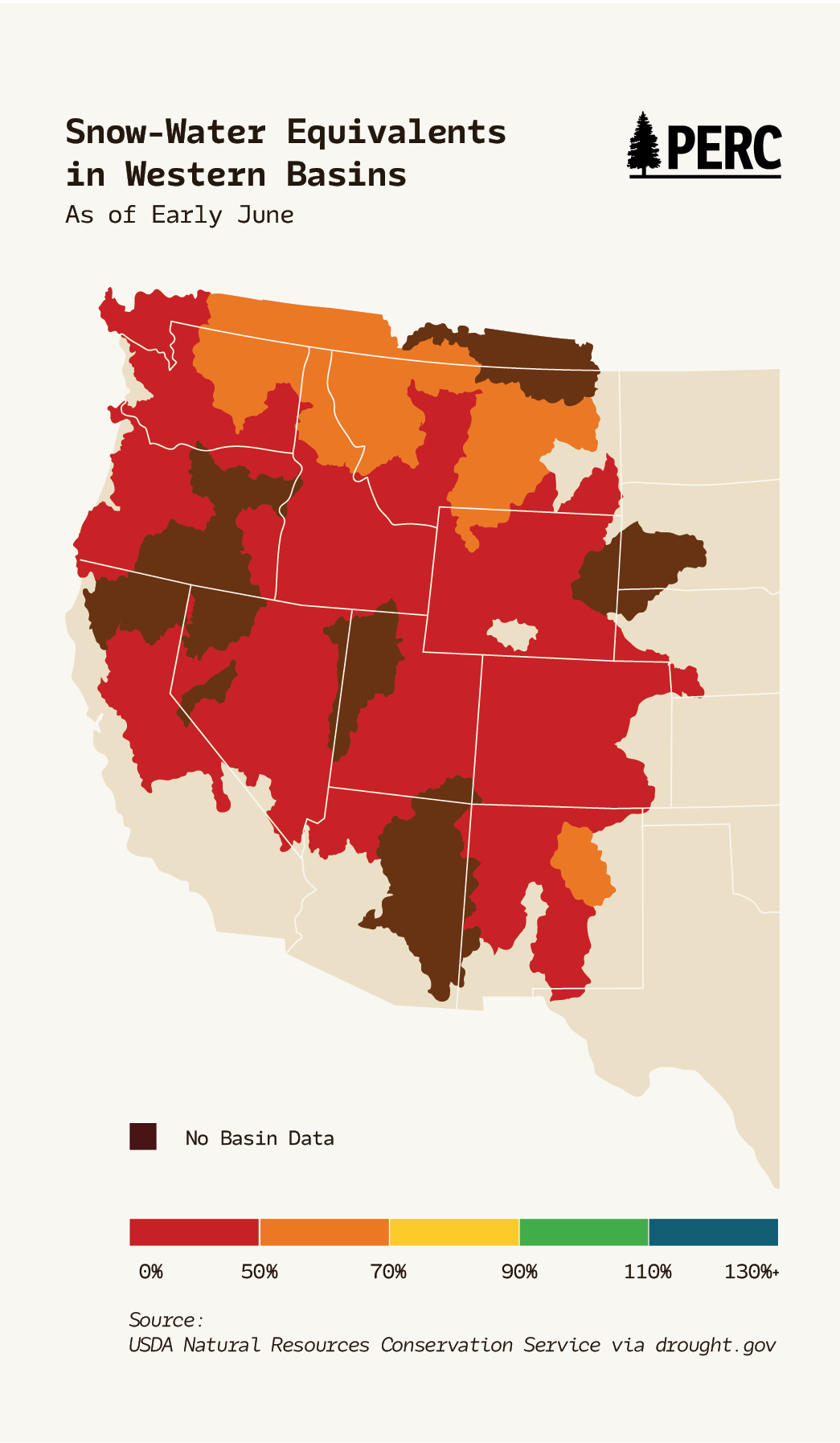
Signs of strain are appearing across the West. In Utah, the Great Salt Lake ended 2025 at the third-lowest level since 1903, just three years removed from its all-time low. In Colorado, Denver Water announced that it would fully drain and close Antero Reservoir, a prized trout fishery for browns, cutthroats, and rainbows, to move the water to less evaporation-prone reservoirs downstream. And the Colorado River, which supplies roughly 40 million people across seven states and 30 federally recognized tribes, is facing its deepest crisis in decades. The river has lost about 20 percent of its flow since 2000. Now, both of the system’s major reservoirs are nearing crisis levels: Lake Powell sits at roughly a quarter of capacity, and Lake Mead at about a third, with the system as a whole at 36 percent—close enough to deadpool elevations that loss of hydropower at Glen Canyon Dam is a genuine concern.
In April, the federal government took emergency action, cutting the annual release from Lake Powell by nearly 1.5 million acre-feet—roughly 20 percent—while releasing additional water from Wyoming’s Flaming Gorge Reservoir to keep Powell from falling further. Negotiations over how to curtail water use in light of dwindling supplies have stalled among the seven basin states, and Utah and Arizona have set aside money for a legal fight that could end at the Supreme Court.
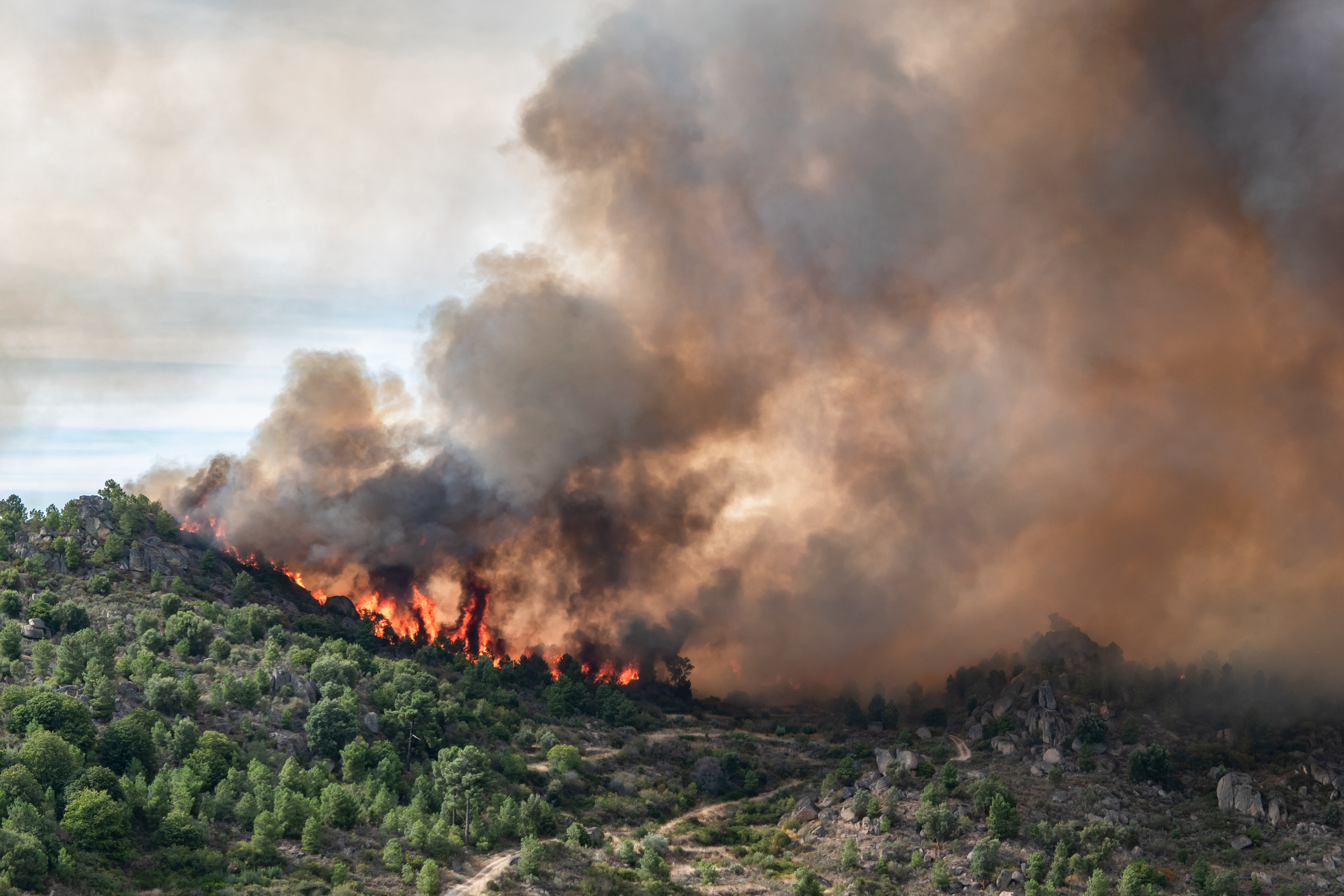
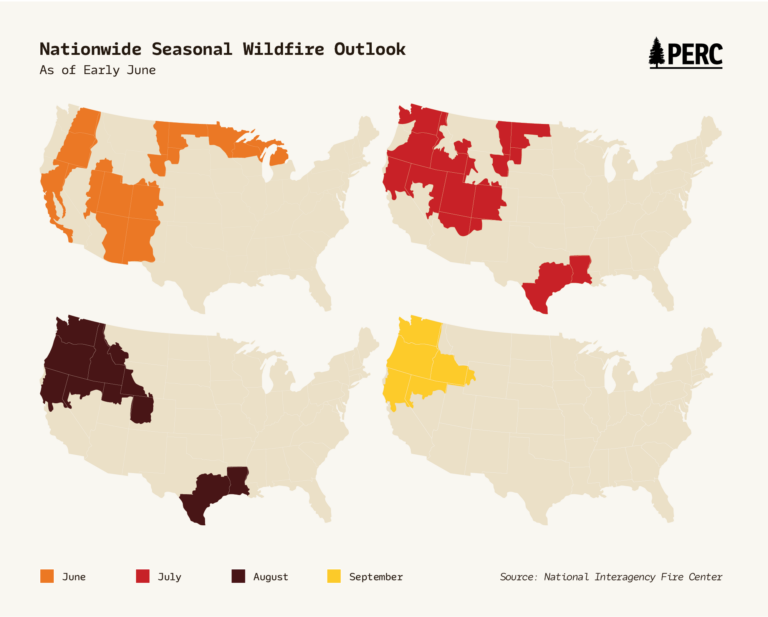
Wildfire warnings are sounding as well, some of them far from the usual fire hotspots of western states. In southern Georgia, two major fires burned tens of thousands of acres, destroyed more than 100 structures, and forced officials to confront a dangerous combination of drought, wind, and dried-out storm debris left by Hurricane Helene 18 months earlier. By May, more than 1.8 million acres had already burned nationwide—including a million acres across Nebraska, Kansas, and Oklahoma—nearly double the 10-year average for the first four months of the year. The West is unlikely to be spared either: The federal government’s latest seasonal fire outlook projects above-normal wildfire potential across much of California, the Pacific Northwest, and the Northern Rockies through the summer. And this is just the start of wildfire season, which could last well into the fall as hotter, drier conditions in much of the U.S. have lengthened the fire calendar.
The dire outlook is not anomalous. Every summer now brings a new round of wildfire smoke, water shortages, record heat, or dry riverbeds. But these crises aren’t just acts of nature or predictable byproducts of a changing climate. They’re also products of rigid, outdated systems for natural resource management—and tests of whether our institutions are flexible enough to respond and adapt.
The following five ideas focus on practical reforms—anchored in markets, incentives, and property rights—that can reduce risk, improve resilience, and help people and ecosystems adapt to a hotter, drier future. Some, like deploying reverse auctions to conserve water or expanding prescribed fire use on private lands, could be implemented quickly and begin to ease the pain this summer and next. Others, like reforming state water law or fixing legal frameworks that slow forest restoration, would unfold more slowly but yield benefits for many hot summers to come. Many cost little or nothing in new public dollars, working instead by removing the legal and regulatory barriers that keep landowners, water users, conservation groups, and tribes from taking the conservation actions they already want to take.
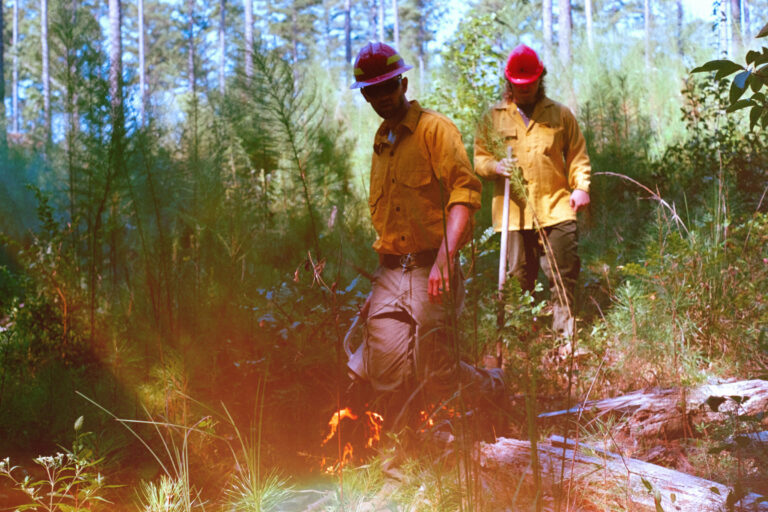
1. Prevent Wildfire on Federal Lands Before the Flames Start
Restoring forests proactively is cheaper, safer, and more effective than fighting fires after the fact
As we enter the summer, forests across the West are dry, overgrown, and ready to burn. About 80 million acres of national forests are in need of restoration, a backlog that the U.S. Forest Service has struggled to chip away at even in record treatment years. The dangers of falling behind are mounting. Wildfires have scorched more than 130,000 structures since 2005, more than three-quarters of which have burned in the past decade. California’s record 2020 fire season alone released twice the amount of carbon emissions that the state had cut between 2003 and 2019. The more the Forest Service spends fighting flames, the less it has to invest in the proactive work that lowers the risk of future fires.
Federal land managers know what works. A recent meta-analysis found that combining mechanical thinning and prescribed burning reduces the severity of subsequent wildfires by up to 72 percent. But bureaucracy delays often block these forest treatments. Once the Forest Service initiates environmental review, fuel treatments take an average of 3.6 years to begin for mechanical thinning and 4.7 years for prescribed burns. Projects that require a full environmental impact statement take even longer, and a lawsuit can typically add another two years. Redundant endangered species consultations triggered by the Ninth Circuit’s Cottonwood decision and limited authority for state and tribal partners further impede restoration. The result is a system that documents wildfire risk in painful detail, yet sits idly while forests burn before work on the ground ever begins. The bipartisan Fix Our Forests Act would tackle several of these barriers—including a Cottonwood fix and improved Good Neighbor Authority. Then, the real work to restore forests on the ground will begin.
Recommendations
1. Prioritize wildfire prevention over suppression.
Federal wildfire spending has ballooned alongside fire severity, but the strategy still tilts heavily toward emergency response over proactive treatment that would lower risk for communities. Two recent economic studies supported by PERC demonstrate the logic of prevention. The first finds that every dollar invested in national forest treatments avoids $5 to $6 in suppression costs in the Pacific Northwest. The second finds that every dollar invested yields an average of $3.73 across the West in averted smoke and property damage, adding up to an estimated $2.8 billion in avoided damage from 2017 to 2023. Directing more resources to treating the larger and highest-risk landscapes would deliver the most benefit.
Expanded reading:
2. Streamline review and permitting for high-priority fuel treatments.
Environmental analysis was never meant to delay the very projects designed to protect ecosystems and communities, yet that’s the reality today when areas proposed for treatment burn up in smoke while awaiting approval. PERC research published in 2022 found that to begin fuel treatments that required an environmental impact statement took 5.3 years on average for mechanical thinning and 7.2 years for prescribed burning. However, projects that qualified for a categorical exclusion from a full environmental review averaged just 2.9 and 3.6 years for thinning and burning, respectively, substantially reducing administrative delays. Expanding categorical exclusions, increasing their acreage caps, and fixing the redundant Cottonwood consultation requirements would give land managers the tools and flexibility they need to address mounting risk.
Expanded reading:
3. Continue to expand state, tribal, and local partnerships to increase the pace and scale of restoration.
The Forest Service can’t tackle the wildfire crisis alone. Thankfully, Shared Stewardship Agreements now span all 50 states and a growing roster of tribes—including the Cow Creek Band of Umpqua and the Great Sioux Nation. A recent wave of renewed and expanded agreements, like a 16.5-million-acre partnership with Idaho and a 20-year agreement with Montana, signals the agency’s growing willingness to work with partners and commit to long time horizons. Congress should use statutory tweaks to make sure this model proves durable, including extending the 10-year limit on stewardship contracts that implement these agreements and making permanent the EXPLORE Act’s revenue-sharing flexibility, which sunsets in 2028. Locking in these reforms would create lasting predictability and let federal land managers keep tapping local capacity to speed and scale restoration.
Expanded reading:
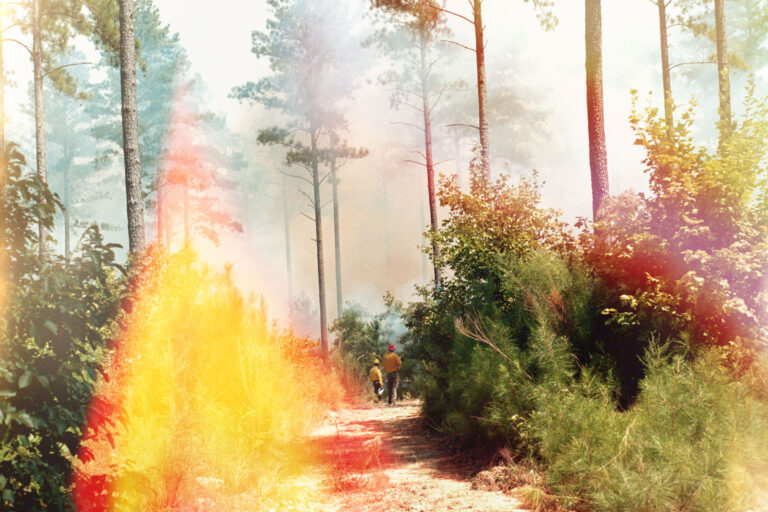
2. Make Good Fire Easier to Use on Private Lands
Controlled burning mitigates wildfire risk and improves forest health, but barriers hamper its use
Prescribed fire is one of the most effective tools available to reduce fire risk and restore forest health, yet it remains drastically underused across the country. As of 2021, the Southeast accounted for roughly two-thirds of prescribed burning nationwide, and while some states have made progress in recent years, most regions still lag far behind what’s needed. Across regions and ecosystems, one of the most cost-effective tools for lowering fire risk sits underused.
Several barriers limit prescribed fire use, especially on private land. State liability laws often hold landowners responsible for damages from spot fires or escaped burns even when they followed best practices, making the personal risk of using good fire too great to bear. The prescribed fire liability insurance market has largely collapsed, with premiums climbing four-to-five-fold in recent years as some carriers have withdrawn coverage entirely. Permitting and planning systems can be slow and inflexible, with limited “burn days” and little predictability over whether a burn will be allowed. Surveys of landowners find that most who want to burn are blocked by liability fears, regulatory hurdles, and limited capacity.
Recommendations
1. Reform prescribed-burn liability rules to encourage safe, responsible burning.
State liability laws are one of the greatest deterrents to good fire. Landowners who follow best practices can still face open-ended exposure if a burn produces smoke that drifts to a road or sparks an escape, leading many to forgo prescribed fire altogether. States can shield responsible burners by raising the liability standard for certified burns from ordinary negligence to gross negligence, clarifying what counts as best practice, and pairing those reforms with tools that compensate parties genuinely harmed. The result: less legal uncertainty, more burning, and lower wildfire risk.
Expanded reading:
2. Support prescribed-burn associations and other local burn cooperatives.
Many landowners want to use prescribed fire but lack the training, equipment, and expert support to do so safely. Prescribed-burn associations—local cooperatives where landowners pool tools, knowledge, and labor to plan and execute burns together—have driven much of the prescribed fire activity in states like Oklahoma and Texas but remain rare in some regions, including much of the Intermountain West. Recognizing burner certification across state lines, harnessing training resources from prescribed-burn associations and tribal organizations, and establishing tiered certification pathways for burn bosses would help these associations grow, building the capacity needed to scale up good fire across private lands nationwide.
Expanded reading:
3. Develop insurance and finance tools that lower barriers to prescribed fire.
The collapse of the prescribed-fire insurance market has made the financial risk prohibitive for many burns. New tools can fill the gap. Risk retention groups, member-owned insurance vehicles authorized by federal law, would let landowners, burn bosses, and burn associations pool risk while channeling the savings from safer practices back to members. Combined with catastrophe bonds and other private investment vehicles, these approaches can replace shrinking commercial coverage with a market that rewards continuous improvement.
Expanded reading:

3. Get Water to People and Communities Who Need It Most
Property rights and markets can help move scarce water supplies to their highest-value uses
Even as reservoirs shrink and snowpacks dwindle, much of the water that does flow is locked into uses prescribed by 19th-century rules and contracts. The Colorado River—the lifeline for 40 million people across seven states and 30 federally recognized tribes—is overdrawn, and federal and state negotiators are confronting cuts that could fall on cities, farms, and tribes from Wyoming to California. Texas’s state water plan, meanwhile, projects a 6.9 million acre-foot annual shortfall by 2070 if conditions like the multi-year 1950s drought—the state’s worst on record—were to reoccur. Drought is also accelerating aquifer overdraft: As surface rights are curtailed, irrigators pump groundwater that can take decades or even millennia to recharge while simultaneously drawing down surface flows further. Shortages are real—but they also fundamentally present problems of allocation.
The institutions that allocate western water were built for a different era when infrastructure, not natural water supply, was the limiting factor. Establishing rights through prior appropriation—first-in-time, first-in-right—helped provide incentives for private investment while also making it simple to graft new users onto the existing system. More than 150 years later, the overlapping nature of these historical rights—coupled with poor measurement of crucial return flows and tight no-injury protections for potentially harmed parties—locks rights to their original use and method of diversion. Use-it-or-lose-it provisions can push users to apply more water than needed just to keep their rights, and third-party veto rules let any other water user block or delay a transfer by claiming potential harm. Irrigation districts often hold rights—and limit transfers—instead of the farmers who use the water. And federal restrictions prevent tribes from leasing water off-reservation even where willing buyers and sellers exist. The upshot: Scarce water gets stranded in low-value uses.
Recommendations
1. Foster competitive markets to make the most of existing supplies.
Water markets allow scarce supplies to move from lower-value uses to higher-value ones, but most western states have built so much friction into transfers that relatively few trades are made. This means that potential sellers never “feel” the opportunity cost of keeping their water in its current use, and potential buyers are unable to price water accurately. In the near term, reverse auctions—letting farmers and irrigation districts compete on price to deliver the most water savings per dollar—offer a practical way to mitigate shortfalls from the Colorado River and elsewhere without resorting to across-the-board mandated cuts. For the long haul, reforms that clarify and secure water rights, establish state water trusts to lower transaction costs, and limit veto powers would let voluntary markets get water where it’s most needed.
Expanded reading:
2. Encourage interstate cooperation and creative cross-border water deals.
Western rivers and aquifers don’t follow political boundaries, yet state-by-state water laws often block transfers and joint efforts that could benefit many parties. A banking arrangement in which Arizona stores water on Nevada’s behalf in exchange for letting Nevada draw against Arizona’s Colorado River allotment shows what’s possible. States and federal agencies should make voluntary interstate transfers simpler and lift rules that block water from flowing to willing buyers across state lines.
Expanded reading:
3. Give farmers more flexibility to trade water.
Farmers are often best positioned to identify where conserved water could be put to higher-valued use, but in many western basins they cannot transfer water without their irrigation district’s blessing, and federal contracts on Bureau of Reclamation water add another layer of permission. Reforms to district bylaws and contract terms would promote more water trading within the existing institutions that allocate and deliver water, unlocking conservation gains and giving producers a new way to profit from stewardship.
Expanded reading:
4. Let tribes lease water off reservation.
Tribes hold some of the most significant water rights in the West, but federal law and policy prevent most tribes from leasing those rights to off-reservation users without an act of Congress. The result is foregone tribal income. Streamlining the leasing process, and treating tribes as full owners of their water rights, would strengthen tribal economies while codifying potential sources of supply for cities and ecosystems.
Expanded reading:
5. Expand water reuse and aquifer-saving tools through market incentives, not government subsidies.
Big-ticket supply augmentation—cloud seeding, desalination, or long-distance pipelines—may have a place, but it can divert public investment that would deliver more savings if spent on market-based tools. Groundwater conservation easements, pioneered in Colorado’s San Luis Valley, pay willing landowners to retire pumping rights and restore overdrafted aquifers. Removing regulatory barriers to direct potable reuse and letting cities and farms bank surface water in local aquifers can expand effective supply at far lower cost—without governments having to pick winners.
Expanded reading:
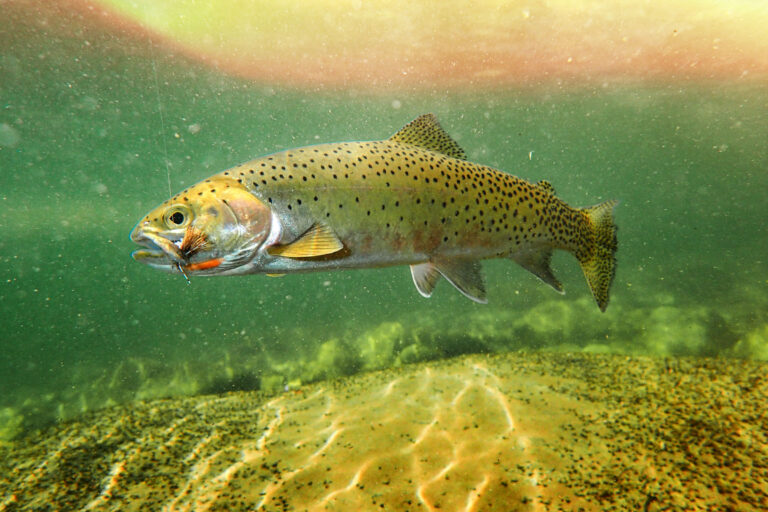
4. Keep More Water in Rivers for Trout, Wildlife, and Ecosystems
Flexible rules and responsive tools will ensure water can flow to environmental uses
As surface flows shrink, rivers, lakes, and the wildlife that depend on them are paying the price. The Great Salt Lake has lost 60 percent of its surface area due to decreased inflows, threatening the brine shrimp at the base of its food web and the storks, herons, pelicans, and 200-plus other bird species that rely on its habitat. For three straight years, California’s salmon fishery was closed after drought and agricultural diversions crashed fish returns. Only wet winters that temporarily eased the pressure allowed a limited reopening this year. The state’s Scott River shows how policy—not just precipitation—can drive recovery: Drought and dewatering once pushed adult coho salmon returns to just 62 fish, but voluntary leasing helped them rebound more than five-fold within three years. Recovery is possible when institutions clear the way.
For most of the 19th and 20th centuries, western water law treated leaving water in a river as wasting it. State statutes required users to divert water and apply it to a “beneficial use,” such as irrigating crops, leaving few tools to protect flows. Reforms in some states have begun to shift that. Utah, for instance, recently expanded the definition of beneficial use to include instream flows. But the changes are uneven, and where they exist, voluntary transfers still face lengthy regulatory review, third-party objections, and difficult questions about how much water is actually saved and where it ends up. Even with political will to leave water in rivers, the legal and technical machinery often struggles to deliver.
Recommendations
1. Let private parties hold instream flow rights.
Even in states that recognize instream flow as a beneficial use, several still prohibit anyone but the state from holding the underlying water right. That restriction forces conservation groups, water trusts, and tribes to fund a state agency to hold rights on their behalf, or to navigate awkward legal workarounds that can slow or block transactions. Letting private parties hold instream flow rights directly would give them clear legal standing and unlock more environmental water deals across the West.
Expanded reading:
2. Simplify and accelerate voluntary transfers that protect instream flows.
Most state water laws subject instream flow transfers to the same lengthy reviews and high transaction costs as any other water transfer, even though leaving water in a river poses fundamentally less risk to third parties than diversions do. The approach can price out smaller, time-sensitive deals. Utah’s recent reforms—expanding beneficial use to include instream flows, removing use-it-or-lose-it penalties for conserved water, and authorizing split-season leasing—show the kind of changes that could be replicated elsewhere. Streamlining transfer review and creating clear pathways for short-term instream leases would let conservation groups and water trusts move quickly when fish and rivers need water most.
Expanded reading:
3. Use water banks and trusts to enable quicker, lower-cost drought reallocations.
Water banks and trusts let willing buyers and sellers transact water without each lease running the gauntlet of full regulatory approval. Utah’s water banking statute and Texas’s state water trust create the legal infrastructure for these arrangements, while similar tools elsewhere have moved water during droughts at lower cost than one-off transactions. Expanding and funding these institutions across the West would lower transaction costs and put dry-year tools in place before the next crisis hits.
Expanded reading:
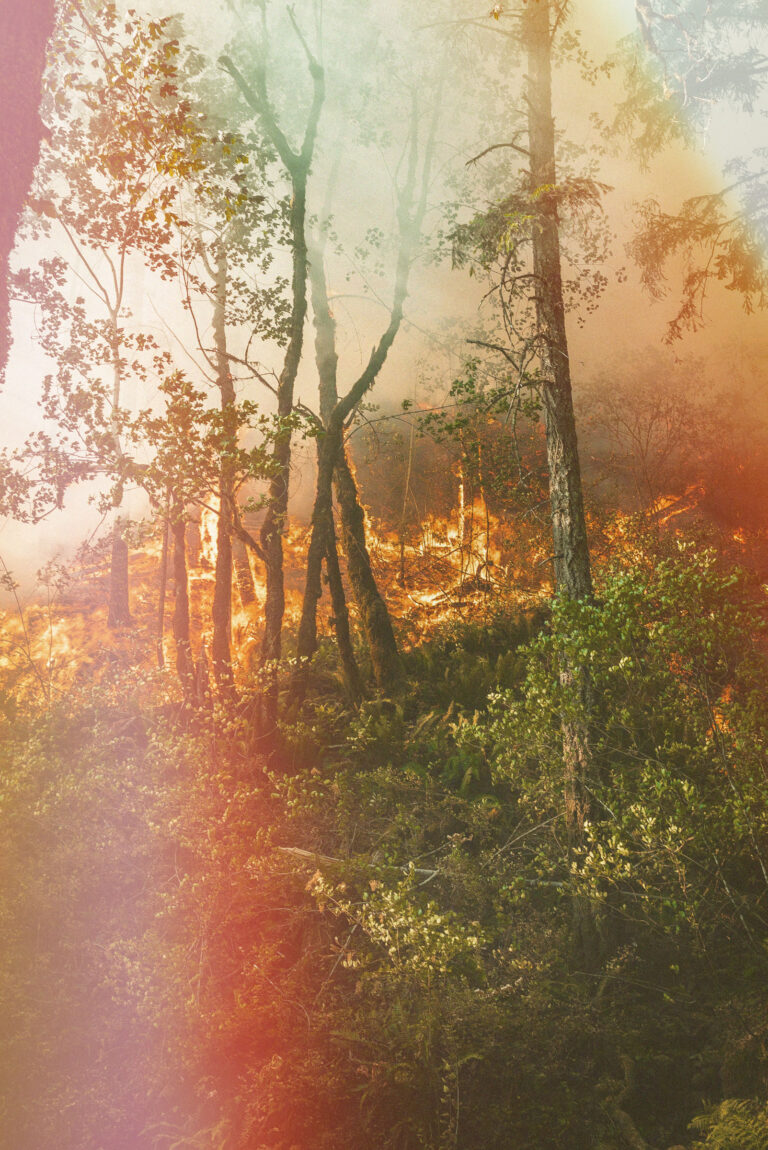
5. Update Policy to Unleash Innovative Tools for a Volatile Future
Modern rules and better data can promote adaptation
As summers grow hotter, drier, and more volatile, the tools used to manage lands and waters must adapt. The West has more than half a million miles of fencing, much of it aging barbed wire that’s rapidly becoming a liability. Wildfires can destroy thousands of miles of fenceline in a season, and where barbed wire remains standing, it can ensnare or kill deer, elk, pronghorn, and other wildlife such as raptors. And, fences are fundamentally fixed, making it costly to adapt grazing practices to changing conditions on a seasonal or annual basis. Water managers face a similar challenge: Trades and leases depend on accurate measurement of how much water is used, yet traditional methods—paper records, inconsistent metering, periodic site visits—can’t deliver the precision demanded by the next generation of conservation. Yesterday’s infrastructure can’t keep up with today’s demands.
The good news is that better tools exist. Virtual fencing uses GPS collars and digital boundaries to herd livestock with sound and mild stimulus and is replacing thousands of miles of ranches’ interior barbed-wire fencing. The system can avoid costly fence installation and maintenance, make rotation grazing seamless, and keep cattle out of fragile stream ecosystems or sensitive wildlife habitat. When it comes to measuring consumptive water use, satellite-based evapotranspiration monitoring can deliver more accurate and consistent measurements than meter readings alone. But these tools are still finding their way into mainstream management, and adoption is slowed by high upfront costs and regulatory uncertainty.
Recommendations
1. Promote adoption of virtual fencing to protect sensitive streams and adapt as fire and drought reshape landscapes.
Virtual fencing has matured rapidly over the past decade. It lets ranchers move cattle away from erosion-prone burned areas, out of drought-stressed riparian areas, and around wildlife migration corridors, all from a phone or laptop. Where fires have already destroyed fencelines, it offers an alternative to rebuilding miles of barbed wire. Policymakers can speed adoption by removing regulatory friction: clarify that virtual fencing satisfies grazing-permit fence requirements, let conservation groups pay ranchers for virtual-fence-enabled stewardship within existing permits, and allow existing range-improvement funds financed by grazing fees to cover virtual fencing infrastructure. Electronic-posting laws, like North Dakota’s, would further encourage willing landowners to replace static fences with virtual ones.
Expanded reading:
2. Improve water measurement with remote sensing to support trading, leasing, and conservation.
Water rights are denominated in terms of how much a user can divert, but trades depend on knowing how much water is actually being used because this is the quantity that can be transferred without harming third parties. In most western states, diversions are hardly measured, let alone consumptive use. Water managers still rely on outdated paper records, back-of-the-envelope calculations, and occasional manual readings. Modern tools like satellite-based evapotranspiration monitoring can measure consumptive use far more precisely. Platforms like OpenET make these measurements available to any farmer or prospective buyer, but major uncertainty remains about how regulators will treat them. States should accept high-quality remote-sensing data as the basis for water trades, leases, and environmental shepherding, and should clear regulatory pathways for private deployment of such measurement tools. Without efficient and precise methods, even the best market reforms will struggle to deliver or verify results.
Expanded reading:
This integrated approach could protect the substantial majority of unprotected late-successional and old-growth forest while managing total investment to levels more realistic than the $422 million required for fee acquisition alone. The strategy recognizes that different protection mechanisms have comparative advantages for different types of properties and conservation objectives, and that efficient resource allocation requires matching mechanisms to circumstances rather than relying exclusively on any single approach.
Conserving Maine’s oldest forests will depend on translating their public conservation value into incentives for the private landowners who steward them. In a landscape defined by private ownership and working forests, conservation must compete economically with timber harvest. An integrated strategy grounded in voluntary participation, clear property rights, and well-designed market mechanisms offers a path to do so. By combining targeted acquisition, durable easements, and incentive-based mechanisms that compensate landowners for the public benefits their forests provide, it is possible to secure meaningful protection at scale.
Conclusion
We can’t control heat, drought, or lightning. But we can control whether policy makes it easier to prevent disaster, respond intelligently, and adapt before crisis hits.
Many of the ideas in this report work by removing legal and regulatory barriers. Landowners want to use prescribed fire on their land. Farmers and tribes want to benefit from leasing water to cities or rivers in dry years. Conservation groups want to fund landowners who keep flows in streams for fish. Forest managers want to thin overgrown stands before they burn. Across the West, the willingness is there. Too often, the institutions are not.
The reforms outlined here are practical and incremental, but their cumulative effect would be substantial. Some—like reverse auctions for Colorado River conservation or virtual fencing on grazing allotments—can deliver results within a year. Others—like tribal water leasing or fixes to the legal frameworks slowing forest restoration—will take longer and require sustained political work, but would compound for decades. The building blocks—proven pilots, willing landowners, decades of research, examples that work in different states—are already in place.
What these reforms require is a willingness to update institutions for the conditions we now face. The drought is real. The fires are real. So is the system that determines how forests are managed, how water is allocated, and how people can respond to a changing climate—but much of it was built for a different era. Summers like this one make the cost of inaction harder to ignore. The reforms in this report offer a way forward, anchored in voluntary action, market incentives, and the property rights of the people who know these landscapes best.
References to PERC Research
Forests and Wildfire
Frederik Strabo and Matthew Reimer, “Beyond Wildfire Suppression: The economic case for fuel treatments on national forests,” Property and Environment Research Center (2026).
Sara Sutherland, Eric Edwards, and Frederik Strabo, “PERC Wildfire Risk Map: A new tool helps identify the most opportune places to restore western forests,” Property and Environment Research Center (2025).
Eric Edwards and Sara Sutherland, “Does Environmental Review Worsen the Wildfire Crisis?: How environmental analysis delays fuel treatment projects,” Property and Environment Research Center (2022).
Holly Fretwell and Jonathan Wood, “Fix America’s Forests: Reforms to restore national forests and tackle the wildfire crisis,” Property and Environment Research Center (2021).
Hannah Downey, “Healthy Forests Make Good Neighbors: Through Good Neighbor Authority, federal agencies are working with states and other western partners to mitigate wildfire risk,” PERC Reports 41, no. 1 (2022).
Toddy Myers, “Reclaiming the Forest: How local control is helping restore tribal forests,” PERC Reports 43, no. 2 (2024).
Hannah Downey, “Policy Change is Needed to Improve Forest Health,” prepared statement before the U.S. House Natural Resources Committee, Subcommittee on Federal Lands, April 17, 2024.
Jonathan Wood and Morgan Varner, “Burn Back Better: How western states can encourage prescribed fire on private lands,” Property and Environment Research Center (2023).
Andrew Morriss, “Fighting Fire With Finance: How risk retention groups can expand and improve prescribed burning practices,” Property and Environment Research Center (2025).
Water
Nick Hagerty and Bryan Leonard, “A Plan to Solve the Colorado River Crisis: What if farmers competed with one another to cut water consumption?” High Country News, October 19, 2022.
Amy Hardberger, “Improving Texas Water Markets: Policy reforms to encourage conservation by reducing barriers to trading water,” Property and Environment Research Center (2026).
Eric Edwards and Shawn Regan, eds., “The Future of Water Markets: Obstacles and Opportunities,” Property and Environment Research Center (2022).
Tate Watkins and Bryan Leonard, “Arizona Water Reform: Improving water allocation and enhancing water supplies,” Property and Environment Research Center and Goldwater Institute (2023).
Andrew Ayres and Daniel Bigelow, “Engaging Irrigation Districts in Water Markets: Ideas to address modern water scarcity challenges,” in The Future of Water Markets: Obstacles and Opportunities, eds. Eric Edwards and Shawn Regan, Property and Environment Research Center (2022).
Leslie Sanchez, “Addressing Institutional Barriers to Native American Water Marketing: Policy reforms can give tribes full value of their water rights,” in The Future of Water Markets: Obstacles and Opportunities, eds. Eric Edwards and Shawn Regan, Property and Environment Research Center (2022).
Leslie Sanchez, “How Federal Laws Undermine Native American Water Rights: Tribes could help bridge gaps between water supply and demand—if it weren’t for federal restrictions,” PERC Reports 41, no. 2 (2022).
Katherine Wright, Travis Brammer, and Shawn Regan, “Groundwater Conservation Easements: Evaluating an innovative new tool for aquifer sustainability,” Property and Environment Research Center (2024).
Tim Hawkes, “Trout Water: The legislative quest to reform Utah water law and allow conservationists to protect fish and wildlife habitat,” PERC Reports 41, no. 2 (2022).
Reed Watson, “Scott River Water Trust: Improving stream flows the easy way,” Property and Environment Research Center (2014).
Sarah Null, “Water Banking Can Help Great Salt Lake: Utah’s Water Banking Act offers a mechanism to allocate water to a drying Great Salt Lake,” in The Future of Water Markets: Obstacles and Opportunities, eds. Eric Edwards and Shawn Regan, Property and Environment Research Center (2022).
Katherine Wright, “Utah’s Moonshot: How voluntary water leasing can help restore the Great Salt Lake,” Property and Environment Research Center (2025).
Technology
Sophie Gilbert, “Virtual Fencing for Conservation: A roadmap for making rangelands work better for livestock and wildlife,” Property and Environment Research Center (2026).