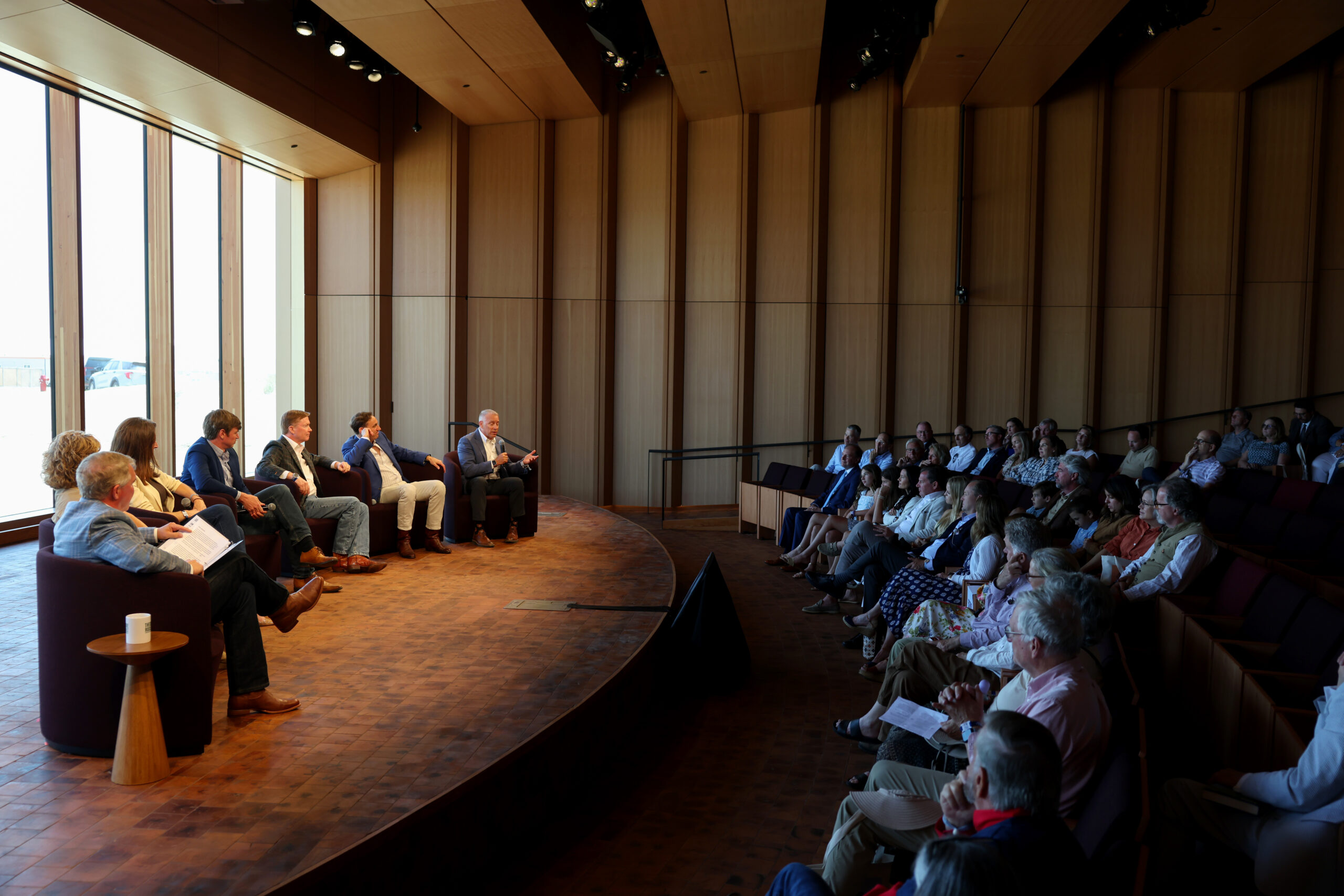
PERC CEO Brian Yablonski moderates the marquee conservation panel at the Grand Opening of the Theodore Roosevelt Presidential Library in Medora, North Dakota
As America celebrated its 250th birthday, the nation gained a landmark worthy of the moment: the Theodore Roosevelt Presidential Library, opened this July in Medora, North Dakota, in the heart of the Badlands where Roosevelt ranched, wrote, and formed the ideas that would reshape American conservation.
PERC was honored to play a central role in the grand opening festivities. PERC CEO Brian Yablonski was invited to moderate the conservation panel of the celebration, a conversation featuring the CEOs of America’s leading conservation organizations, the Deputy Secretary of the Interior, and a great-great grandson of Theodore Roosevelt himself.
For an organization dedicated to shaping the next era of American conservation, there could be no more fitting stage. After all, Roosevelt is known as “the conservation president.” He set aside 234 million acres for conservation—more than one-third of all federal land that exists today—and turned a personal passion into a national birthright.
A Library Worthy of the Conservation President
Rising from the Badlands landscape where Roosevelt once ran cattle, the new facility is unlike any presidential library in America. Its architecture blends into the terrain of what Roosevelt called the cradle of his conservation ethic. Its exhibits are immersive and participatory—as National Wildlife Federation CEO Collin O’Mara put it during the panel, the place is “a cathedral to conservation.”
The grand opening drew a remarkable gathering: a visit from President Donald Trump, presidential historian Doris Kearns Goodwin, descendants of the Roosevelt family, and conservation leaders from across the country, all assembled to mark the opening of the library and the semiquincentennial of the nation Roosevelt served.
From the Cradle of Conservation to the Next Era
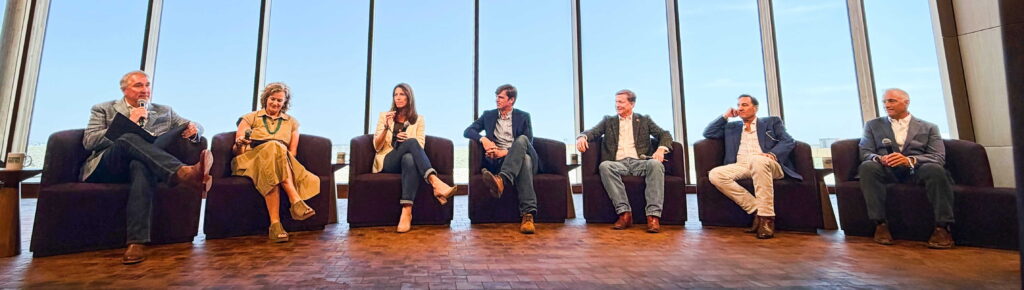
From left to right: Brian Yablonski, Carrie Besnette Hauser, Kate MacGregor, Collin O’Mara, Adam Putnam, Simon Roosevelt, and Jeff Trandahl
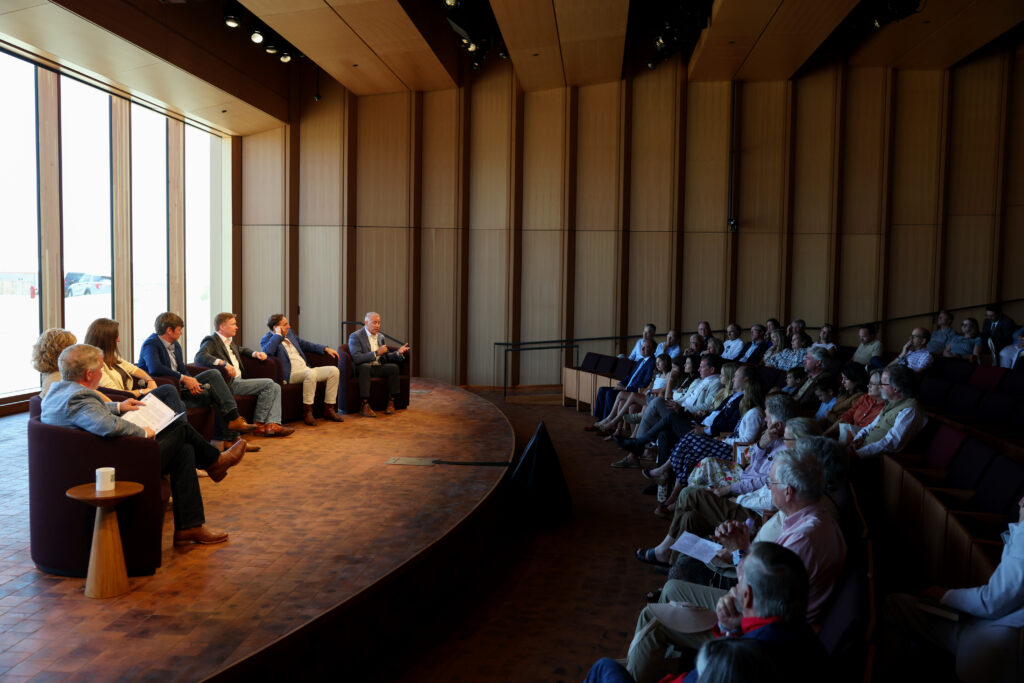
The panel, titled “From the Cradle of Conservation to The Next Era,” was set against the dramatic backdrop of Roosevelt’s Badlands in the library’s auditorium. Its origins trace back to a PERC gathering a year earlier: the “Next Era of Conservation” dialogue PERC convened at the historic Murie Ranch in Grand Teton National Park, where many of these same leaders first imagined what the decades ahead might demand.
The panelists represented the breadth of American conservation leadership:
- Adam Putnam, CEO of Ducks Unlimited, the world’s leading wetlands and waterfowl conservation organization
- Collin O’Mara, CEO of the National Wildlife Federation, America’s largest conservation organization
- Carrie Besnette Hauser, CEO of the Trust for Public Land, a champion for public lands and connecting everyone to the outdoors
- Jeff Trandahl, CEO of the National Fish and Wildlife Foundation, the nation’s largest conservation grantmaking organization
- Kate MacGregor, deputy secretary of the U.S. Department of the Interior
- Simon Roosevelt, executive vice president for conservation at Boone and Crockett Club and great, great grandson of Theodore Roosevelt
The stakes were made plain just before the panelists took the stage. Interior Secretary Doug Burgum, who championed the library’s creation during his time as governor of North Dakota, pulled the group aside to tell them this was the panel he was most looking forward to during the entire grand opening. He asked who the moderator was, looked Yablonski in the eye, and said, “No pressure.”
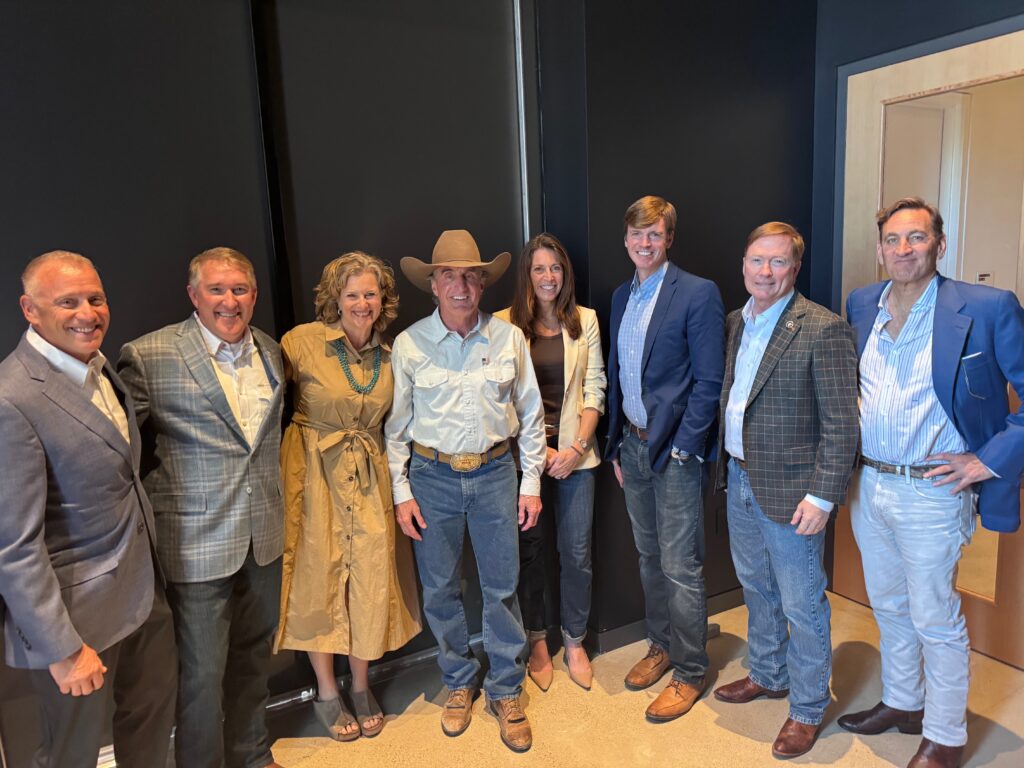
From left to right: Jeff Trandahl, Brian Yablonski, Carrie Besnette Hauser, Secretary Doug Burgum, Kate MacGregor, Collin O’Mara, Adam Putnam, and Simon Roosevelt
“Theodore Roosevelt Is Everything”
Yablonski opened the panel with the words of historian Douglas Brinkley: “Theodore Roosevelt is everything.” Without Roosevelt, American conservation as we know it does not happen. Roosevelt was innovative and fearless in his commitment to addressing the biggest conservation challenges of the day. At 29, years before his presidency, he co-founded the Boone and Crockett Club, the nation’s first wildlife conservation organization. As president, he created 50 wildlife refuges, 18 national monuments including the Grand Canyon, five national parks, and 150 national forests.
The most vivid example came from a five-acre teardrop of land off the Florida coast. In 1903, when the brown pelicans of Pelican Island were under siege by feather hunters, Roosevelt asked whether any law prevented him from declaring it a federal bird reservation. Told no, he replied: “Very well then, I so declare it.” That single declaration created America’s first national wildlife refuge—and launched a Roosevelt era of conservation that would endure for 50 years.
Yablonski traced the arc from that first era through the regulatory era sparked by Rachel Carson’s Silent Spring, to the present moment: a third era of conservation, still to be named and still to be defined, with new challenges like private land stewardship, better public land management, and wildlife corridors demanding new tools and new approaches.
“We don’t just want to look back at the conservation legacy of Theodore Roosevelt,” Yablonski told the audience. “We want Theodore Roosevelt to pull us into the next era of conservation.”
Charting What Comes Next
The conversation that followed ranged across the full landscape of American conservation. Simon Roosevelt reflected on his great-great grandfather’s insight that public lands, working lands, and wildlife must be managed together, and warned that binary, either-or decision making is what most needs repair today. Hauser pointed to the 100 million Americans, including 28 million children, who lack easy access to the outdoors. MacGregor emphasized that people are part of the conservation solution, citing the bipartisan reauthorization of the Great American Outdoors Act.
Putnam made the case that defines much of PERC’s own work: with more than 70 percent of wetlands and endangered species habitat on private and tribal lands, farmers and ranchers must be at the center of the next era’s success. “Conservation without capitalism doesn’t get very far,” he said. Trandahl and O’Mara both returned to the challenge of connecting a screen-bound generation to the outdoors—”the greatest antidote to the algorithm,” as O’Mara put it.
Yablonski closed by asking each panelist for the one conservation outcome they hoped would be secured by the library’s centennial in 2126. Their answers—recovered wildlife, thriving working lands, a 10-minute walk to nature for every American child—sketched the ambitions of the era now taking shape.
Brian also left the audience with an observation drawn from history: in every era of American conservation, organizations like those on stage have been the drivers. The Boone and Crockett Club and Audubon powered the Preservation era birthed by Roosevelt. The Environmental Defense Fund and NRDC powered the regulatory era. The leaders gathered in Medora, he noted, are the ones who will carry conservation into the next 50 years.
It was a fitting charge in a place built to honor the president who declared that credit belongs to the man in the arena—the one who strives, who dares greatly. More than a century later, in the Badlands where Roosevelt’s conservation ethic was born, the arena was full.
The Theodore Roosevelt Presidential Library is now open in Medora, North Dakota.