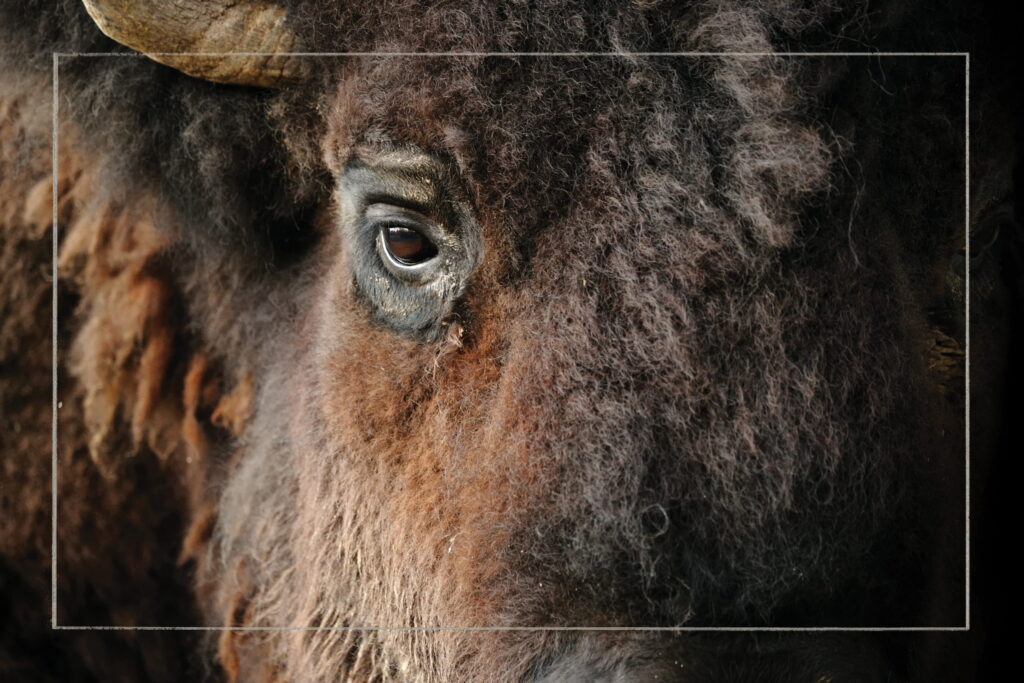
On May 9, 2016, the United States adopted the bison as the national mammal. Elevating the animal to such a position of esteem was a far cry from the late 19th century, when the skulls of millions of slaughtered buffalo were piled into mounds and their carcasses left to rot on the plains. Legislators could have chosen a simpler emblem of national virtue, wild grandeur, or patriotic pride. But the bison is a fitting symbol precisely because it embodies America’s full, complicated conservation inheritance and its future promise.
The American bison represents abundance: tens of millions of animals shaping grasslands across the continent for millennia. It also represents destruction and dispossession: the deliberate slaughter of herds as settlers and the federal government remade the West and forced Native Americans onto ever-shrinking reservations, severing them from a species that long sustained material and spiritual life. It represents resilience: scattered herds persisting in the face of poaching, bad winters, new diseases, cross-breeding, and lost habitat. And it represents recovery—if imperfect and unfinished—made possible by many hands.
The National Bison Legacy Act didn’t shy away from this complexity, but rather highlighted it. The 23 “findings” in the legislation pointed to the bison’s cultural, historical, ecological, and economic importance, its near extinction, and the broad coalition that ultimately prevented the disappearance of the species. For Jason Baldes, vice president of the InterTribal Buffalo Council, which co-led advocacy for the bill with the Wildlife Conservation Society and the National Bison Association, “The story of what happened to the buffalo is not just a Native American story,” he says, “but an American story that a lot of people don’t know about.”
It’s going to take the whole American public to keep telling that story, he adds. The animal that once stood at the heart of Native life on the plains, then in the crosshairs of America’s violent westward expansion, now stands for a different possibility: that a nation capable of destruction can instead choose to heal.
A Continent of Buffalo
The ancestors of today’s bison roamed alongside famed Pleistocene megafauna, but when giant ground sloths and wooly mammoths died out around 12,000 years ago, a smaller version of the epoch’s bison persisted. With little competition for grazing, the population grew into the tens of millions, and its range expanded across two-thirds of the continent, becoming an ecological keystone. Their grazing, defecation, movement, and wallowing influenced fire regimes, aerated and fertilized the soil, dispersed seeds, and created a mosaic of habitat and resources for other grassland species.
The bison were also a cultural keystone. “Indigenous people were highly diverse because the people developed intricate relationships with the resources that were in their regions, like the Plains Indian people and the buffalo,” says Baldes, who is also executive director of the Wind River Tribal Buffalo Initiative. Under his leadership, the initiative works to restore buffalo on the Wind River Indian Reservation, south of Yellowstone, through land rematriation, community revitalization, and youth education. “There was an intrinsic value to the plant and animal biodiversity that the people relied upon and stewarded and cherished and revered,” he continues. “And that relationship had gone on for millennia.”
But then came Europeans with new technologies—and a new land ethic. Under Manifest Destiny, white settlers claimed they had the right, even the obligation, to “civilize” the West. In the space of decades, the relationship between buffalo and Indigenous peoples was severed as the herds themselves were destroyed by settlers, the U.S. Army, and hide-hunters. From tens of millions, only an estimated 85 wild bison existed in U.S. territory outside of Yellowstone National Park by the time early bison advocate William Hornaday published The Extermination of the American Bison in 1889.
Theodore Roosevelt, later a great champion of the buffalo, offered one account of the reasons for this precipitous decline in his 1885 Hunting Trips of a Ranchman:
Its destruction was the condition precedent upon the advance of white civilization in the West. … Where the buffalo were plenty, they ate up all the grass that could have supported cattle. … Above all, the extermination of the buffalo was the only way of solving the Indian question … its disappearance was the only method of forcing them to at least partially abandon their savage mode of life.
From that nadir, buffalo could have slipped into extinction, but a fragile coalition emerged to preserve the last of the species. Their attempts to rescue the bison became one of the earliest tests of whether Americans could save something they had nearly destroyed.
Saved by Many Hands
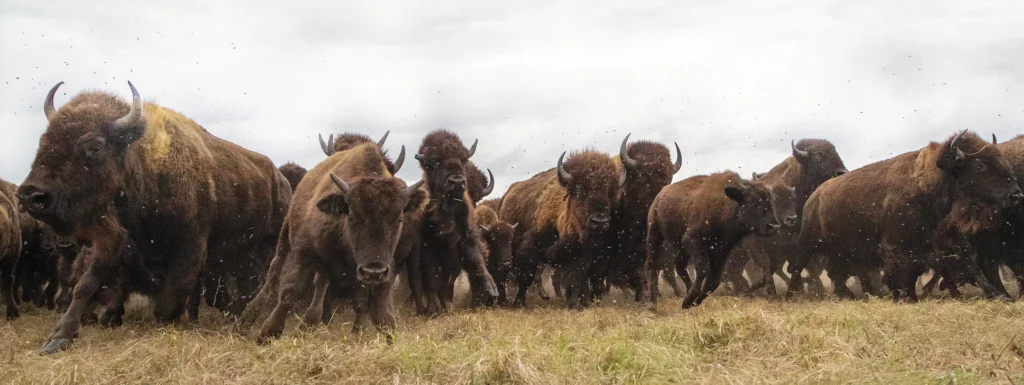
The rescue of the bison did not begin with a centralized recovery plan. It began with five scattered private herds that conserved enough animals to make restoration possible, followed by grassroots support for protection of the relict wild herd in Yellowstone National Park and restoration of wild herds elsewhere.
The private herds were established independently in the late 1800s by a variety of people—several of whom were Native American or had Indigenous ancestry—who had roped wild buffalo calves to raise in captivity. Over the years, their herds grew, got divided amongst heirs, and were sold, mostly to wealthy ranchers and businessmen: bankers, railroad barons, oilmen, and other tycoons. Some of them made it to the New York Zoological Park, now the Bronx Zoo, founded by Roosevelt and directed by Hornaday. When the Yellowstone population dipped to a perilous low of perhaps two dozen individuals around 1902, the park bolstered it with 21 bison from a mix of private collections.
Without those herds, there would have been little left for public agencies or conservation organizations to restore. Nearly all of the buffalo in America today are descended from the couple dozen in Yellowstone and the fewer than 100 that started the private herds. Although no one knew at the time, the plurality of these small herds was a saving grace for the species, providing a surprising amount of genetic diversity to what was a dangerously small founding population. A decentralized patchwork of owners accomplished what no single agency at the time could have.
A decentralized patchwork of owners accomplished what no single agency at the time could have.
And yet, concern remained that private herds were vulnerable, and so Hornaday, Roosevelt, and several others founded the American Bison Society to raise public awareness and advocate for establishing new herds on federal lands. In 1907, years of stewardship, advocacy, and coalition-building paid off when 15 animals from the Bronx Zoo were shipped to the Wichita Mountains Wildlife Refuge, marking the first wildlife reintroduction in North America.
“This is an example of what you can do when you bring these disparate groups together,” says John Calvelli, executive vice president of public affairs at the Wildlife Conservation Society, formerly the New York Zoological Society. He adds that even American Express and Wells Fargo donated trains to ship the bison from the Bronx to Oklahoma.
Not long after, more federal herds were established, including at the National Bison Range, carved from the Flathead Reservation in Montana in 1908. The herds grew steadily in their new preserves, and in 1935 the American Bison Society voted itself out of existence, declaring the species saved and its work done. Calvelli, who directed the bison-as-national-mammal campaign, says bringing bison back from the brink of extinction “set an amazing precedent that yes, we have done damage, but also that we can correct that damage.”
Even so, bison herds remained small, mostly fenced in, and heavily managed, with bison themselves legally classified as livestock, not wildlife. In addition, Native Americans remained severed from the buffalo, even while the animals were restored to lands taken from reservations. As Baldes says, “Every promise or treaty ever made was broken or violated in some form or fashion, and we’re still working to heal.” The buffalo are foundational to that.
Rescue to Restoration
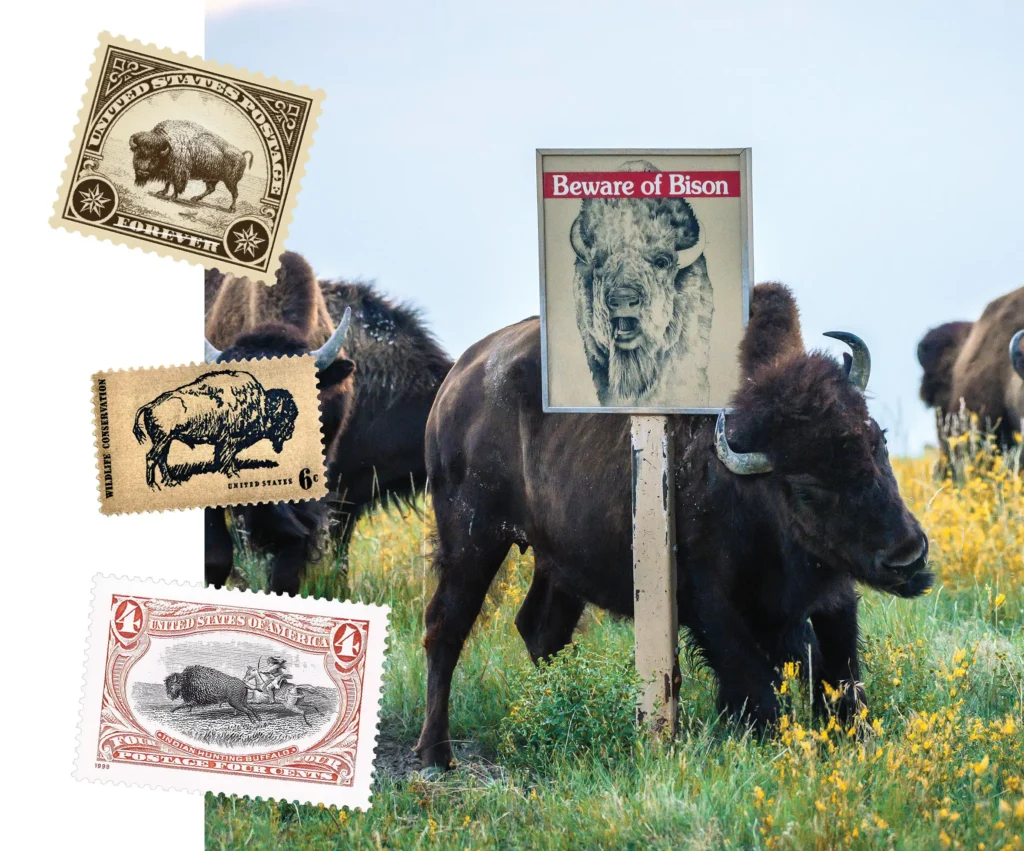
A conservation system built to rescue is not always equipped to support abundance. But in the second half of the 20th century, as the science of ecology matured, environmentalism took off, and tribal sovereignty movements gained power, a new coalition started growing. Not satisfied with herds merely existing, they began to define and work toward functional restoration: ecologically and culturally.
The Crow tribe was the first to welcome buffalo back to their reservation, initially in the 1930s and then again in 1972. The InterTribal Buffalo Council formed in 1992 to coordinate and support buffalo restoration, and today it has more than 80 member tribes managing 20,000 buffalo on one million acres. In 2022, the Confederated Salish and Kootenai Tribes closed the circle by reclaiming management of the Bison Range from the federal government. On Wind River, Baldes welcomed the first 10 buffalo to the reservation the same year the National Bison Legacy Act passed. The herd, which is managed as wildlife and has grown to more than 200, is nourishing his community, revitalizing culture, and restoring the ecosystem.
In Yellowstone, bison number in the thousands after managers in the 1960s stopped limiting the population to a few hundred. In response to concern and litigation around potential disease risk to cows, the federal government developed the Interagency Bison Management Plan in 2000, which has successfully prevented any documented brucellosis transmission from buffalo to cattle. Federal, state, and tribal partners also developed the Bison Conservation Transfer Program to send certified disease-free Yellowstone bison to tribal lands across North America.
State and private herds have also grown dramatically. The Nature Conservancy manages 6,600 bison on 11 preserves. American Prairie hosts around 900 head across a mix of private and public land in Montana. And commercial U.S. herds, sustained by a growing market for bison meat, have ballooned to nearly 200,000 animals.
Together, these nations, organizations, states, agencies, and individuals are beginning to coordinate research and management across the metapopulation of bison in North America. Many of them also came together in the push to designate bison as the national mammal. On the power of the buffalo to unite so many disparate groups, Baldes says that “people are looking for ways to better understand what it means to be a part of a system, not above it, or in control of it. So I think buffalo restoration gets to something special in our psyche and in our soul.”
From astonishing abundance through catastrophic destruction, in a saga marked by private initiative, tribal leadership, public action, and unfinished restoration, a shared vision is emerging of great herds of bison roaming freely across the plains. It’s ambitious, Baldes admits, but possible if we choose to work toward it together. “Things can heal themselves if we let them,” he says, “and that’s what happened when we put buffalo back.”