The King’s Game
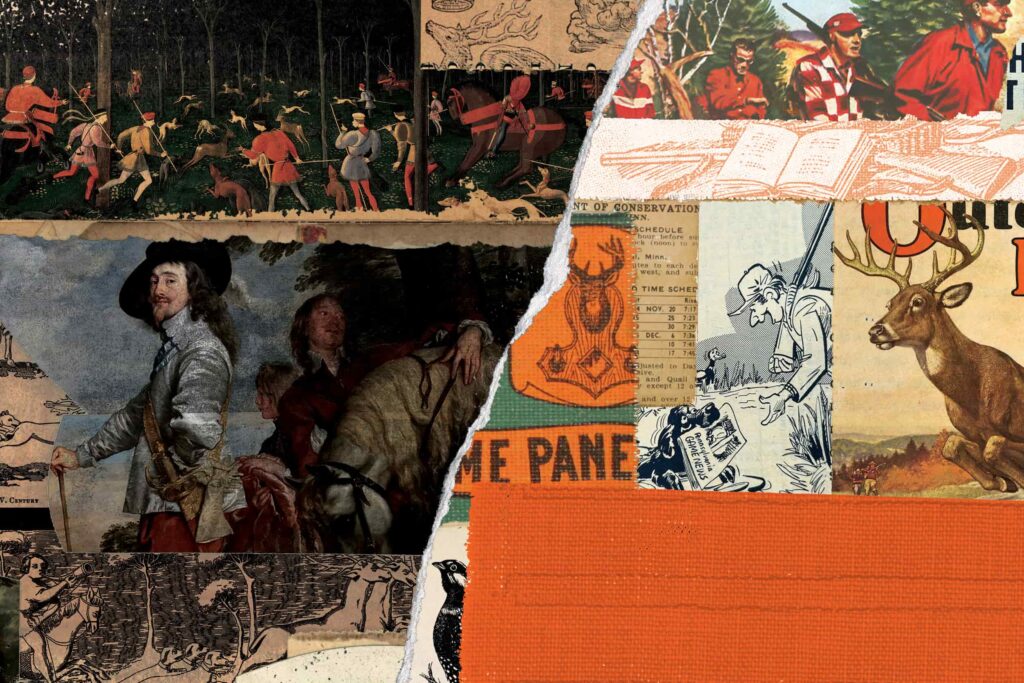
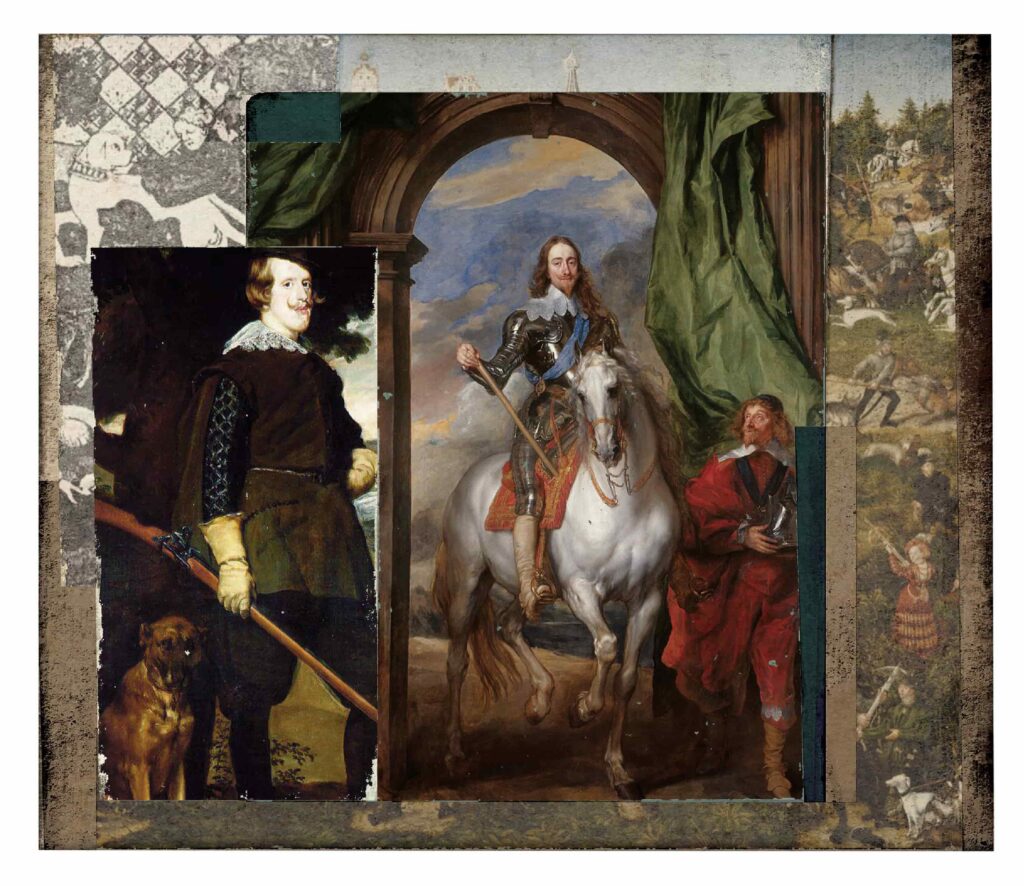
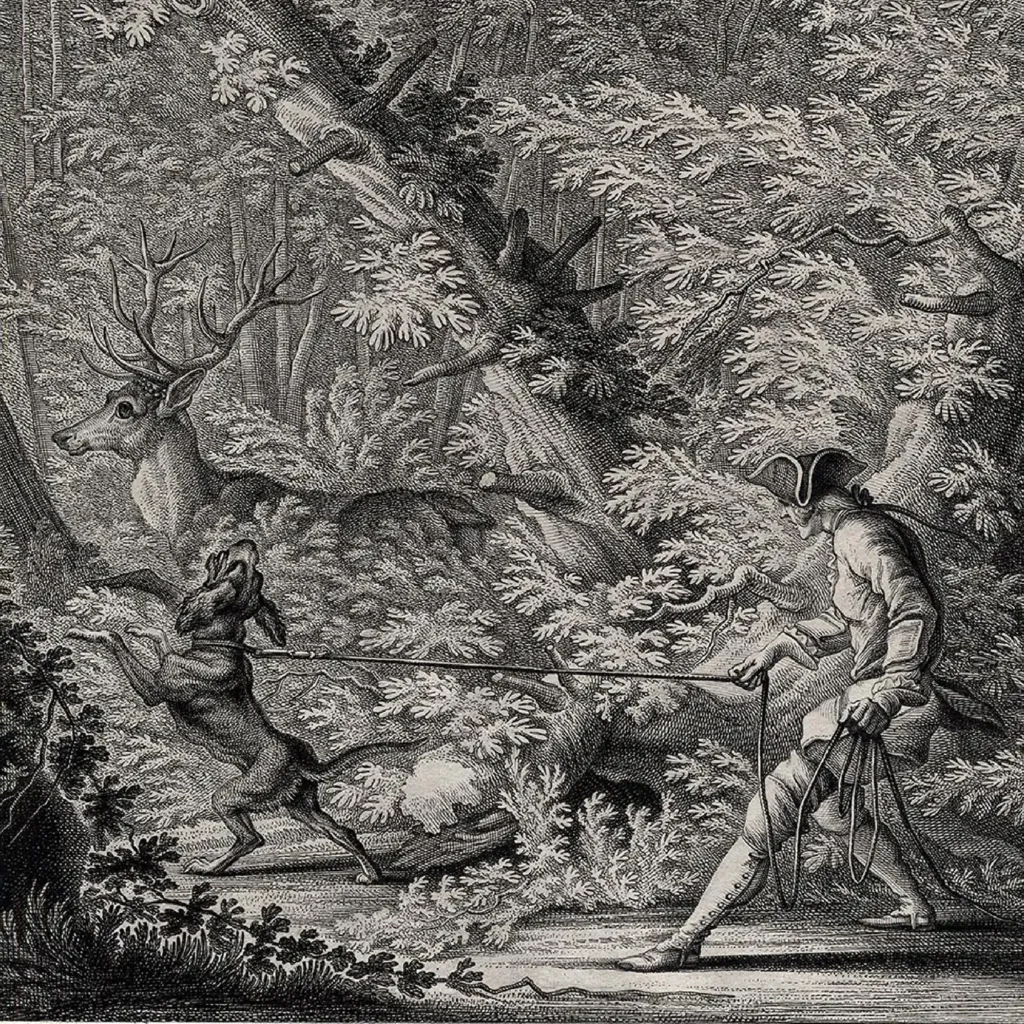
From the Early Medieval Era through the 1700s, England enacted and enforced laws to reserve the privilege of property and access to fish and game for the ruling classes. “Royal” species like deer, falcons, salmon, and others deemed to have commercial and sport value, were reserved for the exclusive use of royalty and their courts. Large areas of land were proclaimed royal forests and set apart for the Crown’s exclusive use, and gamekeepers were employed to keep commoners out.
Through the Middle Ages, the Black Death, and into the Renaissance, economic hardship and social inequality drove many of the Crown’s subjects to poach game from wealthy landowners’ forests, fields, and streams, often leading to violent conflicts. In response, Parliament passed the Black Act in 1723. Aimed at “wicked and evil-disposed men going armed in disguise” with blackened faces to poach deer, steal fish, and the like, offenders could be fined, deported to America, or sentenced to death.
As influence and law-making increasingly transitioned from the Crown to Parliament, the status quo remained largely unchanged. Parliament continued to enact laws, such as “qualification statutes,” to restrict the taking of game to those who held the requisite level of wealth and land.
Wildlife for the People
The American Colonies of the 17th and 18th centuries lay far beyond the control of European aristocracy. Having come from lands where ordinary people were routinely arrested for attempting to feed their family with a salmon from a nearby stream, they were now in a country with a seemingly inexhaustible supply of fish, wildlife, timber, and other natural resources. They depended on those resources for food, clothing, shelter, and trade.
It was a widely held tenet in Colonial America that citizens were free to take fish and game on all unenclosed lands—ones not sealed by fence or wall—within their colony, even if the land was privately owned. The 1683 Frame of Government of Pennsylvania, for example, set forth the right of its citizens “to fowl and hunt upon the land they hold, and all other lands therein not enclosed.”
From the very outset of European colonization, heavy hunting pressure was placed on species such as white-tailed deer, turkey, and game birds for their meat. Resident wildlife became scarcer and scarcer, prompting the first attempts at game laws. In 1646, the town of Portsmouth, Rhode Island, ordered a closed season and decreed that “if any shall shoot a deere within that time he shall forfeit five pounds.” By the 1770s, 12 colonies had enacted game laws, including seasons, bag limits, and special restrictions such as no night hunting, or no hunting on Sundays, which served the pursuits of both conservation and religion.
Abundance Meets Its Limits
The Revolutionary War forged 13 loosely allied colonies into a young nation on wobbly legs. By the conclusion of the War of 1812, Great Britain, France and Spain no longer contested U.S. authority on the North American continent, and the newly minted country spread outward. In this newly found freedom, wildlife took a beating. Once-abundant populations of deer, turkey, beaver, otter, trout, and salmon disappeared from forests and rivers near towns and settlements. The heath hen, passenger pigeon, and Carolina parakeet declined steadily in the face of hunting and habitat loss—each would be functionally extinct by 1900.
The observations of Englishman John Woods on hunting in southeastern Illinois around 1820 are telling: “The time of sporting lasts from the 1st of January to the last day of December,” he wrote, “as every person has a right of sporting, on all unenclosed land, for all sorts of wild animals and game, without any license or qualifications as to property. … If you [suggest constraint] they lose all patience, and declare, they would not submit to be so imposed on.”
In the United States of America of the early 1800s, any suggestion of restricting free access to the seemingly endless bounty of fish and game smacked of tyranny. Even as the colonies and early state governments attempted to enact game laws, they often lacked the resources to enforce them. In 1739, absent funding to enforce its deer season law, Massachusetts attempted a self-funded approach, instructing each town to appoint a “deer reeve”—America’s first game wardens. Reeves received half of the 10-pound fine for any conviction they secured. Similar positions were subsequently authorized in Rhode Island, Connecticut, New York, and North Carolina.
While the gamekeepers of 16th century England protected wildlife for the exclusive use of English nobility, deer reeves, and, later, wardens, acted on behalf of a civil government to protect deer to ensure their continued harvest by the public. These early, scattered efforts at conservation marked a nascent movement to conserve fish and game that would continue to expand throughout the 19th century. The tip of the spear would be the sportsman.
Sportsmen Take the Lead
As deer and turkey disappeared from the forests and trout and shad from the rivers, hunters and anglers became increasingly alarmed. “Who hears the fishes when they cry?” Henry David Thoreau lamented in 1849, as he watched spawning attempts of salmon and shad blocked by dams on the Merrimack and Concord Rivers.
Frightened by the decline of fish and game populations, sportsmen pressed for protective action in the form of bag limits and seasons. But such efforts faced a wall of hostility from the general populace, who opposed any kind of game laws or infringements on their individual rights. Citizens maintained a deep distrust of anything that smacked of the tyranny of English game laws, privileges of the aristocracy, and oppression of the “lesser born.”
A “sportsman” of the 18th and 19th centuries would be defined as an individual who hunts, shoots, and fishes wild game as a pastime. By the start of the 1860s, sportsmen were “easily the largest, most influential, and best-organized segment of the nation to be concerned about nonutilitarian environmental issues,” according to historian John Reiger in his American Sportsmen and the Origins of Conservation. “They began to think in more expansive terms … concerns increased for fishes and nongame, as well as for game birds and mammals, and the realization started to take hold that the preservation of habitat was more important than saving individual animals.”
In 1844, a group of influential New Yorkers formed the New York Sportsmen’s Club with its goal “confined solely to the protection and preservation of game” and with “every dollar of its funds appropriated solely for those purposes.” In 1887, a group of concerned hunters established the Boone and Crockett Club, the longest-tenured conservation organization in North America, “to promote the conservation and management of wildlife, especially big game, and its habitat, to preserve and encourage hunting and to maintain the highest ethical standards of fair chase and sportsmanship” on the continent.
These “gentlemen sportsmen” had nothing in common with the “market” (commercial) or “pot” (meat) hunters whom they condemned for their wanton waste and avarice. As Reiger documented, the sportsman extolled the aesthetic of hunting and fishing and the belief that the concepts and practices already developed in Europe, especially Great Britain, needed to be adopted in America if fish and wildlife were to be conserved. In retrospect, this cohort of sportsmen certainly smacked of European nobility, entitled and elitist. Regardless, these upper-class sportsmen were the force that pressed for fish and wildlife conservation, as they did for progressive social reforms such as women’s suffrage, under the concept of noblesse oblige, which inferred the responsibility of the privileged to act with generosity toward those less fortunate.
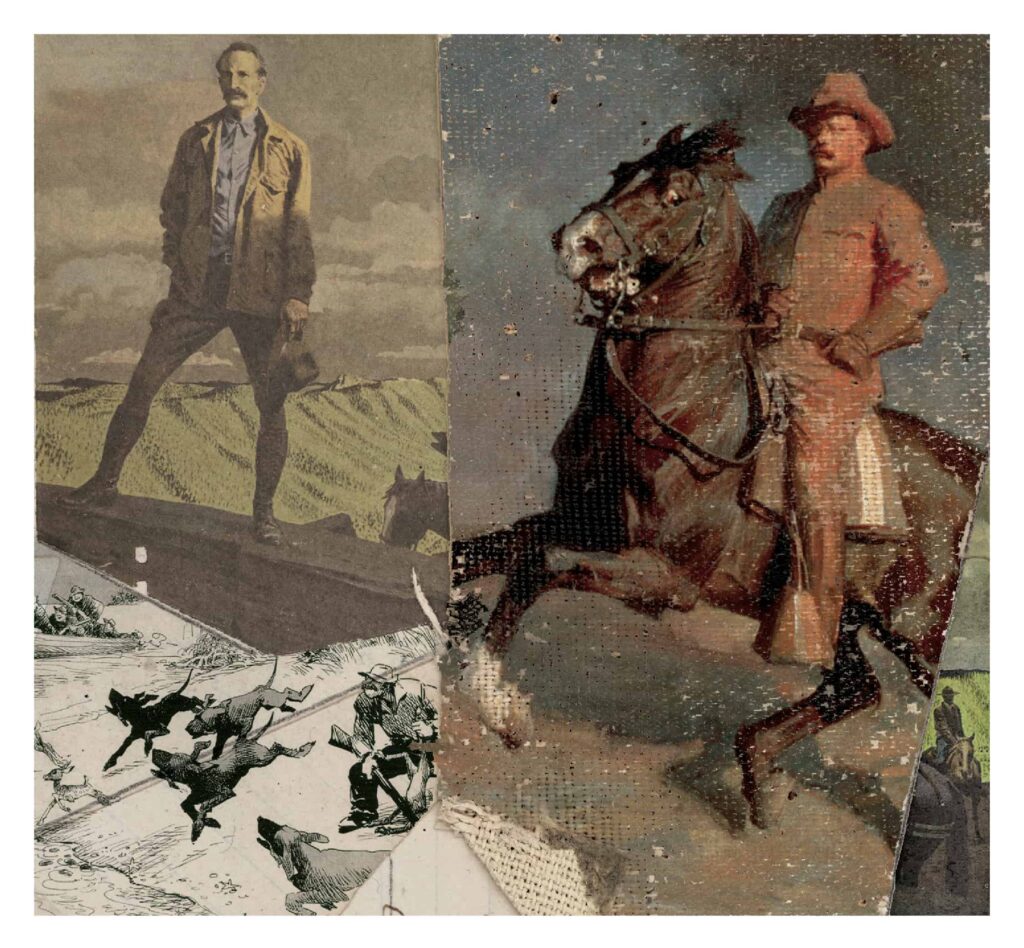
While Theodore Roosevelt, Gifford Pinchot, and a core of other well-known individuals commonly receive conservation accolades, their efforts were firmly built on a foundation laid down by the sportsmen, and increasingly over time, women, who came before and with them. From the 1870s on, sportsmen and women worked to enact and enforce new game laws, restrict commercial hunting and fishing, adopt national fish culture programs—that included efforts to reduce water pollution—and establish game preserves.
Echoing prior colonial eras when wildlife “took a beating,” the late 1800s into the 1900s were marked by the overexploitation of what once seemed an endless bounty of fish and game, as well as the unfettered harvest of other natural resources. Fueled by Manifest Destiny, industrial growth, and the near absence of regulation, the resulting damage to forests, rangelands, and water resources taught hard lessons of the “tragedy of the commons,” whereby individual self-interest trumped concern for the conservation and wise management of nature.
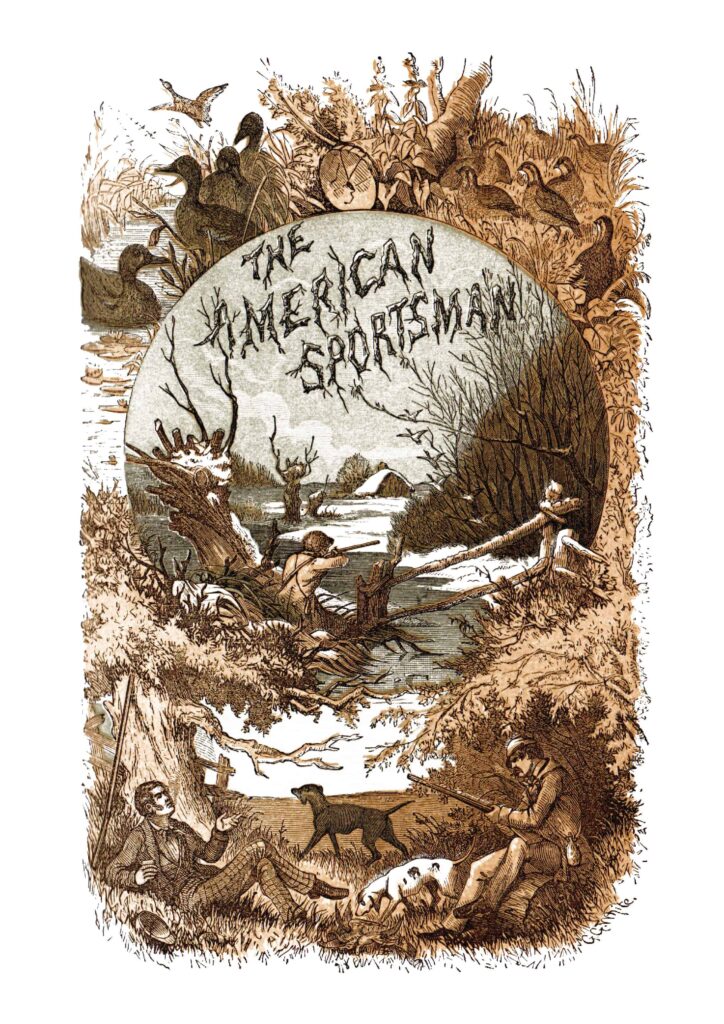
Nevertheless, sportsmen’s organizations continued to exert pressure to enforce limits. Publications such as The American Sportsman (1871) and Forest and Stream (1873) were established to amplify the reach and impact of their conservation message, railing against market gunners and net fishermen while espousing the ethics and responsibilities of sportsmanship.
While initially focused on limits to harvest, increasingly there was also an understanding that the loss of habitat also meant the loss of places to hunt. Sportsmen, therefore, reasoned that two types of selected areas should be set aside: ones to provide refuges for wildlife and others as places to hunt. “Public shooting grounds must be established for the rank and file of the gunners who cannot afford to belong to exclusive clubs,” wrote President of the American Game Protection Association John Burnham in 1919. “This is the duty of the State, but the sportsmen must take the initiative. With the public shooting grounds must come more reserves where the birds should have absolute protection, for as the country becomes more settled, shooting would become impossible without them.”
By 1850, wildlife protection legislation of some sort was found in 19 of the 30 existing states. In 1866, Massachusetts and New Hampshire established the first agencies to manage fisheries, and “game” would be added in subsequent years. By 1880, fish and game legislation of some fashion had been enacted in all 48 states, including prohibitions on waste of game (Wyoming, 1871), hide hunting (Oregon, 1874), and market hunting (Arkansas, 1875). Other regulatory innovations included bag limits on game birds (Iowa, 1878) and mandated rest days for wildfowl (Maryland, 1872).
Seeking funds to pay for management, New York was the first state to require hunters to purchase a license, in 1864, while neighboring New Jersey was the first to institute specific licenses for nonresidents—who paid higher fees—in 1873. By 1920, most states had adopted laws requiring all hunters to buy state licenses with funds earmarked for their fish and game agencies. In many cases, these funds were the sole revenue source to carry out fish and wildlife management activities.
The Conservation Bargain
In 1928, Aldo Leopold and a distinguished committee of conservationists were asked by the American Game Institute (today’s Wildlife Management Institute) to draft a policy for game management. In the midst of a growing depression and mass unemployment, the resulting 1930 American Game Policy presented seven fundamental actions. They included extending public ownership and management of game lands as far and fast as land prices and available funds permit, recognizing the landowner as the custodian of public game on private lands, finding facts and experimenting, and recognizing that all citizens share the responsibility for conservation of wildlife as a whole. While all seven recommendations carry down through time, nearly a century later, the last deserves special attention: “Provide funds. Insist on public funds from general taxation for all betterments serving wildlife as a whole. Let sportsmen pay for all betterments serving game alone. Seek private funds to help carry the cost of education and research.”
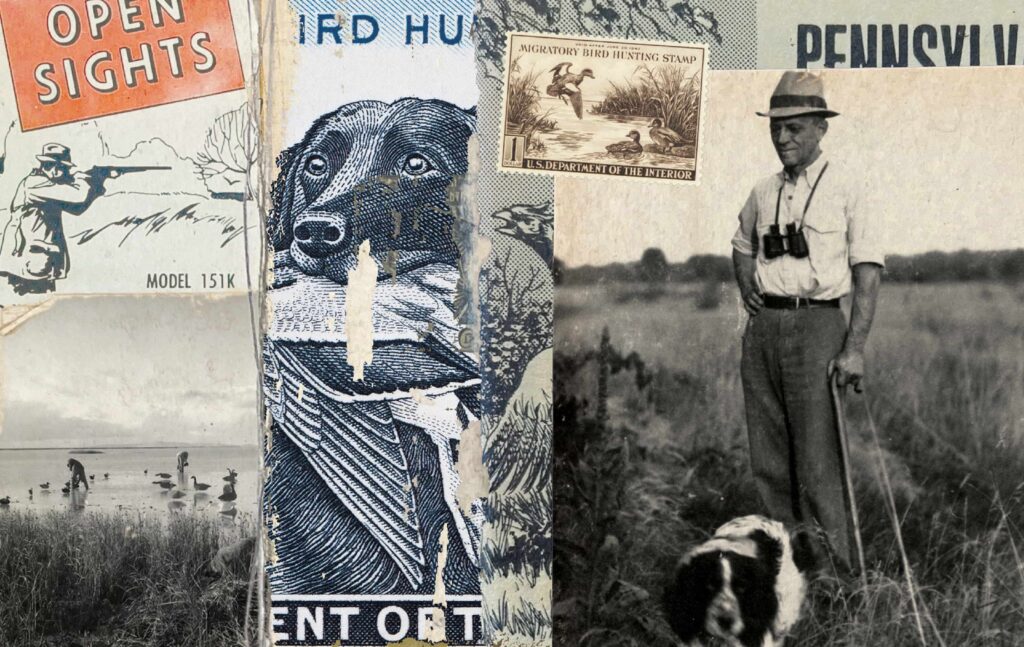
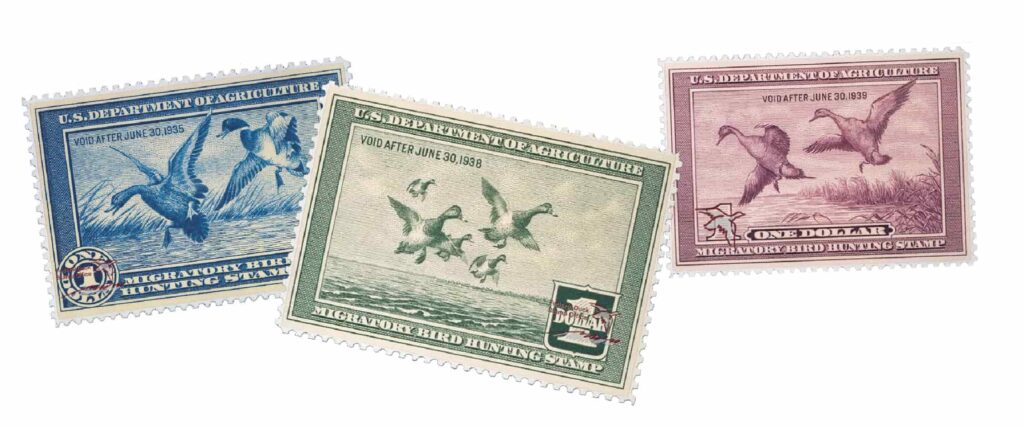
Hunters and anglers were already supporting state management of wildlife through purchases of licenses and tags. They also stood up to support additional measures. In 1934, President Franklin Roosevelt signed the Migratory Bird Hunting Stamp Act. Under the act, waterfowl hunters aged 16 and older are required to buy and carry an annual Migratory Bird Hunting and Conservation Stamp, better known as simply a “Duck Stamp.” From the total purchase price—$1 in 1934, $25 in 2026—98 percent of proceeds are allocated directly to waterfowl and wetland habitat conservation. Since its enactment, over $1.2 billion has been used to acquire land or conservation easements on more than six million acres of wetlands and wildlife habitat for inclusion in the National Wildlife Refuge System—an area larger than the State of New Jersey.
In 1937, the concept of “user pays, user benefits” took another significant step forward with the passage of the Federal Aid in Wildlife Restoration Act, commonly known as the Pittman-Robertson Act for its primary congressional sponsors—Senator Key Pittman of Nevada and Representative Willis Robertson of Virginia. This first-of-its-kind legislation provided permanent funding to state wildlife agencies for habitat restoration, management, research, education, and the development of public access areas. Funded by federal excise taxes on firearms, ammunition, and, later, archery equipment, revenues are apportioned to the states on the basis of land area and number of licensed hunters, with the stipulation that states match federal funding of project costs at a ratio of one to three. Fish got their due in 1950, when President Harry Truman signed the Federal Aid in Sport Fish Restoration Act into law.
Arising from subsequent examinations by wildlife professionals of the fundamentals that led to the form, function, and successes of wildlife conservation in the United States today, the so-called North American Model of Wildlife Conservation sets forth seven principles. Foremost among them, it affirms the importance of wildlife as a public trust, the allocation of wildlife by law, hunting opportunity for all, science as a vital tool for developing wildlife policy, and killing of wildlife only for legitimate purposes. As Shane Mahoney has written in a previous issue of this magazine, the model “represents a singular achievement,” demonstrating “that it is possible to reverse declines in natural diversity and abundance across vast geographic areas while maintaining multiple uses and public access to wild, renewable resources.” It serves as both a historical narrative for understanding the origins and development of conservation in North America and an explanation for its current regulatory and management practices.
Hunters and anglers have been the essential ingredient responsible for today’s wildlife conservation system in the United States—a system unmatched in the world. Since the early 1800s they have advocated for enacting game laws governing seasons, bag limits, and hunter conduct; established professional state fish and wildlife agencies; funded state fish and wildlife management from their own pockets; and supported meaningful wildlife conservation programs across America.

The People’s Responsibility
On the eve of America’s 250th birthday, this history offers more than a celebration of past success. It offers a framework for the next era of wildlife conservation. The North American Model of Wildlife Conservation remains a guide for the wildlife professional, but one need not look much further than the Leopold Committee’s recommendations from nearly 100 years ago to see the enduring obligations from the American system: humility, experimentation, stewardship, and partnership.
Those recommendations may be somewhat rusty from neglect and underuse, but they are not relics. Updated for today, they remain a useful charge:
- Extend public-minded stewardship and management of wildlife habitat just as far and fast as land prices and available funds permit.
- Recognize the private landowner as the custodian of wildlife, on behalf of the public.
- Experiment, monitor, and employ adaptive management.
- Continue to train a cadre of wildlife professionals for skillful administration, management, and fact-finding.
- Recognize that all citizens share with sportsmen and landowners the responsibility for conservation of wildlife as a whole.
- Ensure adequate funding, drawn from public and private funds, to ensure robust and sustained wildlife conservation.
America’s contribution was not merely shifting from an Old World inheritance of “the king’s deer and the king’s land” to a model that made wildlife available to ordinary citizens. It was creating institutions that made users responsible for conservation, turning access into stewardship and use into support. Wildlife would belong to the people, but it would not endure unless the people conserved it.
That remains the central lesson of the American model. From the king’s deer to the people’s wildlife, America’s achievement was not simply widening access to fish and game. It was making conservation the work of the people themselves.