This article was originally published in the Argus Leader.
South Dakotans have learned to live with wildfire and diminished air quality throughout the summer months. Just last March, the Route 13 Fire scorched nearly 34,000 acres south of Faith, and not too long ago, the Legion Lake Fire left its mark on the Black Hills, burning more than 53,000 acres and reshaping the region’s landscape. These instances, among others this year, are a stark reminder that the United States is in the midst of a growing wildfire crisis—and that our forest management policies are outdated.
But good news is on the horizon: Senate Leader John Thune and the Senate Agriculture Committee passed the Fix Our Forests Act, a significant step on its journey to becoming law. The strong bipartisan vote highlighted the increasing risk of wildfire and broad consensus on the need for proactive and efficient forest restoration. It’s time for Leader Thune to bring this necessary legislation for a full Senate vote.
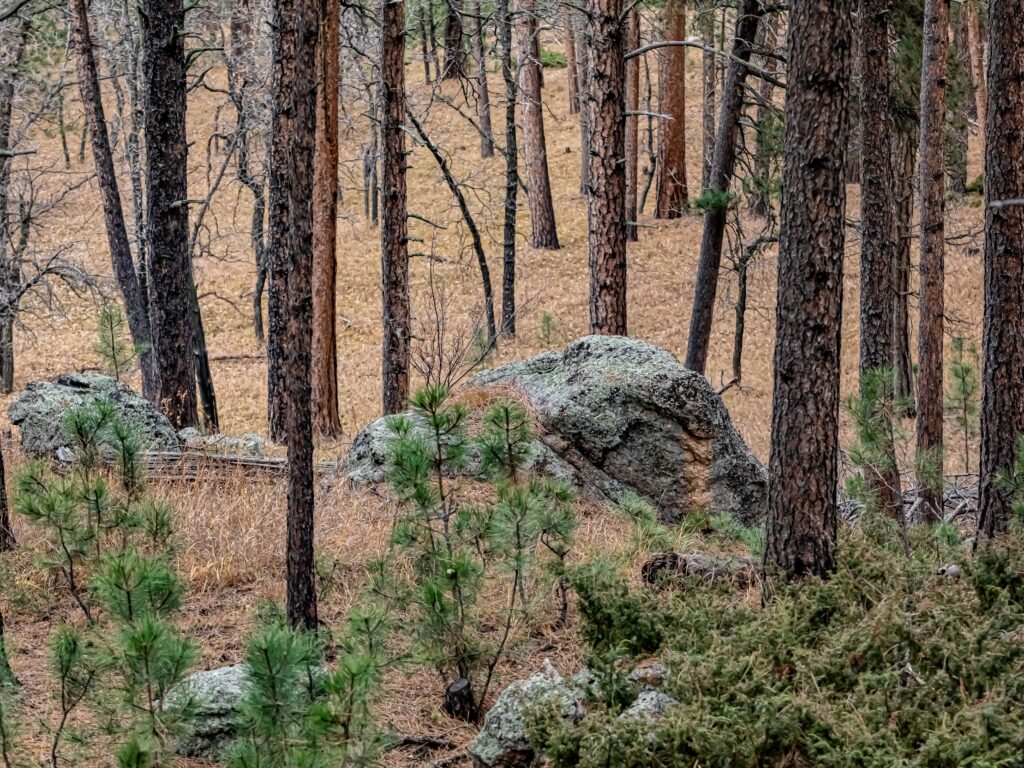
In keeping with national trends, the health of South Dakota’s forests has significantly declined in recent years, jeopardizing the safety of communities and ecosystems. Most notably, a mountain pine beetle epidemic dramatically increased wildfire risks in the Black Hills, killing over 90 percent of ponderosa pines in certain areas. And the impact is still being felt today—a 2023 assessment by the U.S. Forest Service found that the Black Hills face an “uncharacteristic accumulation of live and dead fuels” and require a dramatic amount of thinning. While drought, climate, and landscape topography contribute to wildfire frequency and severity, poor forest health is the leading contributor.
Fortunately, we know that prescribed burns and mechanical thinning projects drastically reduce wildfire risks and improve overall forest health. A 2024 study published in Forest Ecology and Management, for example, found that when combined, these forest management techniques reduced the severity of wildfires by 62 to 72 percent. In addition to making wildfires easier to control, proactive management techniques also reduce the probability of fires breaking out in the first place.
But prescribed burns and mechanical thinning projects—despite their centrality in an ecosystem’s health—are often delayed or halted altogether by red tape and litigation. PERC research found that litigation and complex, often duplicative environmental reviews are responsible for delays spanning up to a decade. This is simply too long. South Dakotans know all too well that sitting around with the forests in such a vulnerable condition is playing with fire.
If we are ever going to reduce wildfire risk and restore the health of our nation’s forests, we must remove unnecessary hurdles that delay critical projects. Although environmental review was intended to bolster conservation, in practice, the process too often hinders the very projects upon which healthy forests depend. Now that our nation’s forests require more work than ever, it is time to speed up restoration rather than slow it down.
The Fix Our Forests Act addresses this head-on, which is why a wide-ranging and bipartisan cohort of legislators and policy groups support it. The bill protects forests, wildlife, and communities by streamlining environmental review, promoting collaborative restoration partnerships, and deterring frivolous lawsuits that needlessly delay essential projects. With targeted provisions that reduce grassland wildfire risk and prioritize restoration projects in the Black Hills, South Dakotans in particular have strong reasons to welcome the legislation’s momentum.
Thanks to strong leadership from forest advocates in the Senate Agriculture Committee, we are close to making healthy forests attainable. We respectfully urge Leader Thune to help fix the wildfire crisis by advancing the Fix Our Forests Act.