

Buried in the continuing resolution funding the federal government for the remainder of 2011 is a rider that delists the gray wolf as an endangered species in Montana and Idaho. The rider had bipartisan sponsorship from Sen. Jon Tester, Montana Democrat, and Rep. Michael K. Simpson, Idaho Republican, but the public reaction is anything butContinue reading “Politics of Endangered Species”
Types Archives
Beware the Siren Song of Green Political Activism
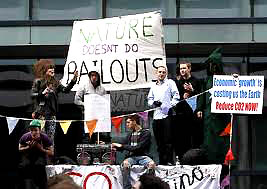
Green activism is often a threat to the very environment that activists are trying to save.
2011 PERC Fellows
Each summer, PERC awards fellowships to scholars, journalists, business people and environmentalists from around the world who are engaged with the same ideas and approaches to conservation as PERC. Their particular interests vary widely, including forestry, fisheries, ecosystem services, climate change, conservation easements, energy development as well as many other topics. Fellows are expected to spendContinue reading “2011 PERC Fellows”
Basic economics can preserve the environment

The industrial revolution that began about 200 years ago has changed humanity’s relation to, and attitudes about, nature completely—and sometimes it has generated new views about God and nature, such as from the Transcendentalists of the 19th century. In the first half of the 19th century, Alexis de Tocqueville reflected that in America, civilization endedContinue reading “Basic economics can preserve the environment”
Renewables are a costly shot in the dark

PERC’s Roger Meiners writes that calls for massive changes in all aspects of modern life from transportation to food production in
order to reduce carbon emissions are unrealistic. Repeated failures of such utopian experiments suggests extreme caution.
Montana consultant helps clients enter the water market
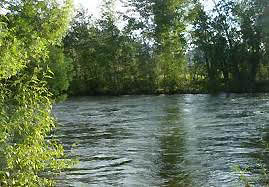
In Montana, enviropreneurs like Chris Corbin are creating a water market by helping owners identify and vaule their water rights and sell them.
U.S. can’t afford to scrap nuclear power
By Andrew P. Morriss TUSCALOOSA, Ala. — Despite the disaster at Japan’s Fukushima Daiichi nuclear power complex, eliminating the technology that provides 21 percent of the United States’ electricity and 14 percent of electricity worldwide would be dangerous and unrealistic. Our demand for electricity is largely met using coal, nuclear, large hydro, and naturalContinue reading “U.S. can’t afford to scrap nuclear power”
Debunking myths about free-market environmentalism
Originally published at Grist. A recent post on Grist attempted to dismantle the intellectual foundations of free-market environmentalism — the application of markets and property rights to solve environmental problems. But far from toppling a burgeoning movement within modern environmentalism, it succeeded only in misrepresenting the subject. To recap: Clark Williams-Derry claimed that while free-marketContinue reading “Debunking myths about free-market environmentalism”
Terry Anderson lectures in Prague
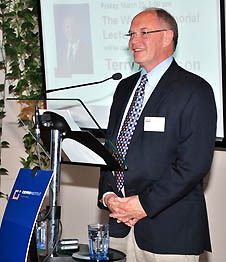
Terry Anderson presents the annual Friedrich Wieser lecture at the Prague Conference on Political Economy 2011 to supporters of
the Austrian School of Economics and political economy of freedom.
Green-Washing Energy Efficiency

Regulations requiring greater fuel efficiency in cars create unintended consequences such as more driving and more energy use because of the car’s fuel efficiency.