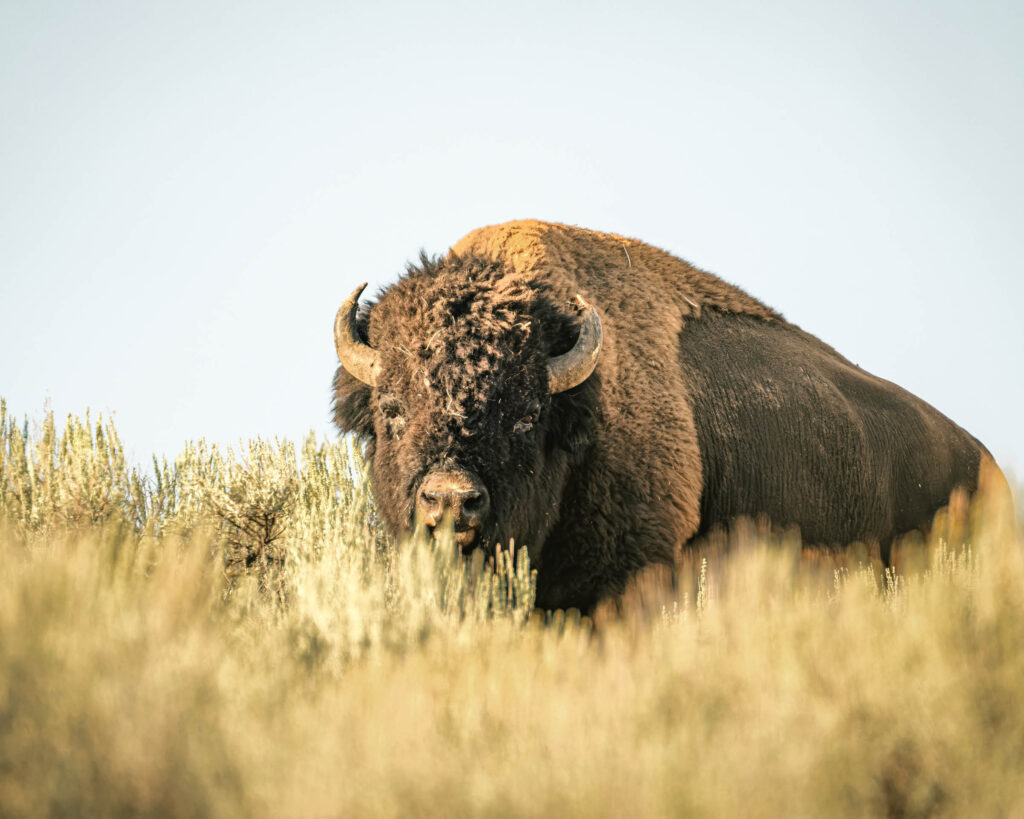
Lewis and Clark never saw a “bison.” As the Corps of Discovery worked its way up the Missouri River, past herds that stretched to the horizon, they knew the shaggy brown beasts by the term Americans have used ever since: buffalo. Scientists later introduced the Latin name “bison.” But “buffalo” came first, and “bison” was gaining currency while the animal in question nearly went extinct.
Ted Turner came much later. The cable-television pioneer, who died in May at 87, demonstrated that the surest way to save an American icon was to give people a stake in it. When Turner bought his first bison in the late 1970s, perhaps only 30,000 of them remained in North America, a fraction of the tens of millions that once covered the Great Plains. By the time Turner died, he owned about 45,000—the largest private herd in the world, and about 1 of every 5 bison in the U.S. His Flying D Ranch, southwest of Bozeman, still runs roughly 4,500 of them.
I’ve had the privilege of visiting Flying D several times. A public gravel road traverses the ranch on the way to a U.S. Forest Service trailhead, and in summer you can see bison grazing near Spanish Creek, along with whitetail deer and occasionally a black bear or moose.
As the U.S. celebrates the animal named its national mammal in 2016, it’s worth remembering a seeming paradox: Economic forces devastated the buffalo and then, more than any act of Congress, brought it back.