Summary
Prescribed burning is a vital land management practice that reduces wildfire risk and enhances ecosystem health. However, liability concerns, soaring insurance costs, and outdated legal frameworks severely limit its use across the United States. This policy brief proposes the creation of risk retention groups as an innovative solution to simultaneously address three critical needs: compensating parties harmed by escaped burns, encouraging safer burning practices, and promoting continuous improvement in prescribed fire techniques through data collection and analysis. By aligning financial incentives with safety improvements, risk retention groups offer a market-based path to expand prescribed burning while better protecting all stakeholders.
Policy Recommendations
Several policy actions would facilitate the development and success of prescribed fire RRGs.
1. States should support RRG formation by providing technical assistance, establishing clear regulatory pathways, and potentially offering temporary funding support for initial capitalization. This support need not be extensive but could include grants or loans to help overcome the initial formation hurdles.
2. State laws should explicitly recognize RRG coverage as satisfying any insurance requirements for prescribed burning and create clear legal standards that work effectively with the RRG model. These legal frameworks should balance the need for liability protection with ensuring compensation for legitimate claims, creating a stable environment for prescribed burning to expand.
3. Non-domiciliary states should streamline registration processes for prescribed fire RRGs to operate within their borders, minimizing unnecessary regulatory burdens. While the federal Risk Retention Act provides significant protection from state regulation, cooperative relationships with state insurance departments would still be valuable for smooth operations.
4. RRGs and state agencies should establish data-sharing agreements to enhance risk management capabilities. Weather data, fire history, ecosystem information, and other relevant datasets held by state agencies could significantly enhance the RRG’s analytical capabilities. Formal data-sharing agreements and protocols would facilitate this exchange.
5. Extension services and land grant universities should partner with RRGs to develop and disseminate educational materials about prescribed fire best practices. These educational institutions have existing networks and expertise that could amplify the knowledge developed through the RRG, bringing improved practices to an even wider audience.
The Problem: Valuable Practice, Crippling Constraints
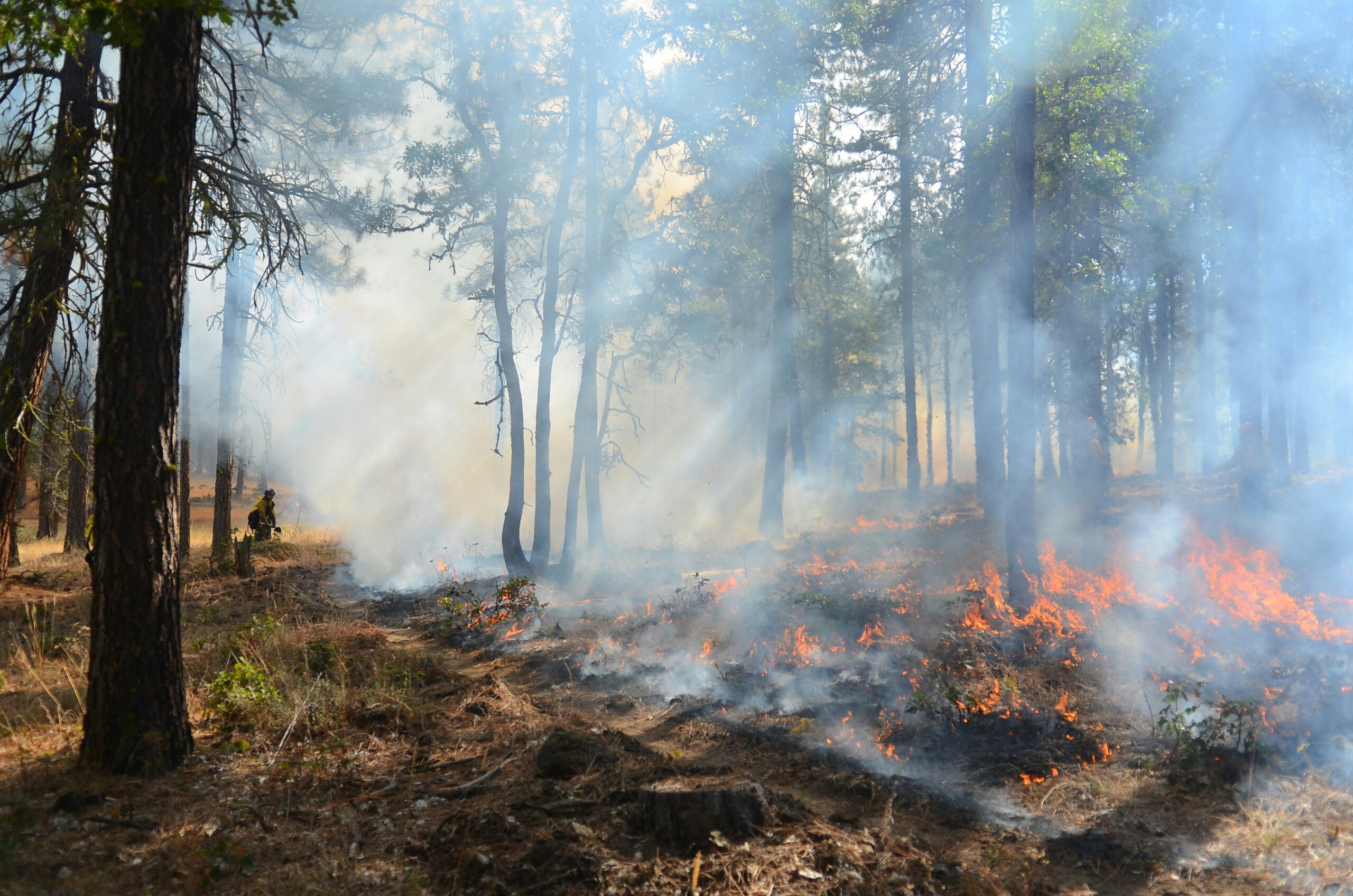
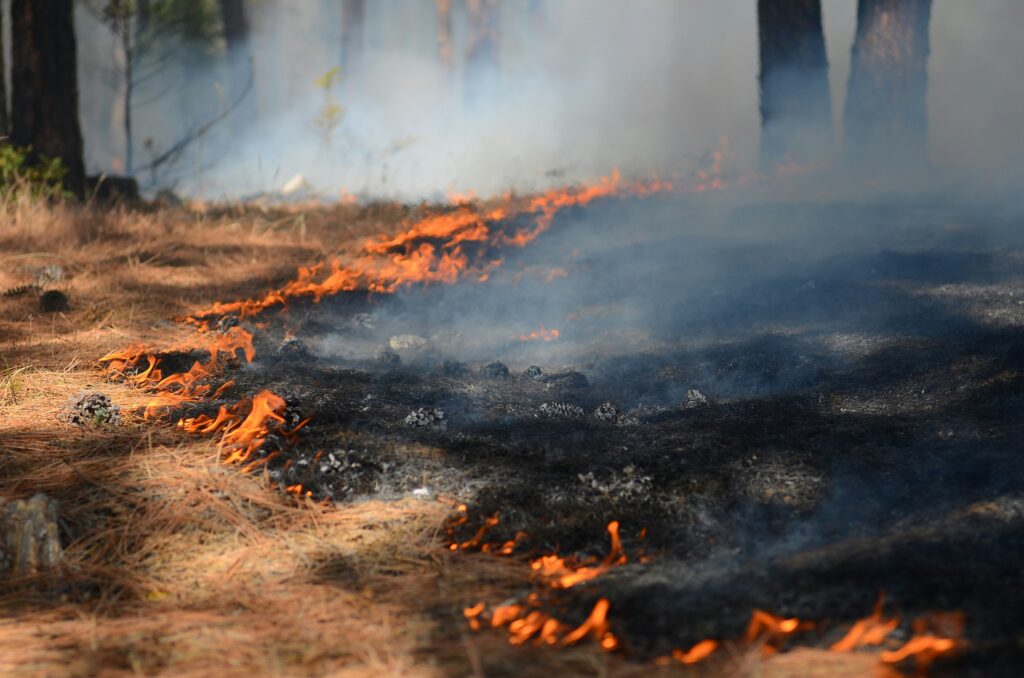
Fire is a natural and essential component of many North American ecosystems. For centuries, Indigenous peoples and later European settlers used controlled burns to manage landscapes. As our understanding of ecology has deepened, the scientific consensus has become clear: Regular prescribed burning is crucial for maintaining healthy forests, grasslands, and other fire-adapted environments.1 Karen J. King & Joanne Chapman, Using statistics to determine the effectiveness of prescribed burning, Contributions to Probability and Statistics: Applications and Challenges 73, 74 (Apr. 4-5, 2005); Martha Mintz, Playing with Fire: When Manageable Risk Delivers Great Reward, Noble Research Institute (n.d.) https://www.noble.org/regenerative-agriculture/prescribed-burn/playing-with-fire-when-manageable-risk-delivers-great-reward/.)
When fire is deliberately reintroduced through prescribed burns, the benefits are substantial. Carefully managed fires reduce hazardous fuel accumulation, enhance biodiversity, improve wildlife habitat, control invasive species, and increase agricultural productivity. Perhaps most importantly, prescribed burns help prevent the catastrophic wildfires that have devastated communities across the country in recent years.2E.L. Kalies & L.L.Y. Kent, Tamm Review: Are Fuel Treatments Effective at Achieving Ecological and Social Objectives? A Systematic Review, 375 Forest Ecol. 84 (2016).
By aligning financial incentives with safety improvements, risk retention groups offer a market-based path to expand prescribed burning while better protecting all stakeholders.
Despite these clear advantages, prescribed burning remains dramatically underutilized.3Jonathan Wood & Morgan Varner, Burn Back Better: How Western States Can Encourage Prescribed Fire on Private Lands, Property and Environment Research Center (PERC) and Tall Timbers (2023). A 2011 study found that Oklahoma alone had 9.1 million hectares (22.5 million acres) requiring periodic burning, yet only 18 percent of the necessary annual burns were being conducted.4John R. Weir, Are Weather and Tradition Reducing Our Ability to Conduct Prescribed Burns?, 33(1) Rangelands 25, 27-28 (2011). In California, land managers have set a goal of using prescribed fire on 400,000 acres annually to reduce dangerous fuel loads. Yet in 2022—the most recent year for which data is available—only about 96,000 acres were burned, falling far short of that target.5Kate Selig, In California, Controlled Fires Can Save Homes. Why Aren’t More Happening? N.Y.Times (Sept. 7, 2024). Similar gaps exist nationwide, particularly as wildfire risks intensify due to climate change and past fire suppression policies.
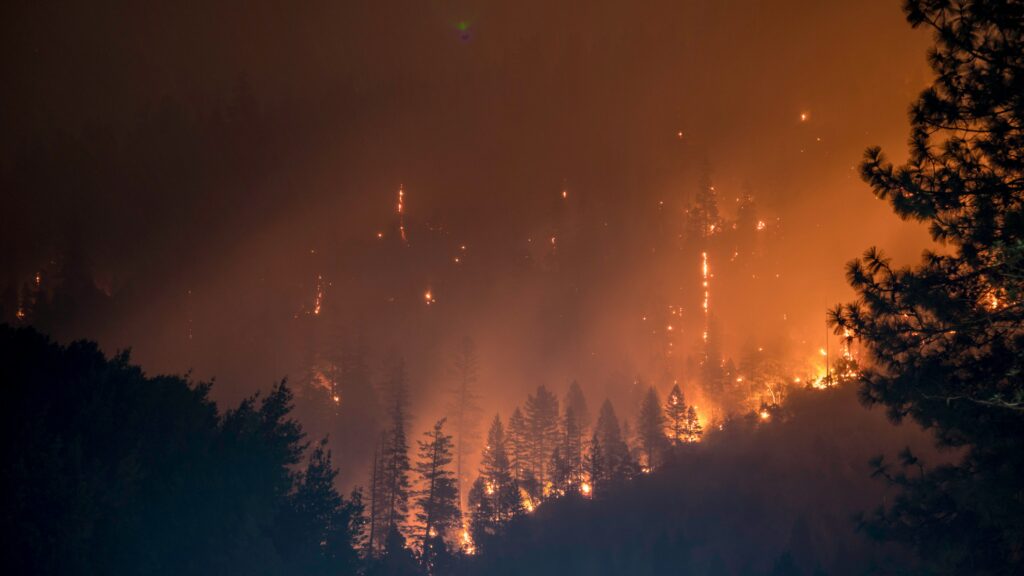
Three interrelated barriers restrict the expansion of prescribed burning. First, landowners fear catastrophic liability if a burn escapes containment or if smoke causes accidents, even when following best practices. Second, the insurance market has largely collapsed, with premiums increasing 300-400 percent in recent years and many carriers withdrawing coverage entirely. Third, the legal frameworks governing prescribed burns have evolved into a confusing patchwork that creates uncertainty for burners while often leaving injured parties without adequate compensation.
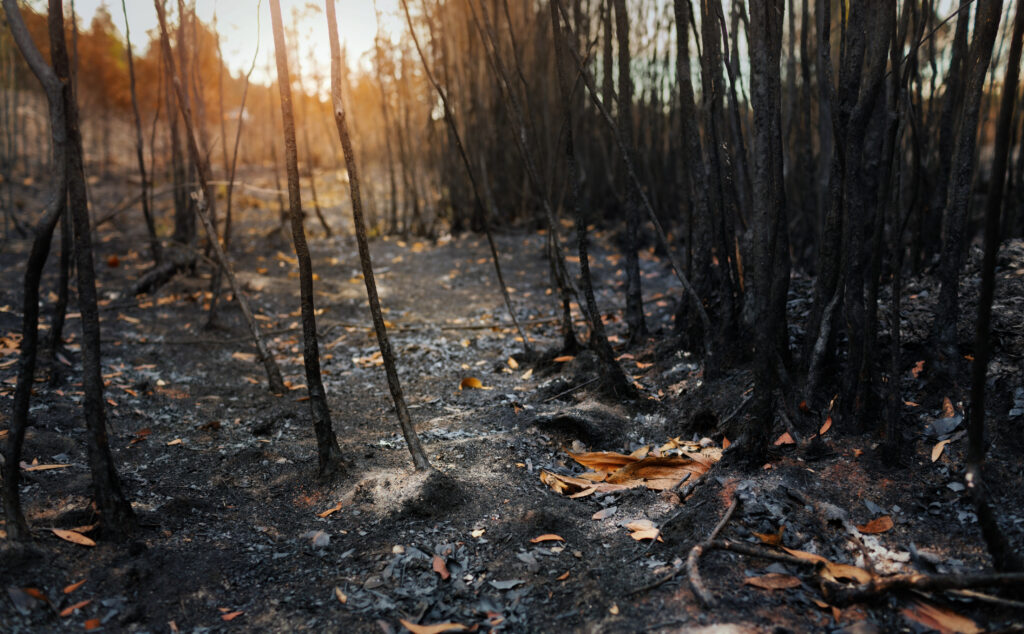
The gap between prescribed burning’s potential benefits and its actual use represents a significant policy failure that increases wildfire risk, damages ecosystem health, and undermines land management goals across the country.
Current Approaches: Fragmented and Ineffective
Over the decades, states have attempted to address the challenges of prescribed burning through various legal and regulatory approaches. These efforts, while well-intentioned, have created a fragmented system that ignores the core problems.
Many states have shifted from ordinary negligence to gross negligence standards for prescribed burn liability. This change provides significant legal protection for burners who follow approved procedures, but it also potentially leaves injured parties without recourse when they experience legitimate damages from burns that were not negligent but still caused harm. The legal pendulum has swung between protecting burners and protecting the public, never finding an optimal balance.
In an attempt to address the shortcomings in the liability regimes, state regulatory oversight has expanded significantly, with states imposing permitting requirements, certification programs, and operational protocols intended to reduce risks. While these measures have some value, they tend to be static rather than adaptive. Regulatory frameworks typically focus on compliance with procedures rather than outcomes, and they rarely evolve to incorporate new scientific understanding or technological innovations.
To address the compensation problem, some states mandate liability coverage for certified burn managers, but these requirements become ineffective when such insurance is unavailable or prohibitively expensive. California is experimenting with a government claims fund to backstop liability, but this approach lacks incentives for continuous improvement in practices and may represent an unsustainable burden on taxpayers.
Further, current approaches fail to align incentives properly. When a landowner conducts a prescribed burn, they bear most of the risk while society at large receives most of the benefits. This misalignment inevitably leads to fewer prescribed burns than would be socially optimal. Any solution must address this incentive problem directly.
The Solution: Risk Retention Groups
Risk retention groups (RRGs) offer a promising market-based solution that addresses these aspects of the prescribed burning dilemma. Created by federal law in the 1980s to solve similar liability insurance crises in other sectors, RRGs are specialized member-owned insurance companies with unique capabilities well suited to the prescribed burning context.6Andrew P. Morriss, Non-territorial special jurisdictions in the U.S. insurance market, 3 J. Spec. Jurisd. 59, 77-79 (2022).
RRGs differ from traditional insurance in several crucial ways. First and foremost, they are owned by the people they insure, creating direct financial incentives to reduce claims. When a traditional insurer collects a premium, that money belongs to the insurer regardless of whether claims occur. In contrast, any surplus funds in an RRG after claims are paid are still owned by the members, creating a powerful financial motivation to invest in safety improvements that reduce claims.
This ownership structure transforms the entire approach to risk. Rather than viewing insurance as simply a way to transfer risk to a third party, RRG members see it as a collective enterprise to manage and reduce risk together. The financial benefits of safer practices flow directly to the members rather than to external shareholders or corporate parents.
RRGs can only insure liability risks for members engaged in similar activities, allowing them to develop deep expertise in niche areas. For prescribed burning, this means creating an organization focused solely on understanding and improving fire management practices. Unlike general commercial insurers with little specialized knowledge about prescribed burns, an RRG would become a center of excellence in this domain.
Federal law allows RRGs to operate across state lines with reduced regulatory friction once licensed in a single state. This national capability is particularly valuable for prescribed burning, which often spans multiple jurisdictions and ecosystems. An RRG could serve members across diverse regions while maintaining consistent standards and accumulating knowledge from varied environments.
The knowledge-gathering function of an RRG would be highly beneficial for prescribed burning. RRGs insure their members, so they could be made up of landowners, burn masters, burn associations, and anyone else engaged in prescribed burns. The organization would systematically collect and analyze data from every burn, identifying the specific conditions that maximize benefits while minimizing risks. This information would feed directly into evolving best practices, creating a continuous improvement cycle that static regulatory approaches cannot match.
Unlike current approaches that often separate the regulatory, insurance, and operational aspects of prescribed burning, an RRG would integrate all these functions. Members would simultaneously be developing standards, insuring against risks, gathering data, and implementing improved practices. This integration creates natural synergies that fragmented systems cannot achieve.

From Concept to Reality: Implementation Pathway
Establishing a prescribed fire RRG would require thoughtful planning and execution. The process would begin with forming an exploratory committee that includes representatives from prescribed burn associations, forestry contractors, landowners, insurance professionals, and legal advisors. This diverse group would guide the development process and ensure all stakeholder perspectives are considered.
A comprehensive feasibility study would analyze the potential membership base, premium estimates, projected claims, and capital requirements. This analysis would establish the economic viability of the RRG and identify the optimal scale for initial operations. The committee would then select a domicile state with favorable captive insurance regulations, with Vermont being a strong candidate due to its expertise and established regulatory framework for RRGs.
Initial capitalization would require raising approximately $1-$2 million from founding members, potentially supplemented by outside investors or grants from conservation organizations with an interest in expanding prescribed burning. (Groups interested in supporting prescribed burning could also support an RRG either directly with capital or with alternative means such as a letter of credit, which many state regulators will accept for part of an RRG’s capital.) This capital would meet regulatory requirements and build reserves for future claims, ensuring the financial stability of the organization from the outset. Regulators in states like Vermont that specialize in captive insurance generally and RRGs in particular often allow these entities more flexible means of meeting the capital requirements, such as using a letter of credit as part of the capital while reserves are built over time. New RRGs can also rely on reinsurance to transfer some of the top layers of risk while building reserves.
Once established, the RRG would create robust systems for tracking burn conditions, techniques, and outcomes. Technology would play a central role, with networked weather monitoring stations, mobile applications for real-time risk assessment, drone technology for site assessment, and thermal imaging for post-burn monitoring. These tools would generate unprecedented data about prescribed burning practices and their results.
The RRG would develop its own policy forms addressing the unique risks of prescribed burns, with coverage terms reflecting actual member needs rather than cookie-cutter commercial policies. This tailored approach would include appropriate coverage for volunteers, smoke liability, and other specialized needs that commercial insurers often misunderstand or exclude.
A rigorous risk management program would establish specific requirements for pre-burn planning, weather monitoring, equipment maintenance, communication systems, and post-burn procedures. These standards would evolve continuously based on data analysis and member experience, creating an adaptive framework that improves over time rather than remaining static.
Perhaps most importantly, the RRG would implement a continuous improvement process that includes quarterly analysis of claims and near-misses, annual review and update of standards, regular member education, and research partnerships. This systematic approach to knowledge development would accelerate the evolution of prescribed burning practices far beyond what individual burners or regulatory bodies could achieve alone.
Transforming Knowledge into Practice: A New Paradigm
The transformative potential of an RRG approach becomes clear when considering specific examples of how it would improve prescribed burning practices. Consider the critical issue of weather conditions during burns, which research has identified as the single most important factor in determining whether a burn causes spot fires outside the burn area.
An Oklahoma study found that relative humidity below 25 percent dramatically increases the risk of spot fires to 100 percent, while humidity above 40 percent reduces the risk to just 3.8 percent.7John R. Weir, Using relative humidity to predict spotfire probability on prescribed burns, USDA Forest Service RMS-P-47, 71 (2007). (Different humidity thresholds would likely apply in different regions.) While this information exists in academic literature, it is inconsistently applied in the field. Current approaches offer few mechanisms to translate such research into widespread practice changes.
An RRG would transform this knowledge into improved practices through a systematic approach. It would install networked weather monitoring systems across member properties and partner with micro-level forecasting services to provide site-specific predictions. Mobile applications would give burn crews real-time humidity readings, and conditions would be recorded for every burn, creating a comprehensive database linking weather parameters to outcomes.
Based on this data, the RRG would develop tiered burn protocols with specific requirements for different humidity ranges. For example, weather conditions such as humidity could be used to require particular protocols, equipment, or other measures. Such a nuanced approach, which RRGs could tailor to local contexts as appropriate, would replace the current one-size-fits-all standards prevalent in many regulatory frameworks.
Most importantly, the RRG would continuously refine these thresholds based on actual burn outcomes. It would identify geographic or ecosystem variations in humidity impacts, detect seasonal patterns that affect risk, and develop predictive models for optimal burn windows. This knowledge would be disseminated through member newsletters, training materials, decision-support tools, and certification programs.
A similar approach would apply to maximizing ecological benefits. The RRG would document post-burn vegetation response, monitor wildlife population changes, track invasive species control effectiveness, and measure fuel load reduction longevity. This information would lead to optimized burn techniques for specific ecosystems and management objectives, ensuring that prescribed burns deliver maximum benefit along with improved safety.
This data-driven, adaptive approach represents a fundamental paradigm shift from current fragmented systems. Instead of prescribed burning practices evolving slowly through trial and error or academic research disconnected from field application, an RRG would create a direct pathway from data to implementation, dramatically accelerating improvements in both safety and effectiveness. Commercial insurers lack the focus on this small line of business to develop such knowledge, and the network of burn associations staffed by working farmers, foresters, and ranchers are unlikely to have the time to devote to synthesizing the academic research. Creating an entity that sits on top of data flows and focuses on the specific problem would allow bringing the benefits of new knowledge to bear on burning in a timely way.
Benefits Across the Landscape
The benefits of an RRG approach would extend to all stakeholders in the prescribed burning ecosystem. For landowners and burn practitioners, the RRG would provide access to affordable, reliable liability coverage currently unavailable in the commercial market. Clear standards for safe operations would reduce uncertainty about legal liability, while financial rewards through stable or reduced premiums would incentivize good practices. Perhaps most valuable would be the knowledge sharing and continuous improvement of techniques, enhancing both the safety and effectiveness of prescribed burns.
Neighboring property owners would benefit from reliable compensation if harm occurs, reducing a major source of opposition to prescribed burning. The improved practices developed through the RRG would reduce the risk of catastrophic escapes, protecting adjacent properties. As prescribed burning becomes more widespread and safer, these neighbors would also enjoy reduced wildfire risk from better landscape-level fuel management.
For policymakers, the RRG offers a market-based solution requiring minimal government involvement while addressing the current insurance market failure. The professional self-regulation fostered by the RRG aligns with public safety goals while promoting prescribed burning as a tool for wildfire risk reduction and ecosystem restoration. This approach satisfies both conservative preferences for market-based solutions and progressive goals for ecological restoration and climate resilience.
The environmental benefits would be substantial as prescribed burning expands to approach optimal levels. Ecosystems that evolved with frequent, low-intensity fires would regain their natural resilience. Wildlife habitat would improve, invasive species would decrease, and carbon sequestration would potentially increase in many systems. Most critically, the devastating mega-fires that have become increasingly common would likely decrease in frequency and intensity as fuel loads are managed more effectively.
Conclusion
Prescribed burning is too important a land management tool to remain constrained by outdated liability regimes and dysfunctional insurance markets. Risk retention groups offer a practical, market-based solution that aligns incentives, promotes safety, ensures compensation for legitimate claims, and fosters continuous improvement in prescribed fire practices.
By bringing together practitioners in a member-owned insurance structure, RRGs transform what is currently a liability challenge into an opportunity for collaborative advancement of prescribed burning techniques. The resulting knowledge development would accelerate the evolution of practices far beyond what could be achieved through fragmented regulatory approaches or individual experimentation.
Prescribed burning is too important a land management tool to remain constrained by outdated liability regimes and dysfunctional insurance markets
The implementation of prescribed fire RRGs would likely lead to more acres safely burned, healthier ecosystems, reduced wildfire risk, and better protected communities. This integrated approach addresses all aspects of the prescribed burning challenge simultaneously, creating a virtuous cycle of improvement rather than the current vicious cycle of increasing costs and declining practice.
The time has come to move beyond piecemeal solutions and embrace a comprehensive approach to prescribed burning that harnesses market incentives for public benefit. Risk retention groups provide that path forward, offering hope for a future where fire once again takes its natural place in our landscape—managed wisely, deployed safely, and serving both ecological and human needs.