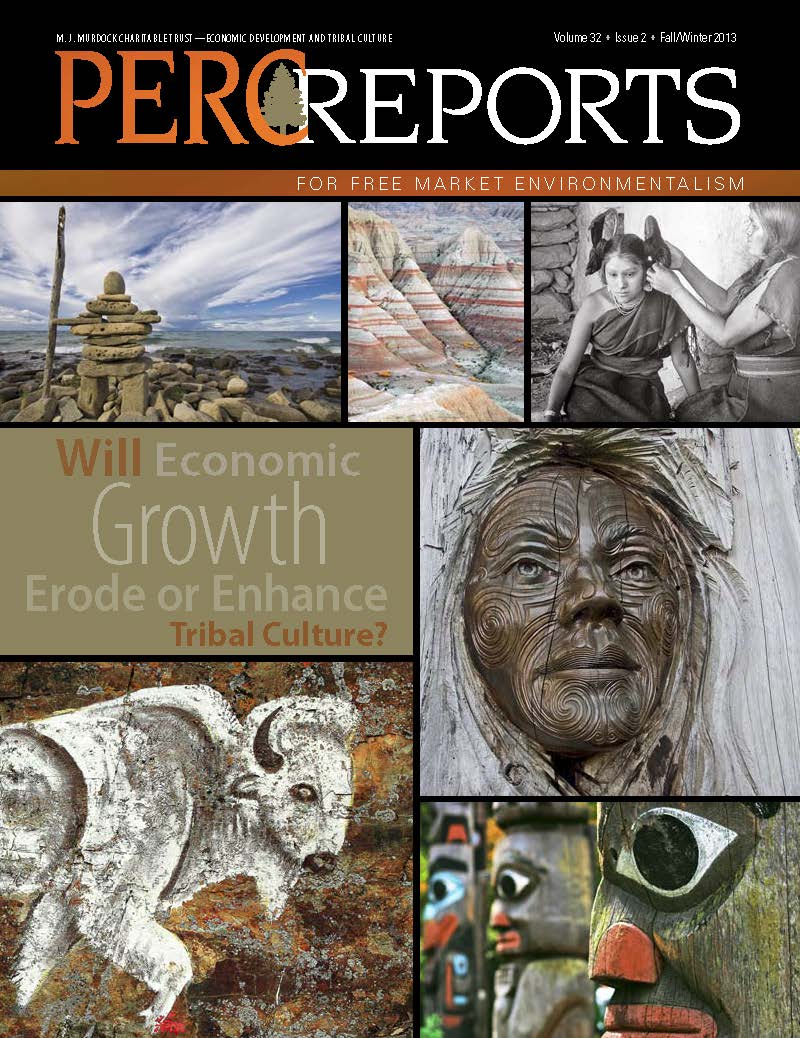
 “Will economic growth in the 21st century erode or augment tribal culture,” asks JUSTIN RICHLAND of the University of Chicago. As an anthropologist, Richland offers firsthand knowledge of the revival of the Hopi language and explores why this evolution matters for culture and the future of the tribe. His question also sets the stage for the themes explored throughout this special edition of PERC Reports.
North of the U.S. border, SHANE GOTTFRIEDSON, Chief of the Tk’emlups, writes a heartfelt article pronouncing that property ownership is a basic human right. His native home is “a tract of land… whose legal title is held by her Majesty. We don’t own our land in the eyes of Canadian law and, consequently, we find ourselves with justice withheld and no real home.” The Nisga’a Band in British Columbia was fed up with this arrangement. Consequently, they became the first of the First Nations to create the option for members to own tribal land privately. RICHARD WRIGHT showcases the experiment.
In “Māori Land Rights—Living on the Periphery,” TE MAIRE TAU describes how Crown policy toward indigenous lands changed in the 1960s to allow local councils to rezone. Māori lost the right to build, which meant their capital base disappeared. The social consequence was devastating but signs that tribal members will regain their full land rights in 2014 look promising.
Back in the United States, it is hard to believe that on the Pine Ridge Indian Reservation, per capita income is below $8,000 and unemployment sits at 80 percent. Yet among this poverty stricken landscape is a region of rich resources including a vast prairie neighboring Badlands National Park. JULIET EILPERIN explores the potential for the Oglala Sioux to operate the first tribal national park—an extension of the Badlands—and turn a profit on a huge heard of bison. Whether this approach can provide economic benefits and become a beacon of cultural pride remains to be seen.
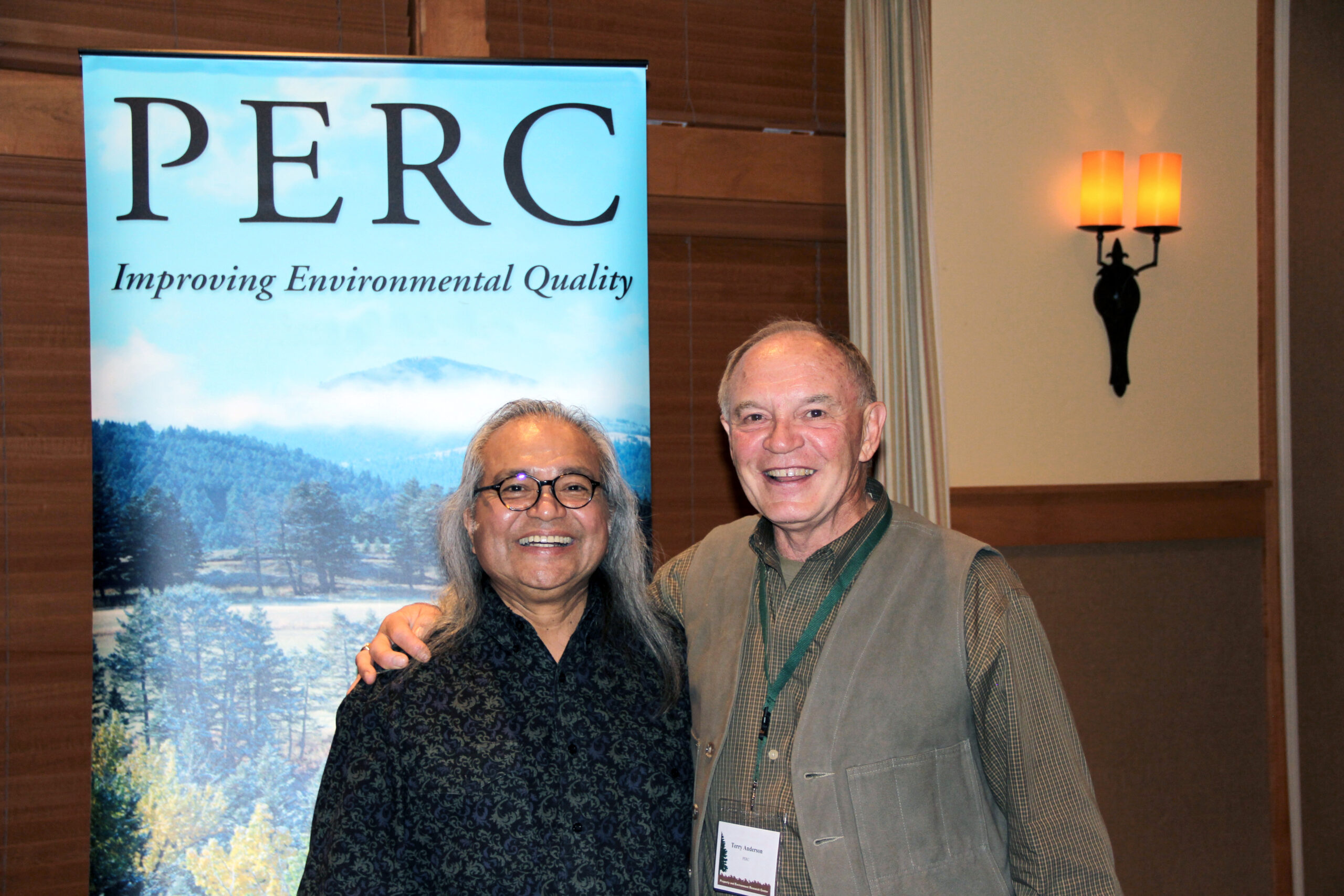
TERRY ANDERSON (featured below with First Nations leader Manny Jules) gets to the heart of this special issue of PERC Reports when he asks, “How can people treated as ‘wards’ of the state reclaim their dignity?” The answer requires sovereignty for individual Indians and for tribes. Achieving sovereignty means becoming self-sufficient.
 Understanding the relationship between economic development, assimilation, and tribal culture is challenging. PERC began to explore some of the connections by hosting 30 experts in the field. The participant list spanned from academics at Berkeley to George Mason University, officials from the First Nations Tax Commission to the U.S. Federal Reserve Bank, and tribal leaders from the Kamloops in Canada to the Māori in New Zealand. Their perspectives are woven throughout this special issue, which was made possible by generous support from the M. J. Murdock Charitable Trust.