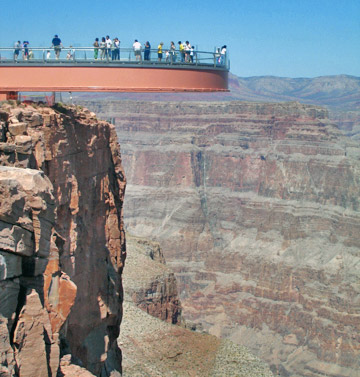
Ten years ago, the Hualapai Tribe in Arizona signed an agreement with a developer, David Jin, to build a glass Skywalk out over the Grand Canyon. After it was built, the tribe abruptly abrogated the contract; initially a U.S. District Court judge ruled that the tribe was a sovereign nation and could do so. Western First Nations own billions of dollars’ worth of oil and gas, but as the tribes occasionally break ironclad contracts with investors, they scare off future development. Where there is poor governance on the reservation, it leads to impoverishment among the people and exceedingly corrupt tribal leadership. PERC President Terry Anderson sat down with The John Batchelor Show to discuss why business can be risky in Indian Country.
Risky Business in Indian Country
-
Terry Anderson
Terry L. Anderson is the former president and executive director of PERC, and the John and Jean De Nault Senior Fellow at the Hoover Institution, Stanford University.
-
Thomas Jefferson: The Lost Founding Father of American Conservation
Two years before he authored the Declaration of Independence, Thomas Jefferson set out on the lifelong project of conserving Virginia’s Natural Bridge. Michaelle Browers has described the effort as “perhaps the first major act of nature preservation in the new republic.” The man who would be Governor of Virginia and President of the United StatesContinue reading "Risky Business in Indian Country"
-
How the Eagle Came Back
As we celebrate the nation’s 250th anniversary, it is heartening that America’s national symbol, the bald eagle, is no longer imperiled. Although once at risk of extinction throughout much of its historical range, this majestic species rebounded in the late 20th century, and populations are now in good health. At the time of the nation’sContinue reading "Risky Business in Indian Country"
-
America’s Landscape of Liberty
As America approaches its 250th anniversary, it’s natural to reflect on our nation’s founding through its political ideals: individual liberty and equality, constitutional government, and individual rights. But these ideals did not emerge in the abstract, nor were they implemented in a vacuum. They were shaped in a diversity of landscapes, quite unlike the terrainContinue reading "Risky Business in Indian Country"