
On ABC’s “20/20” with John Stossel, Terry Anderson sugests eating tigers could be the best way to save them.
Types Archives
On Earth Day, Think Thoreau
By Laura E. Huggins Earth Day is upon us, and with it, several “green” events, including the broadcasting of “Walden: The Ballad of Thoreau” on public television and in schools. This is surprising at a time when government involvement in the environment is all the rage. Henry David Thoreau, who wrote that “government is bestContinue reading “On Earth Day, Think Thoreau”
The ‘illusion’ of green jobs
By Andrew P. Morriss "Green jobs" are touted as the universal cure-all, saving the environment and the economy at the same time. Congress included more than $80 billion in spending and tax incentives to promote them in the recent stimulus bill. Van Jones, President Barack Obama’s green jobs adviser, even recently called for using ex-convictsContinue reading “The ‘illusion’ of green jobs”
Public Land Mismanagement
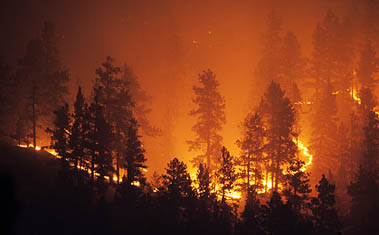
Environmental, fiscal and economic irresponsibility in the name of protection.
Review: Greener Than Thou
By Max Falque Terry Anderson, who attended our 1998 International Conference on Water Resources (Aix en Provence 1998) is executive director of the Property and Environment Reseach Center-PERC, a leading think tank in environmental policy and author of several books, among them the best seller "Free Market Environmentalism". His new book, "Greener than thou, areContinue reading “Review: Greener Than Thou”
Native Americans Need the Rule of Law
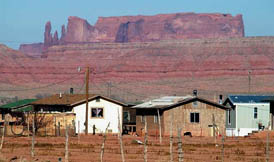
By Terry L. Anderson [See research by Terry Anderson and Dominic Parker] Ken Salazar, the new secretary of the Interior, faces the same tough questions as his predecessors: Drill more or drill less? Graze more or graze less? Mine more or mine less? More snowmobiling in national parks, or less? But for an administration committedContinue reading “Native Americans Need the Rule of Law”
Enviropreneur-in-Residence

At a young age Chris Corbin was told, “Do what you love.” He has been pursuing his passion for water ever since. He left his home in Northwest Arkansas to explore the fabled waters of Montana and pursue an education. He graduated from the University of Montana with high honors in Aquatic Wildlife Biology andContinue reading “Enviropreneur-in-Residence”
THE ENVIRONMENT:
Greener Than Thou

By Terry L. Anderson and Laura E. Huggins Special to the Hoover Digest It’s impossible to read a newspaper or magazine, turn on the radio or television, or engage in a cocktail party conversation without the words “green” or “eco” popping up. There are green television stations, green termite killers, green cars, eco-moms, eco-fashion, andContinue reading “THE ENVIRONMENT:
Greener Than Thou”
Do we pay to reverse climate change?
By Andrew P. Morriss CHAMPAIGN, Ill. – China wants wealthier nations to pay a fixed percentage of their gross domestic product to help developing countries reduce greenhouse gas emissions, with a suggested contribution of a mere 1 percent for a total of$300 billion a year. China also wants to create an international mechanism to transferContinue reading “Do we pay to reverse climate change?”
Warming up to water markets

The article excerpt below is from the Cato Institute’s Regulation magazine. Author Jonathan Adler is a former Julian Simon Fellow at PERC and Professor of Law at Case Western Reserve University. He argues in favor of water markets as the most efficient and environmentally sound approach to water scarcity as climate change exacerbates an already direContinue reading “Warming up to water markets”