A Concert for Conservation in the Greater Yellowstone Ecosystem


A Concert for Conservation in the Greater Yellowstone Ecosystem

[…] regulatory tools as well as a massive loss of habitat to infrastructure. The risk is real. In the United States alone, over 30 million acres—more than 10 Yellowstone National Park’s worth—of natural areas and farmland could be converted into housing by 2040. The U.S. is expected to add 250,000 to 500,000 acres of new […]

[…] I find myself looking to the past—especially the role my state, Wyoming, has had in building a solid foundation. The history of the world’s first national park, Yellowstone, is well known, as is the kind of public-private partnership pioneered by John D. Rockefeller, Jr., in the creation of Grand Teton National Park. Between those […]

[…] flawed. First, why 30 percent? It’s hard to make the case that 30 percent is anything other than an arbitrary goal. Look no farther than the Greater Yellowstone Ecosystem. Seventy percent of the land that comprises the ecosystem is in federal ownership. Yet conserving Yellowstone’s vital elk, mule deer, and pronghorn migration corridors will […]

[…] Paris, Rome, and the like. All of that changed with westward expansion. Beginning with Jefferson’s Lewis and Clark expedition in 1804 and continuing through the establishment of Yellowstone as the world’s first national park in 1872, our nation entered a distinct age of European-American discovery and settlement. The wonders of the natural world familiar […]
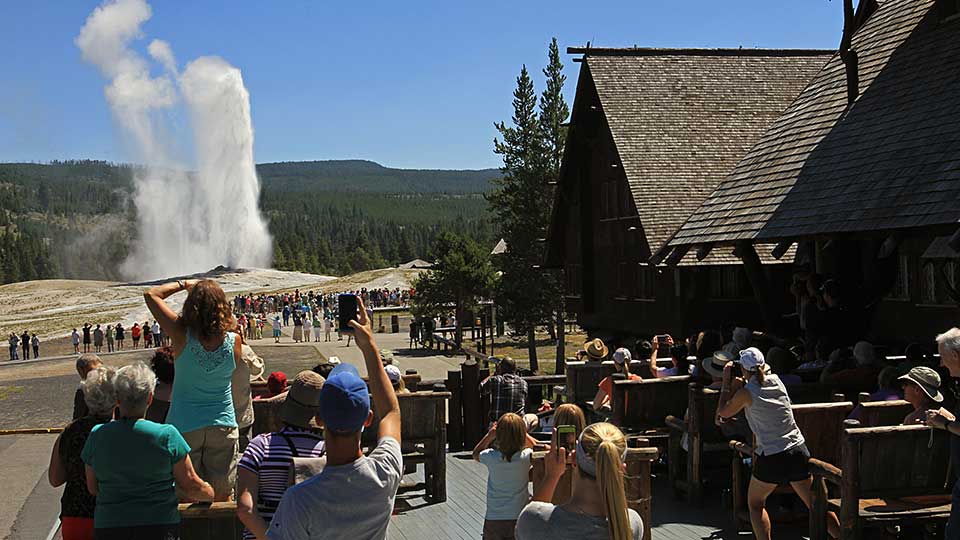
Starting January 1, 2026, overseas visitors who pull up to the gates of 11 of the most popular U.S. national parks (including destinations like Yellowstone, Yosemite, and the Grand Canyon) will pay a $100 surcharge on top of the base entrance fee. The price of non-resident “America the Beautiful” annual passes will also rise, […]

[…] Department of the Interior: “This is a big win for everyone who loves America’s national parks. A $100 international visitor surcharge could generate $55 million annually at Yellowstone National Park alone, more than quadrupling that park’s revenue to address deteriorating trails, failing wastewater systems, and crumbling bridges. PERC has long led an effort to […]

A Wild Livelihoods Survey Report Wild Livelihoods is a coalition of Montana businesses in the Greater Yellowstone whose livelihoods depend upon wild places. We share a common interest in protecting open spaces, clean air and water, rich soil and native plants, and vibrant wildlife populations for all. We are guides, restaurants, lodges, gas stations, […]

America’s national parks are more popular than ever. From Yellowstone to Zion, record visitation has put new pressure on park budgets, infrastructure, and staff—challenges that can’t be solved by appropriations alone. To ensure our parks remain both accessible and exceptional, the National Park Service should embrace creative, market-based tools that make every dollar go […]

[…] bear populations as though they still needed federal life support. In January, the U.S. Fish and Wildlife Service denied requests from Montana and Wyoming to delist Greater Yellowstone and Northern Continental Divide grizzlies—two distinct populations that have met recovery goals for years. The reasoning? That these bear populations have actually recovered too much; the […]