[…] the political process. As long as there is unclaimed water, state agencies throughout the West have the authority to reserve water for instream purposes. On the lower Yellowstone River, for example, the Montana Department of Natural Resources and Conservation (DNRC) has reserved 5.4 million acre feet that cannot be claimed by private users. This, […]
[…] Johns Hopkins University Press, 1983. Water Rights: Scarce Resource Allocation, Bureaucracy, and the Environment, edited by Terry L. Anderson. San Francisco: Pacific Institute for Public Policy Research, 1983. The Yellowstone Primer: Land and Resource Management in the Greater Yellowstone Ecosystem, edited by JohnBaden and Donald R. Leal. San Francisco: Pacific ResearchInstitute for Public Policy, 1990.
[…] Terry L. Anderson. Washington, D.C.: Cato Institute and Johns Hopkins University Press, 1983. , edited by Terry L. Anderson. San Francisco: Pacific Institute for Public Policy Research, 1983. The Yellowstone Primer: Land and Resource Management in the Greater Yellowstone Ecosystem, edited by JohnBaden and Donald R. Leal. San Francisco: Pacific ResearchInstitute for Public Policy, 1990.
[…] Johns Hopkins University Press, 1983. Water Rights: Scarce Resource Allocation, Bureaucracy, and the Environment, edited by Terry L. Anderson. San Francisco: Pacific Institute for Public Policy Research, 1983. The Yellowstone Primer: Land and Resource Management in the Greater Yellowstone Ecosystem, edited by JohnBaden and Donald R. Leal. San Francisco: Pacific ResearchInstitute for Public Policy, 1990.
[…] Johns Hopkins University Press, 1983. Water Rights: Scarce Resource Allocation, Bureaucracy, and the Environment, edited by Terry L. Anderson. San Francisco: Pacific Institute for Public Policy Research, 1983. The Yellowstone Primer: Land and Resource Management in the Greater Yellowstone Ecosystem, edited by JohnBaden and Donald R. Leal. San Francisco: Pacific ResearchInstitute for Public Policy, 1990.
A Concert for Conservation in the Greater Yellowstone Ecosystem Now in its sixth year, Wildlands continues to distinguish itself as one of the most unique music events in the country, pairing world-class artists in a unique outdoor venue limited to 5,000 attendees, while raising funds for conservation groups devoted to preserving the Greater Yellowstone […]
[…] Projects Western United States Project #007 Paradise Valley Fence Fund Paradise Valley Project #008 Elk Occupancy Agreement Eagle Rock Ranch, CO Project #009 Brucellosis Compensation Fund East Yellowstone Support Creative Conservation PERC is pioneering creative new approaches to protect land, water, and wildlife. Donate now to help expand new frontiers in conservation. Donate Today […]
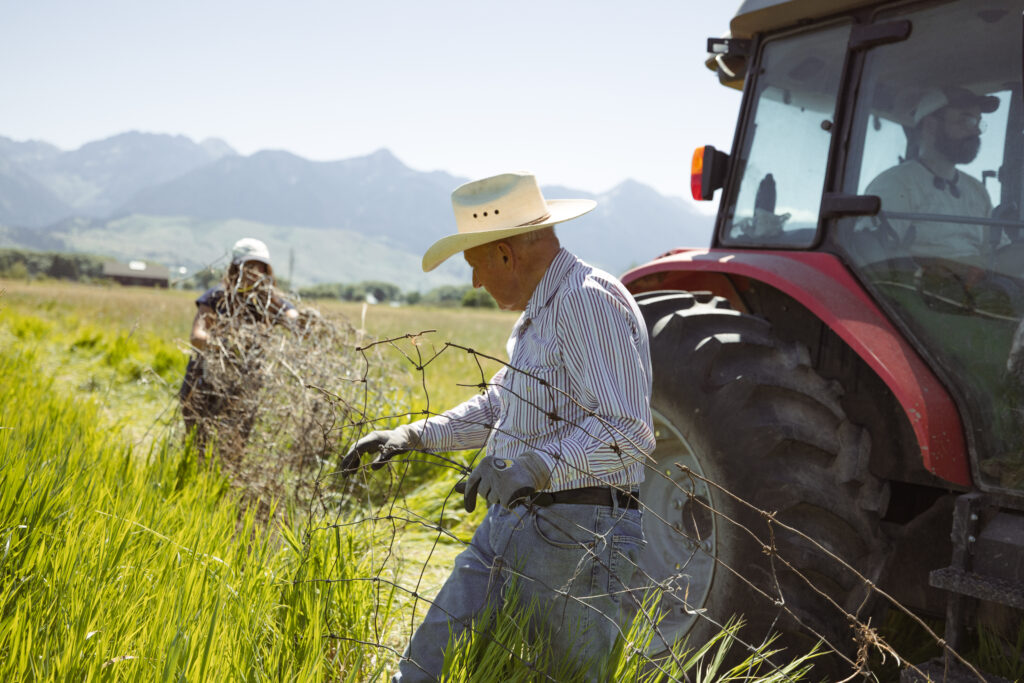
Innovation Lab Paradise Valley Fence Fund Expanding wildlife-friendly fencing and conservation practices outside of Yellowstone National Park overview Supporting ranchers and wildlife PERC’s privately funded Paradise Valley Fence Fund assists ranchers in the working lands outside Yellowstone National Park in maintaining fencing damaged by wildlife, adopting wildlife-friendly fencing, while supporting the migration of the […]
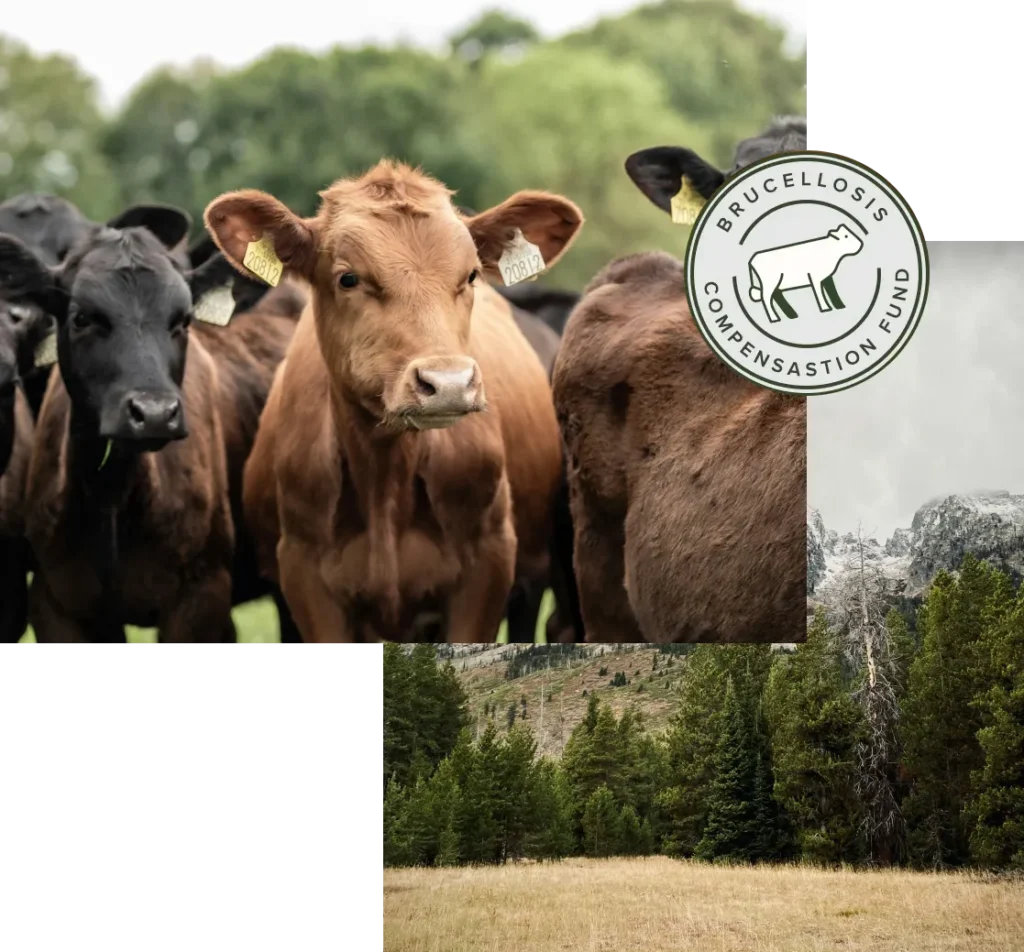
Innovation Lab East Yellowstone Brucellosis Compensation Fund A new tool helps reduce disease risk and facilitate wildlife migration overview PERC’s East Yellowstone Brucellosis Compensation Fund is an innovative new tool that helps ranchers in Wyoming’s Park County whose land serves as vital elk habitat. Relief for ranchers The private fund is designed to support […]
[…] knowledge of the land, this innovative program is the first of its kind in the region. Paradise Valley serves as an important wintering ground for the Greater Yellowstone Ecosystem’s iconic elk herds. As rapid development threatens wildlife habitat in the valley, ranchers and their large, open land holdings play a valuable role in maintaining […]
Project #001
Elk Occupancy Agreement
Petrich Ranch
I. Introduction
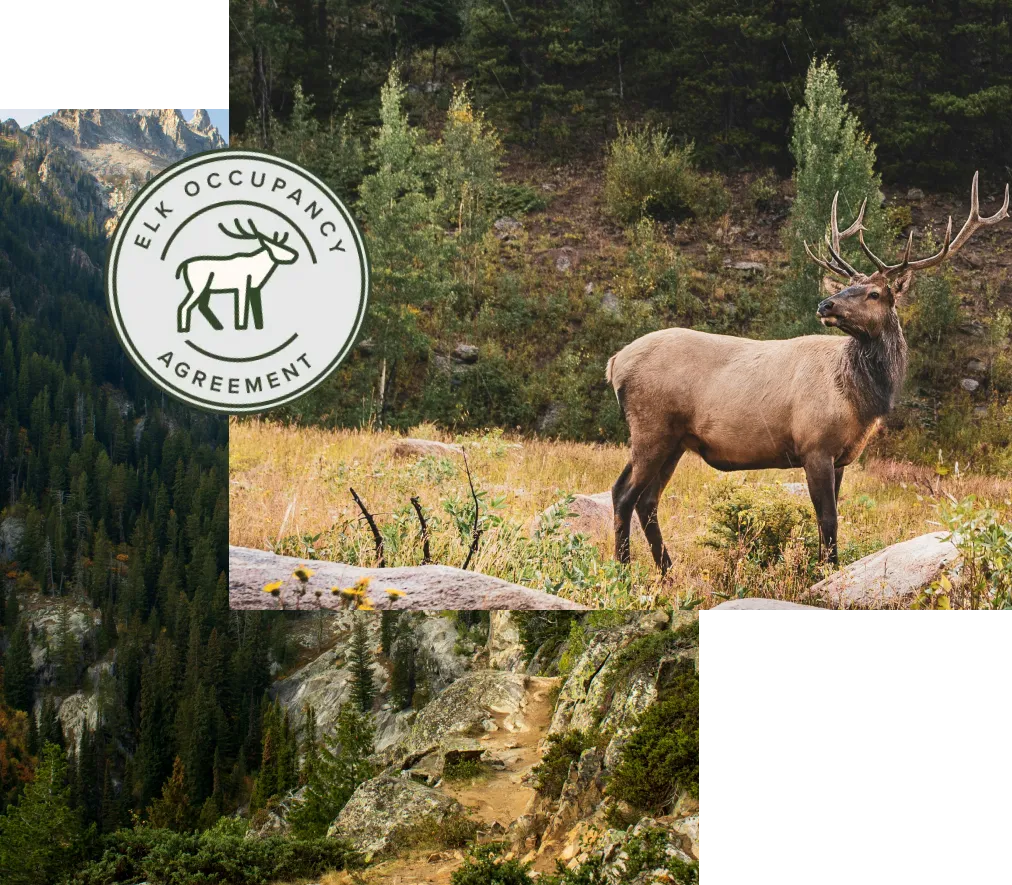
In the summer of 2021, PERC, the Greater Yellowstone Coalition, and the Petrich family of Emigrant, Montana, entered into an Elk Occupancy Agreement to conserve critical elk winter range for the Mill Creek Elk Herd. This was a first-of-its-kind conservation project for Paradise Valley, Montana, and PERC’s first Conservation Innovation Lab project.
In this Elk Occupancy Agreement, PERC and the Greater Yellowstone Coalition partnered to fund the construction of a 1.25-mile long fence in the northern portion of the Petrich Family Ranch to keep cattle out of a 500-acre area of elk winter-range, with the goal of reducing competition between elk and cattle for resources on the property. For their part of the agreement, the Petriches committed to keep the fence in good working order, manage invasive and noxious weeds in the winter-range area, and allow PERC to share the story of the agreement. The combination of these actions is designed to improve elk habitat in the area covered by the occupancy agreement, and help maintain the long-term financial viability of the ranch’s cattle and hunting operations.
For more information about Elk Occupancy Agreement #001, see:
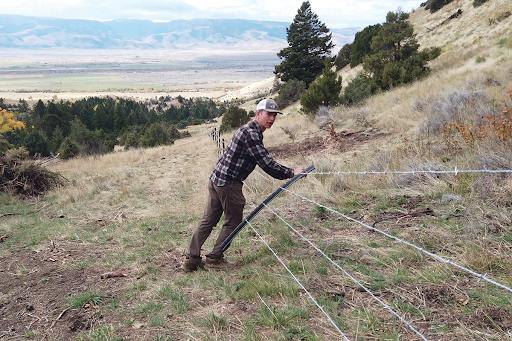
Zane Petrich demonstrating the novel suspension fence built for the agreement.
II. Update
Since the start of the project, the Petrich family has observed flourishing native grass species, such as bluebunch wheatgrass, and a renewed abundance of wildlife, particularly elk, in the 500-acre occupancy area. The family has invested significantly in range health through noxious weed management and prescribed fire, and has replaced the entirety of the ranch’s fencing with a more wildlife-friendly design.
Before the agreement, cheatgrass, other non-native plant species with low forage value for wildlife, and encroaching conifers were common sights in the elk occupancy area. Elk searching for more nutritious food sources led to large herds occupying hay meadows or other areas where they were in close contact with cattle, increasing the risk of disease spread and competition for resources. Thanks to the hard work of the Petriches and some creative weed-spraying helicopter pilots, there are few remaining patches of non-desirable plants in the area.
Although the terms of this agreement seem simple, the benefits have been even bigger than expected. The wildlife-friendly fence has successfully kept cattle out of the elk winter-range area, allowing native forage to rebound and creating a significant benefit for the elk, mule deer, bighorn sheep and other wildlife that spend time on the ranch during their migrations. The suspension-style fence (which uses smooth wire and widely-spaced posts, allowing the fence to flex when animals contact it) is not yet included in Montana Fish, Wildlife and Parks or Rocky Mountain Elk Foundation fencing guides, but it has proven to be durable in spaces shared by cattle and elk, and could be used in areas more heavily trafficked by wildlife.
Petrich Ranch
III. Lessons Learned
Conservation success breeds additional interest in conservation. Through the Paradise Valley Working Lands Group, the Petrich family learned about PERC and began conversations that led to the Elk Occupancy Agreement. After the family entered the agreement, they shared their story with the rest of the landowners in the group, generating more interest and demonstrating that PERC is willing to put its money where its mouth is and put conservation projects on the ground. This project also demonstrates the value of piloting projects. Without first proving the success of ideas and building trust in communities, large-scale efforts are much more difficult to launch.
"As multi-generational ranchers, we were generally suspicious of conservation groups who seemed more interested in making life harder on us than supporting us. With PERC, however, we’ve found a partner committed to helping us manage our land to promote the land, the wildlife, and our ranch operation. The elk occupancy agreement and creation of the elk winter range has encouraged our family to do even more ranch-wide habitat projects to benefit both wildlife and our operations."
Zane Perich
IV. Moving Forward
The Petrich family’s work with PERC demonstrates that conservation projects can benefit both wildlife and ranching. The Petriches went beyond the terms of the occupancy agreement, and replaced the remainder of the ranch’s fencing, totaling roughly 7.7 miles, with the wildlife-friendly suspension design. This will increase the permeability of the ranch for wildlife movement while keeping their livestock in, and it will further reduce the headaches the family faces from repairing or replacing fences damaged by wildlife.
Project #002
Paradise Valley Brucellosis Compensation Fund
Paradise Valley
I. Introduction
In areas where wildlife and cattle share space, risk of disease transfer is high. Although ranchers in Paradise Valley, Montana, enjoy the wildlife that live on and pass through their properties, they admit that the risk of their cattle contracting diseases like brucellosis from wildlife keeps them up at night. If transmitted from elk to cattle, brucellosis not only causes abortion of fetuses, weight loss, and infertility, but it also brings a costly state-mandated quarantine that could financially ruin a ranch. To quarantine a herd, a ranch may need to erect new fences, provide supplemental feed, increase human labor on the operation, and increase veterinarian visits. One study estimated quarantine costs for a herd of 400 cattle in the Greater Yellowstone Ecosystem at nearly $150,000. This makes having an elk herd use a working ranch a lot less desirable. To mitigate this risk, PERC worked to create a new financial resource for ranchers to tap into, and in 2023,PERC established the Paradise Valley Brucellosis Compensation Fund—the first of its kind—to support ranchers if quarantining their cattle becomes necessary.
PERC established the Paradise Valley Brucellosis Compensation Fund based on extensive data collection and modeling as well as interviews and meetings with local landowners. PERC established the Fund with two goals: 1) provide a financial backstop to help ranchers weather the storm of a mandatory brucellosis quarantine and 2) demonstrate that the costs of a brucellosis quarantine can be shared by parties interested in supporting elk conservation. PERC and partners, including the Greater Yellowstone Coalition, Rocky Mountain Elk Foundation, Spruance Foundation, and Credova, seeded the fund to an initial $150,000. It is available to all cattle ranchers in the valley and is designed to cover 50 to 75 percent of a rancher’s quarantine-related costs—primarily hay—following a positive brucellosis test. The cost-sharing nature encourages ranchers to remain proactive and use best practices to protect against the disease. There is no formal enrollment process and no direct financial contribution requested from producers.
For more information about the Paradise Valley Brucellosis Compensation Fund #002, see:
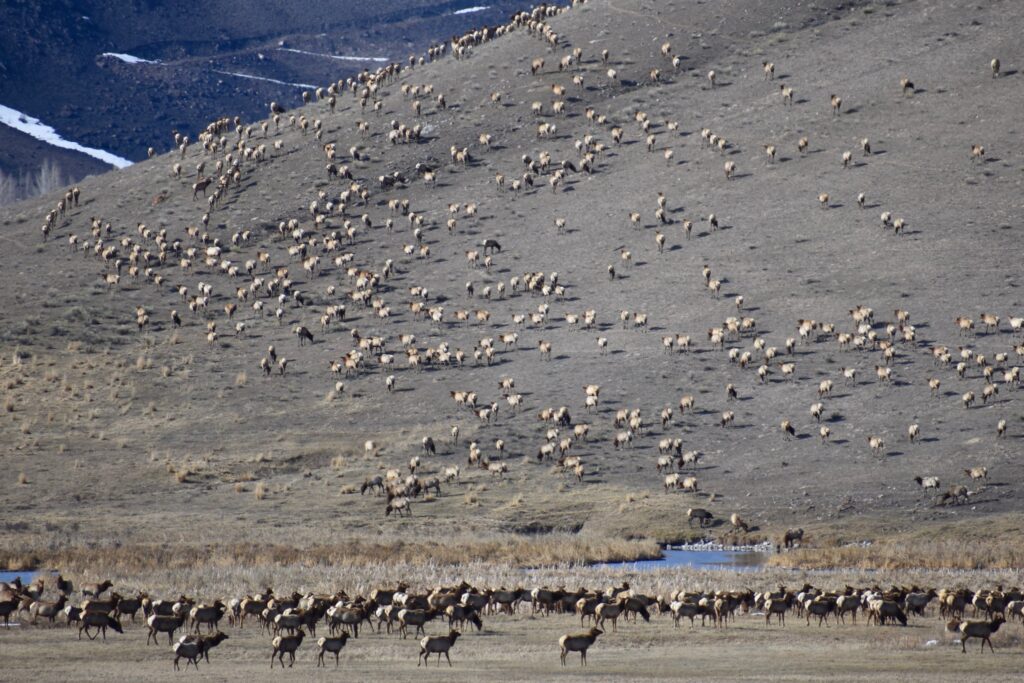
Hundreds of elk migrating through private ranch land
II. Update
In the first two years of the fund’s establishment in Paradise Valley, there were no cases of brucellosis reported to PERC. The fund, thankfully, remains untapped. PERC continues to stand ready to mobilize if a producer ever makes the call.
As part of the annual adjustments to the fund’s compensation and pricing structure, PERC works with hay producers in the valley to determine the expected average price that ranchers would pay for hay. For 2023, we set the per-ton base price of hay at $225; for 2024, that price was established at $175; in 2025, it was $150, reflecting the going price of hay and somewhat-reduced transportation costs given the local nature of the program and source. The hay price was used to determine the percentage of rancher costs that the fund would be able to cover. If hay prices rise, the fund covers a smaller portion of the overall costs faced by producers to avoid draining the fund with one or a few significant quarantine events.
Thanks to the hard work of the PERC fundraising team and partners, the compensation fund is fully capitalized at $150,000. The fund is entirely supported by donations from groups and individuals who benefit from the region’s vibrant elk herds. In January 2024, the ranchers of the Paradise Valley Working Lands Group recognized the contributors to the fund with bronze elk statuettes.
This flexible, private solution not only brings together a coalition of conservationists, hunters, ranchers, local businesses, and community members to protect ranching and elk but it also helps demonstrate the creativity, purpose, and potential of PERC’s Conservation Innovation Lab.
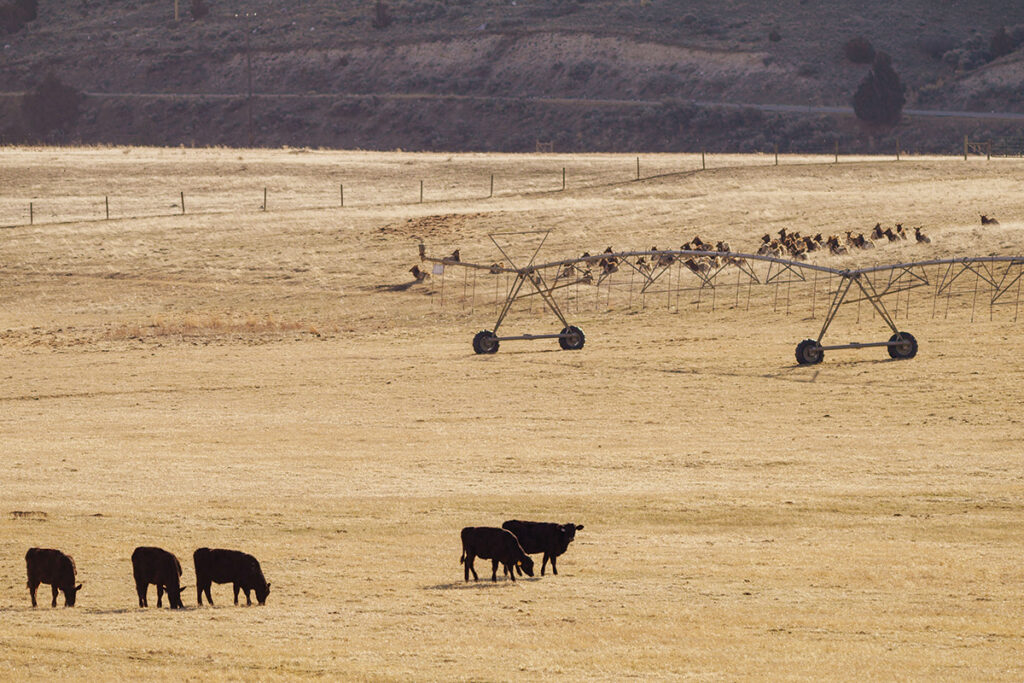
Elk bedded down in a cattle grazing pasure
III. Lessons Learned
Private working lands of Paradise Valley and beyond are vital for sustaining populations of elk and other wildlife. To maintain these lands, we need to partner with and support interested landowners whose properties provide benefits for elk and other wildlife, which subsequently benefit the public. Only by embracing private landowners as full and equal shareholders can we ensure working lands will continue to be counted on as part of a conservation portfolio.
Brucellosis was once a serious, expensive, and unmitigated risk to the ranchers of Paradise Valley. Through the fund, ranchers hopefully face less gut-wrenching fear when they see elk moving out of Yellowstone National Park and down onto their properties. We’ve learned that while so much great conservation happens at the individual ranch level, when we reduce the risks of the wildlife-livestock interface at a larger scale, we can increase conservation impact. When ranchers are less concerned about the presence of elk on their land, they can turn their attention to other important conservation actions, such as improving wildlife-friendly fencing or managing invasive plant species, and much more.
IV. Moving Forward
Every year, PERC will continue to adjust the payment rate to ranchers from the fund based on the average hay price in Paradise Valley. The hay price is cooperatively set in the winter months, when hay cutting is complete and ranchers are beginning to dip into their stores. Although producers in the valley have not yet withdrawn from the fund, it is a valuable resource when brucellosis rears its ugly head. The fund was originally established to be a three-year pilot, and that timeframe expires at the end of 2025. Since the fund provides a crucial resource for ranchers when needed, PERC and partners will renew it for another three years, from 2026 to 2029.
Seeing the opportunity and need for a similar financial backstop for ranchers on the eastern side of the Greater Yellowstone Ecosystem, producers in Cody, Wyoming, approached PERC about developing a comparable fund to address their specific needs. Following a similar process as the Paradise Valley Brucellosis Compensation Fund, PERC worked closely with Wyoming ranchers to develop the East Yellowstone Brucellosis Compensation Fund, which was launched at the beginning of 2025.
Overall, PERC has found significant value in addressing the risks wildlife pose to ranchers and land managers. Several publications have followed this work and led to a framework to address wildlife risks at larger scales.
Project #003
“Elk Rent” Payment for Presence Program
Emigrant Peak Ranch
I. Introduction
Nestled in the shadow of Montana’s towering Emigrant Peak, the Emigrant Peak Ranch provides high-quality habitat for wildlife, routinely hosting 400 to 500 elk during migration season, as well as large numbers of mule and white-tailed deer throughout the year. The concentration of wildlife on the ranch imposes costs on the Kinkie family, who have owned and operated the ranch for generations. The Kinkies have a deep-seated appreciation for the wildlife that grow and graze alongside their cattle, but their presence does not come without headaches for the family. Lost forage, damaged fences, and the threat of disease transfer, specifically brucellosis that can spread from elk to cattle, keep them up at night and on their toes during periods of high-wildlife traffic on the ranch.
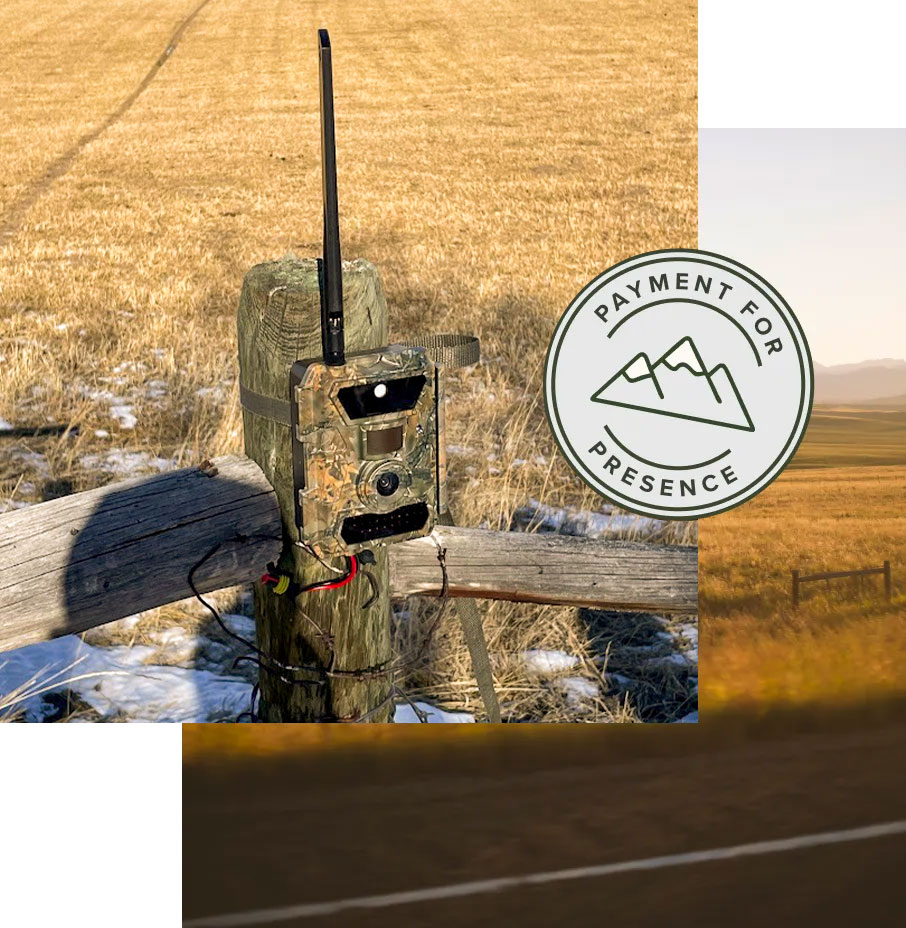
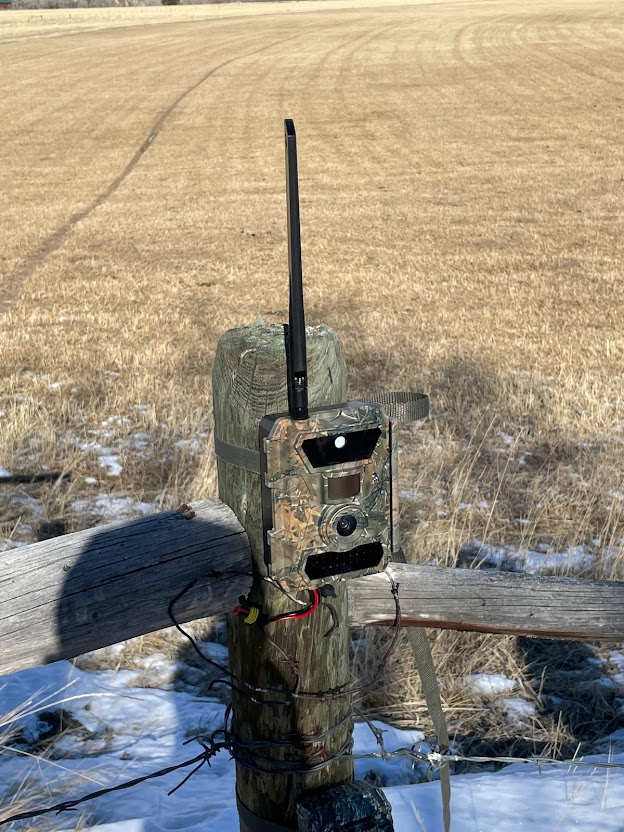
In the fall of 2022, the Kinkie family entered into a payment for presence agreement with PERC and partner Grizzly Systems that compensates the ranch for the high-quality habitat it provides. Under the agreement, the family allows the partners to deploy and monitor time-lapse cameras equipped with artificial intelligence (AI) and powered by solar panels to document elk presence during the winter and spring months. The photos are used to calculate “elk days,” for which PERC compensates the landowners. In the agreement, an elk day is defined as any day during the monitoring period when 20 or more elk are documented by any of the deployed cameras or landowner-provided images. To account for extra-high elk-use days, a bonus award is given when 200 or more elk are documented in a single day.
For more information about Payment for Presence Pilot #003, see:
To easily capture the number of elk on the ranch at any given time, the program relies on game cameras installed in key locations throughout the property.
II. Update
The project has captured elk presence for three migratory seasons on the ranch: the winter/spring of 2022-23, the winter/spring of 2023-24, and the winter/spring of 2024-2025. In Year 1, during the 103 days between the first and last elk detection (February 14 – May 27), elk were detected 40 percent of the time (41 days), yielding 18 elk days, based on the terms of the agreement. In Year 2, during the 219 days of recorded elk presence (December 5 – May 13), elk were detected 42 percent of the time (67 days), and a total of 42 elk days plus a single “bonus” day (201 elk) were documented. Year 3 saw the implementation of upgraded technology, including motion-activated and infrared cameras, which were active continuously, instead of just during daylight hours. These cameras were able to capture more data than the time-lapse cameras, which are only active from dawn to dusk. The advanced camera setup captured a total of 41 elk days, along with three “bonus” days with over 200 elk each.
In the first year, the Grizzly Systems’ AI-equipped camera traps detected significant elk movement and activity, but calculating actual numbers proved difficult as one or more elk had to be close enough to trigger the cameras’ motion sensors. In the second year, PERC augmented the cameras’ traps with time-lapse cameras that snap photos every five minutes, aiming to capture a fuller extent of elk on the ranch. In addition, the time-lapse cameras captured fascinating and unique wildlife movements. In one example, over the course of a day, a series of photos shows an elk herd moving from nearby higher elevation down onto an irrigated field, then an elk is successfully harvested by a hunter, and the cameras capture various scavengers that follow, descending upon the carcass until it is picked clean.
As a result of the project, the sight of elk on the ranch now elicits less dread from the Kinkies. Elk still cause damage, and they can still spread brucellosis to the cattle on the ranch, but because the family knows that they can recoup some of the costs, the elk represent less of a looming hardship.
Elk captured on Emmigrant Peak Ranch
III. Lessons Learned
In addition to learning a great deal about trail cameras, we’ve gotten to witness the incredible wildlife activity captured by the watchful eyes of the cameras. This project has demonstrated to us that small investments can lead to big change. Total annual payments for the project are capped at $12,000, but the investment has led to dramatically improved relationships with ranchers in Paradise Valley and has created the opportunity to scale this idea to other geographies and contexts.
IV. Moving Forward
In the future, PERC will continue to experiment with camera technology, placement, and counting techniques to capture wildlife activity and trends so that PERC can put impactful conservation work on the ground. Additionally, PERC is partnering with WEST Consultants of Cheyenne, Wyoming, to automate elk counting using machine learning and artificial intelligence.
Project #004
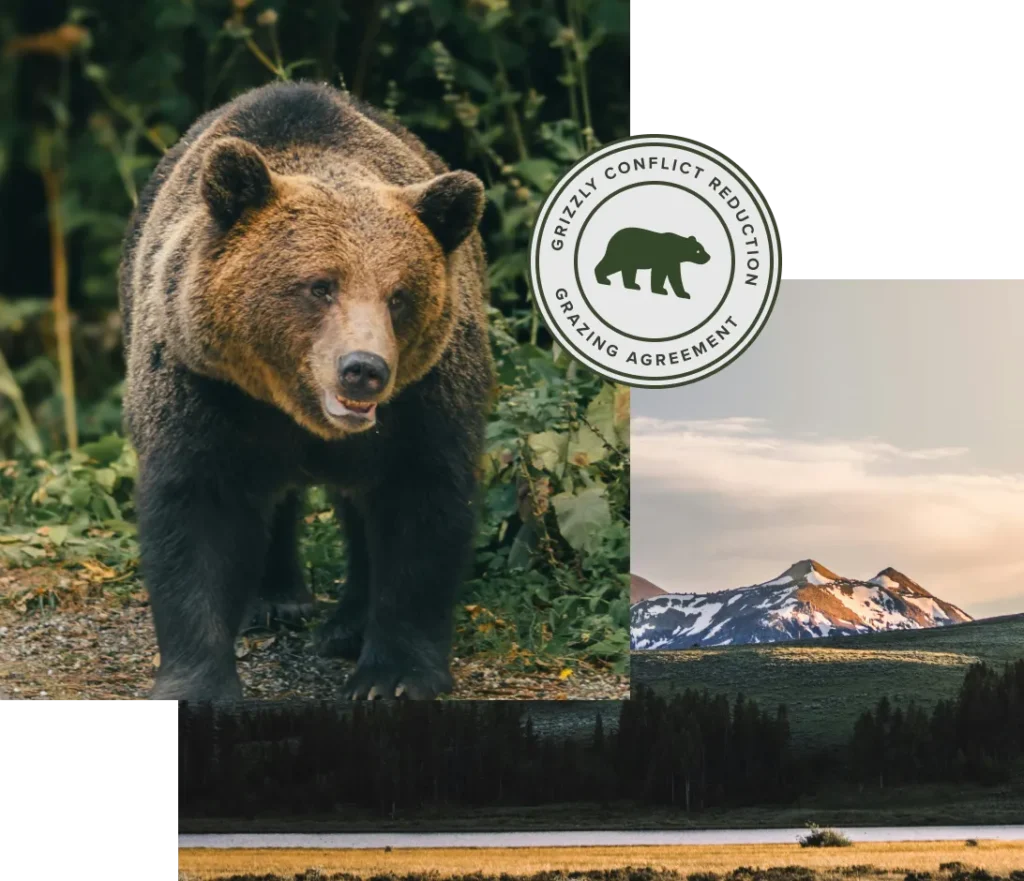
Grizzly Conflict Reduction Grazing Agreement
J Bar L Ranch
I. Introduction
In 2022, PERC, in partnership with the National Wildlife Federation and the Greater Yellowstone Coalition, secured a U.S. Forest Service grazing permit for the J Bar L Ranch and Anderson family who manage the ranch. This permit was acquired after another ranch decided to stop grazing on that permitted ground in the Gravelly Range of Montana due to numerous conflicts between its herd and grizzly bears on the allotment. As part of this agreement, and to reduce the likelihood of bear-cattle conflicts, the Andersons agreed to modify their cattle herd management practices, grazing more cattle for a shorter period, starting later in the season, and conducting consistent range riding while cattle were on the allotment. The ranch further agreed not to seek lethal removal of grizzly bears if a conflict were to arise.
For more information about Grizzly Conflict Reduction Grazing Agreement #004, see:
The prior permittee faced grizzly-depredation rates as high as 19 cattle killed annually. They followed a more traditional cattle grazing approach, turning cattle out to the allotment in the early summer, then gathering them in the fall and counting their losses. This approach resulted in significant conflict and led the permittee and the Forest Service to consider retiring grazing on the allotment entirely.
The Anderson family increased the number of cattle grazing on the allotment to roughly 1,200 individuals, and they switched the type of cattle from cow-calf pairs to yearling heifers, and for a shorter period of time. By grazing more cows, and without vulnerable calves, the ranch created a formidable herd, making it more difficult for grizzly bears to prey on individual animals. Through their intentional grazing practices, the Andersons have encouraged their herd to mimic the ebbs and flows of wild ungulates such as elk through the landscape—which has led to less conflict with grizzly bears and made for healthier, happier cows.
Since the agreement began and the Andersons changed the method of grazing management on the allotment, they have reported only one instance of confirmed or suspected depredation in the first year, none in the second, and three in the third. The range riders provide detailed reports of grizzly activity and grizzly-cattle interactions at the end of each season, giving PERC, other ranchers, and state bear biologists a clear picture of what happens on the allotment while cattle are grazing, and spurring ideas for further reducing grizzly-cattle conflict.
A grizzly bear spotted on the West Fork allotment
III. Lessons Learned
One major advantage of delaying the start of the grazing season is that cattle avoid the peak bloom of tall larkspur, which is toxic to cows and kills a significant number of cattle in Montana every year. By avoiding the larkspur bloom, cattle are less likely to die from ingesting the plant, resulting in fewer cattle carcasses on the landscape, eliminating a major attractant that can draw grizzly bears in from miles away.
Simple actions, such as shifting and shortening a cattle grazing season, can yield significant benefits for livestock operators and lead to important conservation outcomes. The Andersons are allowing their cattle to imitate many behaviors of elk, which have lived alongside grizzly bears for millenia. In addition to the benefits for livestock producers’ livelihoods, this technique gives grizzly bears additional room to roam. Changes in these ranching practices have not only led to improved conservation outcomes in this instance but also seem poised to improve livestock operations long-term by reducing stress on cattle and allowing for the adoption of an intensive, rotational grazing pattern.
IV. Moving Forward
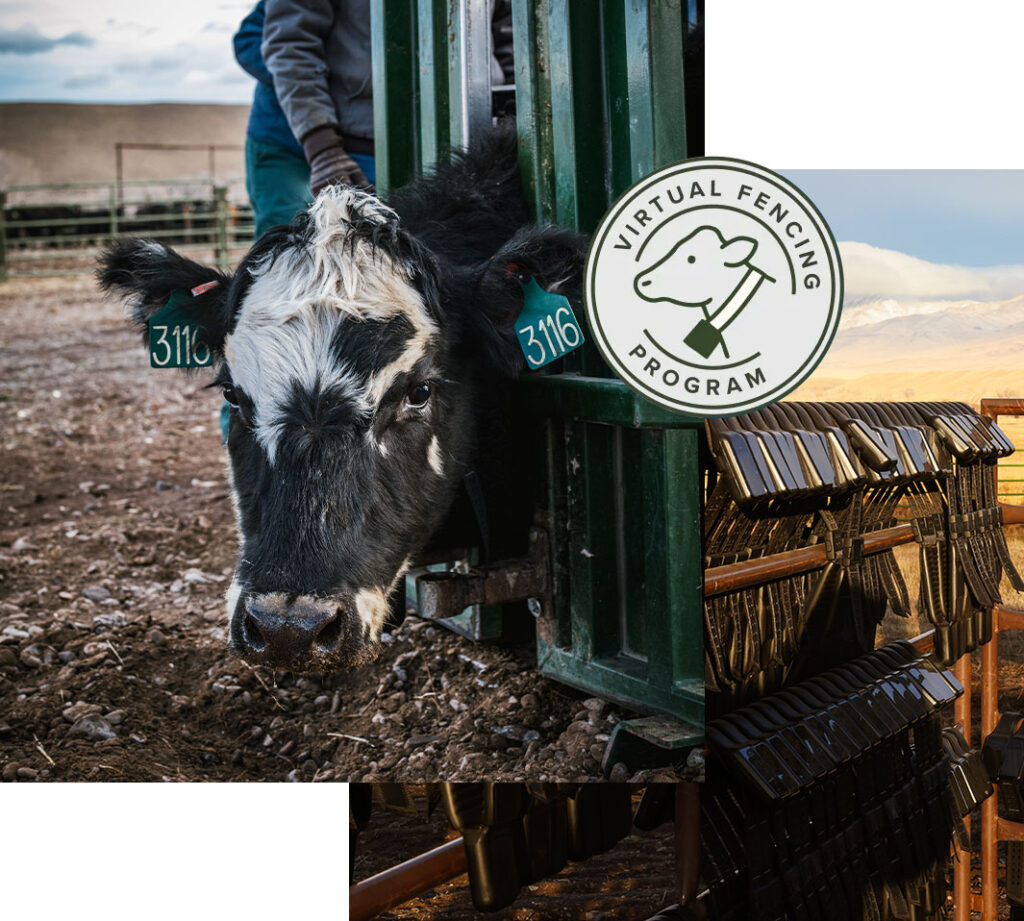
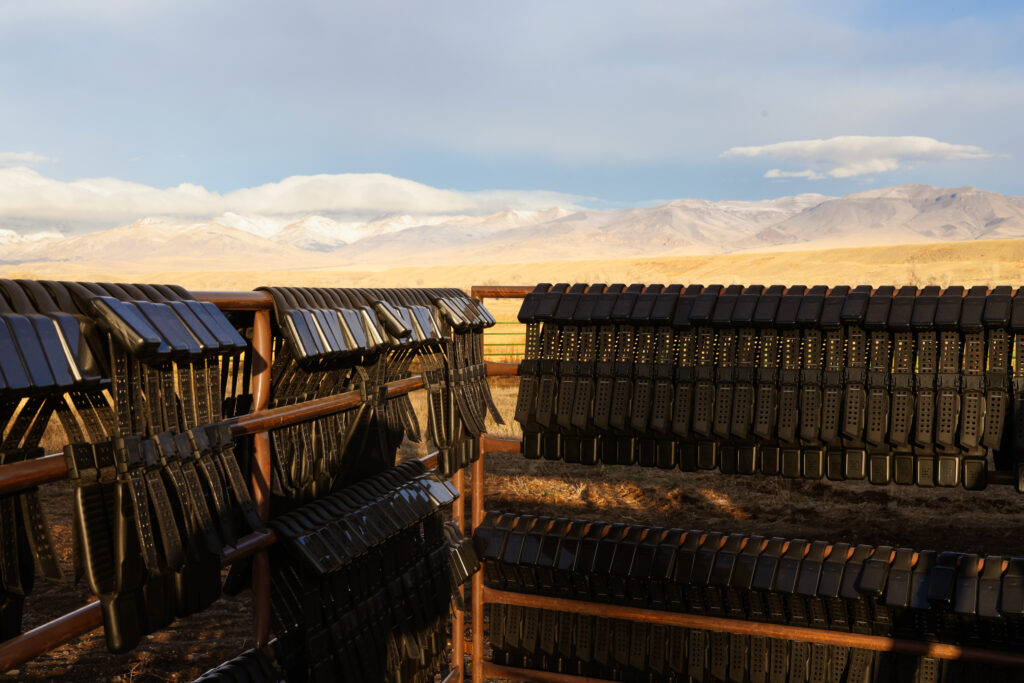
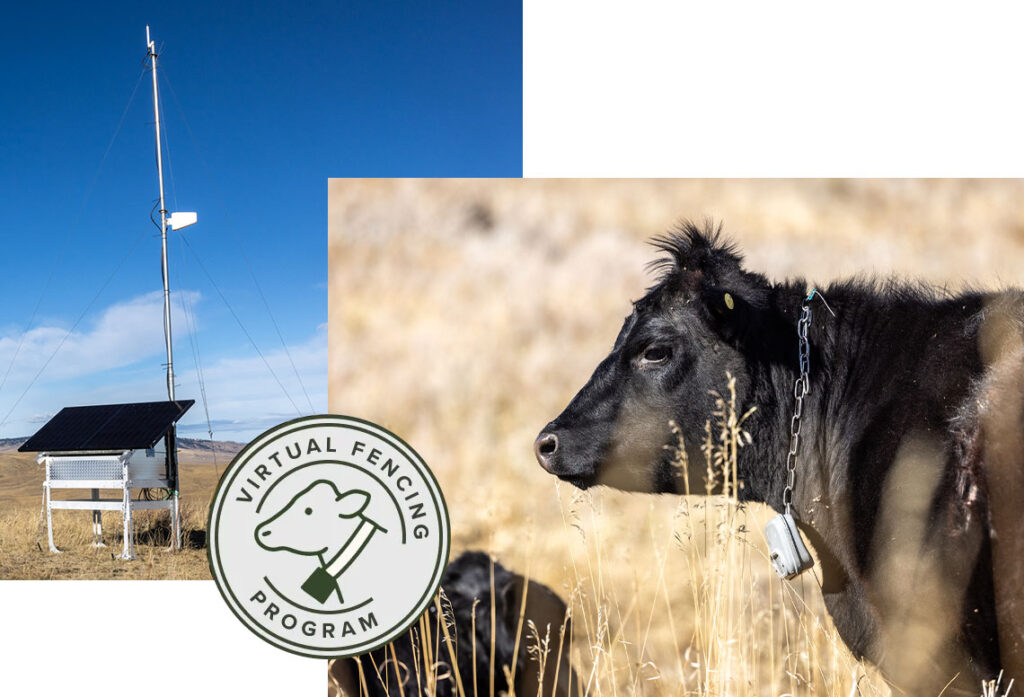
One of the major issues the Andersons continue to face on the allotment is the state of the Forest Service’s fencing infrastructure. The dilapidated fences present challenges for the ranch’s grazing management by not upholding physical boundaries for cattle, requiring additional work from range riders to keep cattle in bounds, and resulting in lost cows at the end of the season. The family has used temporary electric fencing as a stopgap solution, but they need longer-term options. PERC, the Noble Research Institute, The Nature Conservancy, and the Andersons worked this year to deploy virtual fencing across the allotment and other portions of the J Bar L Ranch. Virtual fencing, which involves cows wearing GPS collars being trained to abide by a digital rather than physical boundary, is compatible with the flexible and adaptive management style the Andersons have adopted, and it will allow them to create precise exclusion zones around tall larkspur or other sensitive areas where the ranchers don’t want cattle to wander. In addition, cows wearing GPS collars will help range riders locate lost or deceased individuals quickly, further reducing grizzly bear attractants and bear-cattle conflict.
The virtual fencing system will also obviate the need for electric fencing on the allotment and will lead to additional conservation benefits, such as improving landscape permeability for wildlife by removing fences and restoring streambanks using adaptive exclusion zones in riparian areas.
Project #006
Virtual Fence Conservation Fund
U.S.
I. Introduction
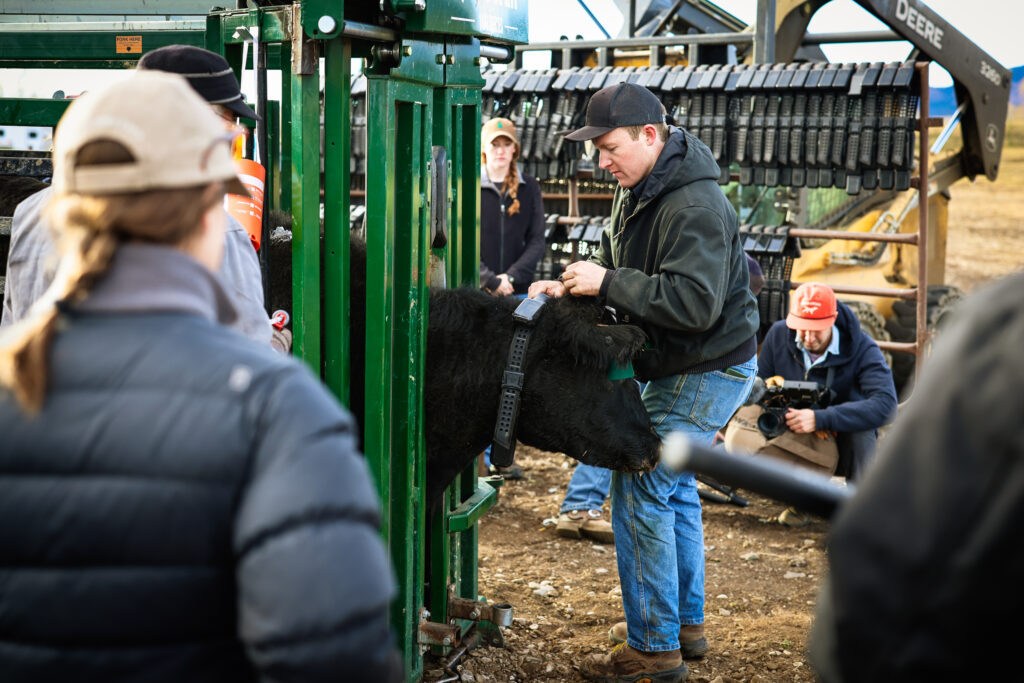
Since 2023, PERC has invested significantly in an emerging technology called virtual fencing. Virtual fencing is an innovative and adaptable tool that allows for more dynamic livestock management, while also opening the door for significant conservation benefits. The technology relies on GPS-equipped collars worn by livestock, which “herd” livestock away from digitally designated boundaries using sound and electric-shock signals. Collars also ping a livestock manager’s phone or computer through a network of towers or base stations placed around a landscape. The communication between a livestock manager’s phone or computer and the collars allows for more flexible, faster, and more efficient livestock management.
We see virtual fencing filling a niche as both a conservation tool and an incentive for farmers and ranchers to implement certain conservation practices. In June 2024, PERC and the Beyond Yellowstone Living Lab, with support from additional partners, hosted a workshop to discuss the future of virtual fencing and how to scale the technology. Part of the discussion in that workshop was around the need for more private philanthropic investment in pilots before other funding sources, including federal and state programs, would be comfortable investing significantly in the technology.
We also realized that conservation groups, as well as virtual fence companies, were not yet thinking about the huge potential conservation value of the technology, or the commercial opportunity of adding conservation groups as a new customer base. PERC stepped up by investing in the technology, reducing the financial risk for multiple early-adopter landowners while simultaneously demonstrating the market demand for the product that conservation can bring to the table. We can now proudly say that we are a leader in virtual fencing for conservation. We have helped grow a new market for the technology, have led by example by investing in it, and have worked to prove the conservation case for large-scale deployment of it.
In 2025, the Conservation Innovation Lab launched the Virtual Fence Conservation Fund, a fully privately funded pool of money for ranchers and other conservation partners who wanted to test virtual fencing to create conservation benefits. The fund received more than 180 applications from around the globe. PERC selected five recipients for funding. In addition to the five virtual fence projects the lab supported through the Virtual Fence Conservation Fund, we also supported three additional virtual fence projects, bringing our total annual investment in the technology to more than $400,000.
For more information about Virtual Fence Conservation Fund #006, see:
Cattle being collared at the Pitchfork Ranch in Wyoming.
II. Update
Successful applicants to the Virtual Fence Conservation Fund were notified in February, and several were able to deploy the technology in time for the 2025 summer grazing season. Others were delayed, but will attempt to deploy virtual fencing by the end of the year. Those who used the technology over the summer were generally pleased with the results. More use of the technology is needed to help us understand its current and future potential as a conservation tool before we can deploy it on a large scale. On several of the projects, PERC is working with research partners to study the conservation impacts of virtual fencing.
III. Lessons Learned
Many of the projects are still in the early stages of piloting the technology. So far, PERC has learned how to set clear expectations for ranchers using virtual fencing, for the tech companies involved, and for ourselves. As each of these projects progresses, and the ranchers using the technology gain a better understanding of its capabilities and limitations, we will track lessons learned and share them with the rest of the conservation community.
IV. Moving Forward
Research plans are in place for several of the projects, and research partners are equipped with everything they need to study the impacts of virtual fencing. PERC has committed to funding several additional virtual fencing projects over the course
Project #007
Paradise Valley Fence Fund
Paradise Valley
I. Introduction
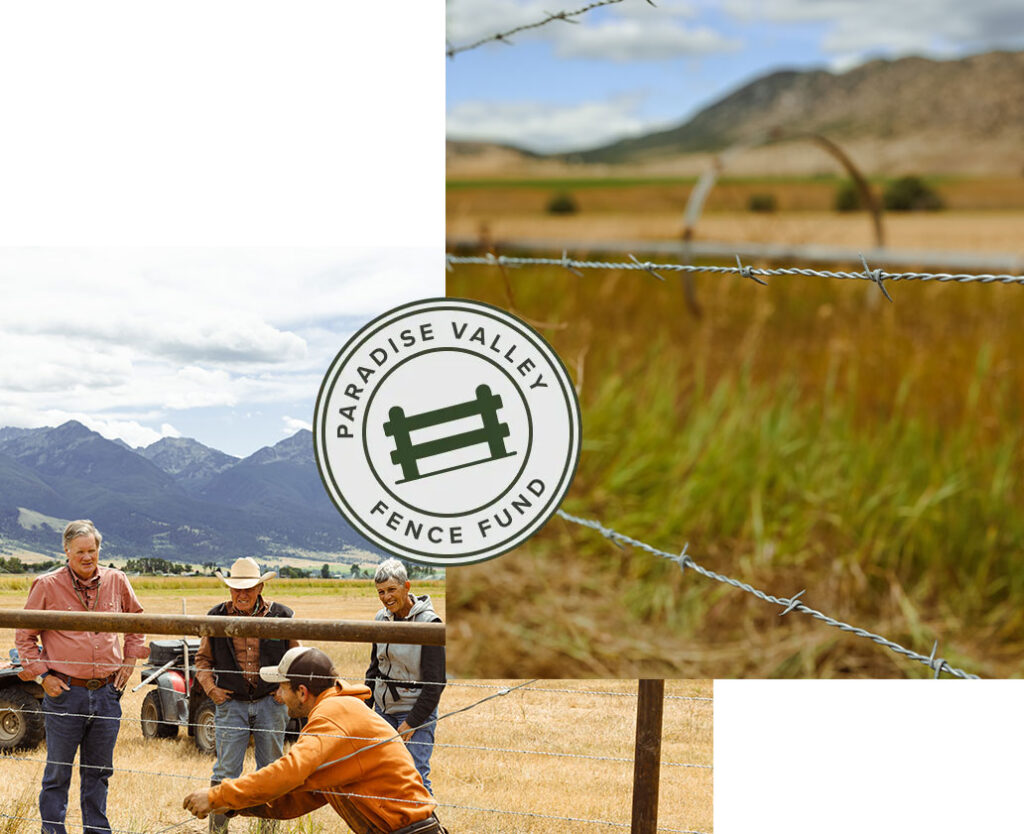
Just outside of Yellowstone National Park, Paradise Valley, Montana, contains invaluable habitat for some of the country’s most iconic species, including deer, elk, moose, bighorn sheep, grizzly and black bears, and many more. These animals are best known for their presence in the park during the summer, providing massive benefits to visitors and the tourism economy. Less known is that they spend the rest of the year outside the park boundaries, on winter habitat that often lie on private lands. Although ranchers on private lands in Paradise Valley enjoy and value the wildlife, their presence also causes headaches for the ranchers. After a great deal of conversations and research in Paradise Valley, PERC found that ranchers consider elk damage to fences to be one of their main concerns about living with wildlife. Additionally, as grizzly bears continue to expand their range and abundance, there is a need to restrict bear access to attractants such as bone yards, bee hives, chicken coops, and apple orchards, to prevent human-bear conflicts.
To help mitigate these conflicts and costs, PERC established the Paradise Valley Fence Fund in January 2025. PERC and partners Sitka Gear, Greater Yellowstone Coalition, Rocky Mountain Elk Foundation, and Sprunance Foundation II seeded the fund to an initial value of $50,000. The fund offers several levels of support for fence damage:
Basic repairs: The fence owner wishes to undertake basic fence repairs without a wildlife-friendly design. The Paradise Valley Fence Fund will compensate 30 percent of total costs (time and materials) up to $3,000.
Fence Replacement: Given wildlife impacts to existing fencing, the fence owner wishes to replace current fencing with wildlife-friendly fencing to mitigate ongoing fence damage. The Paradise Valley Fence Fund will compensate 50 percent of total costs (time and materials) up to $5,000.
To prevent conflict with grizzly bears in the valley, the Paradise Valley Fence Fund also supports fencing bear attractants. PERC and interested ranchers work with Montana Fish, Wildlife and Parks (FWP) and other partners to construct electric fencing around bone piles, bee hives, and other attractants. The fund recently purchased $10,000 in electric fencing supplies from Murdoch’s Home and Ranch Supply which are held by FWP in Livingston and are being deployed in Paradise Valley to resolve active and potential bear conflicts. Ranchers have access to these supplies when working with FWP.
A simple solution for some fencing conflicts is to provide wildlife passage through existing gates when livestock are not present. As an open gate may be seen by some people as an invitation for them to gain access, the fence fund developed a custom “no-entry” gate sign and is distributing them free of charge to interested landowners.
For more information about Paradise Valley Fence Fund #007, see:
Since its establishment, the fence fund has supported several completed projects, including installing electric fencing around two bone piles on a ranch near Yellowstone River, erecting electric perimeter fencing around an apple orchard in Six Mile drainage, and constructing fencing around a chicken coop and nearby residence south of Big Creek. Moreover, several gate signs have been given to landowners in the valley who are already installing them.
III. Lessons Learned
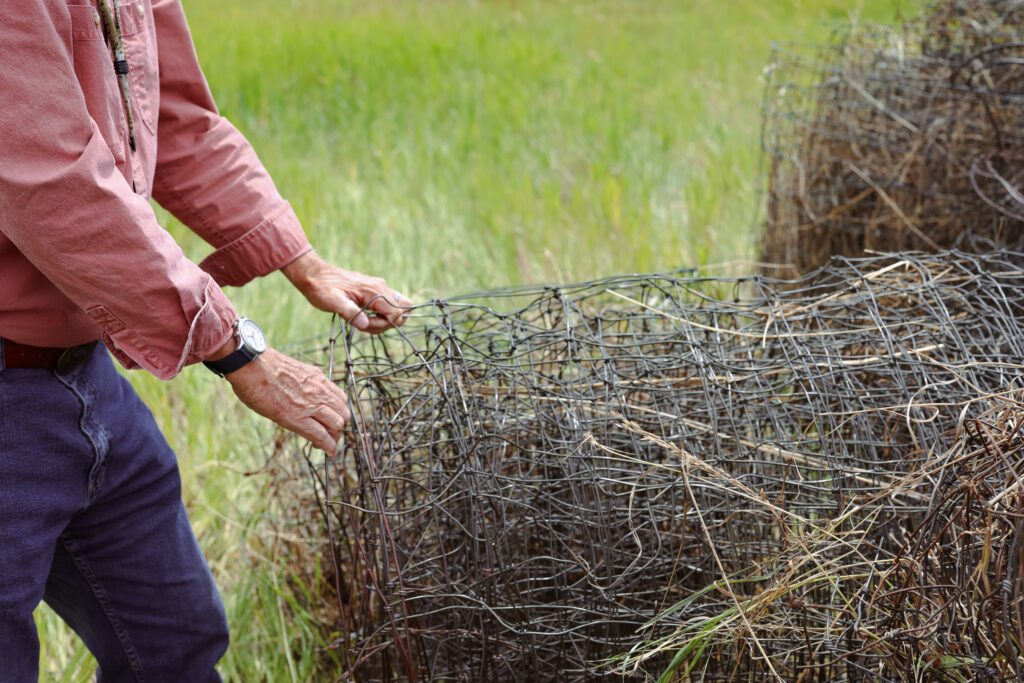
During PERC’s conversations in Paradise Valley, ranchers emphasized the importance of reducing and preventing wildlife-fence conflict. Even if the fence owner is not ready to implement a wildlife-friendly design on their property, they are typically interested in improving fencing, resulting in positive implications for wildlife as they are able to cross new fencing better than old, dilapidated fences that often snag legs and antlers as they pass over or under.
IV. Moving Forward
The Paradise Valley Fence Fund was established in January 2025 as a three-year pilot. PERC and contributing partners will continue to assist Paradise Valley ranchers to repair fences after damage caused by wildlife and replace fences with wildlife-friendly models that make the landscape more permeable for wildlife and reduce damages for ranchers. In addition, PERC expects to fund more bear attractant fencing projects in the fall as hyperphagic bears search for food prior to hibernation, and will also seek to mitigate other bear-human conflicts as they arise.
Project #009
Brucellosis Compensation Fund
East Yellowstone
I. Introduction
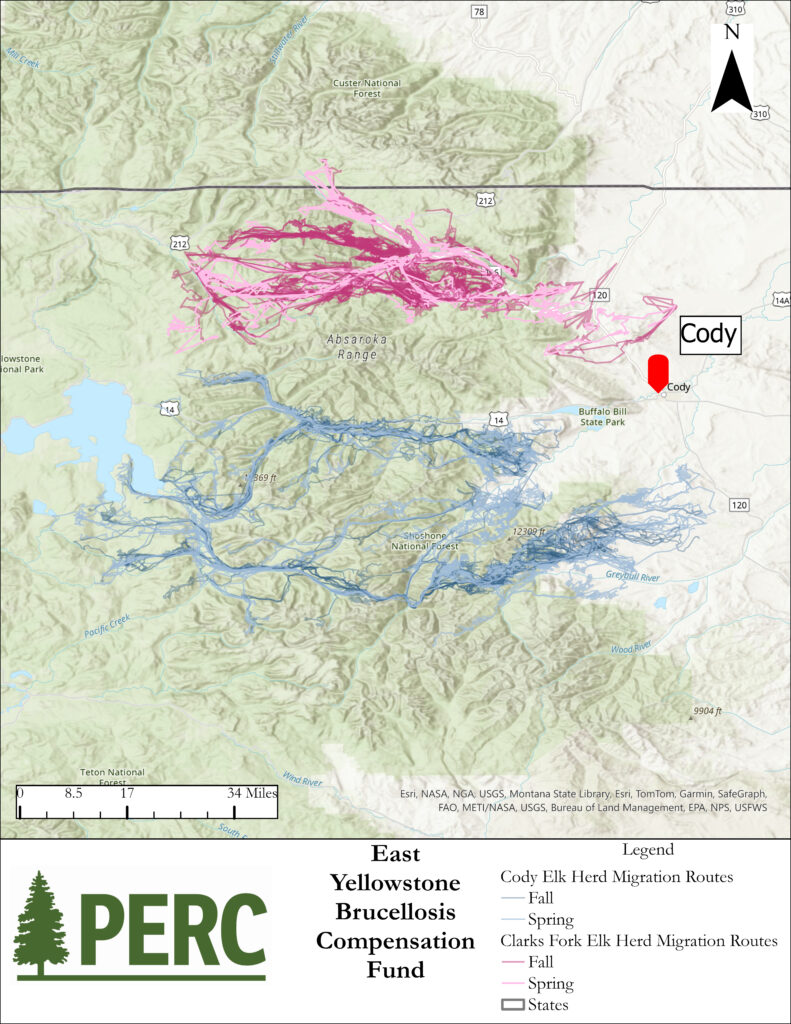
To the east of Yellowstone National Park is an incredible and diverse landscape among the Absaroka and Beartooth Mountain Ranges. These mountains stretch between Wyoming and Montana and create stunning landscapes sweeping above 10,000 feet in elevation. Farther east, the landscape enters the Big Horn Basin, where mountains and pine trees give way to sagebrush and dry scrub. Connecting this landscape from west to east are some of the hardest working ranches in the western U.S., which manage a complex patchwork of federal, state, and private lands alongside abundant populations of large wildlife.
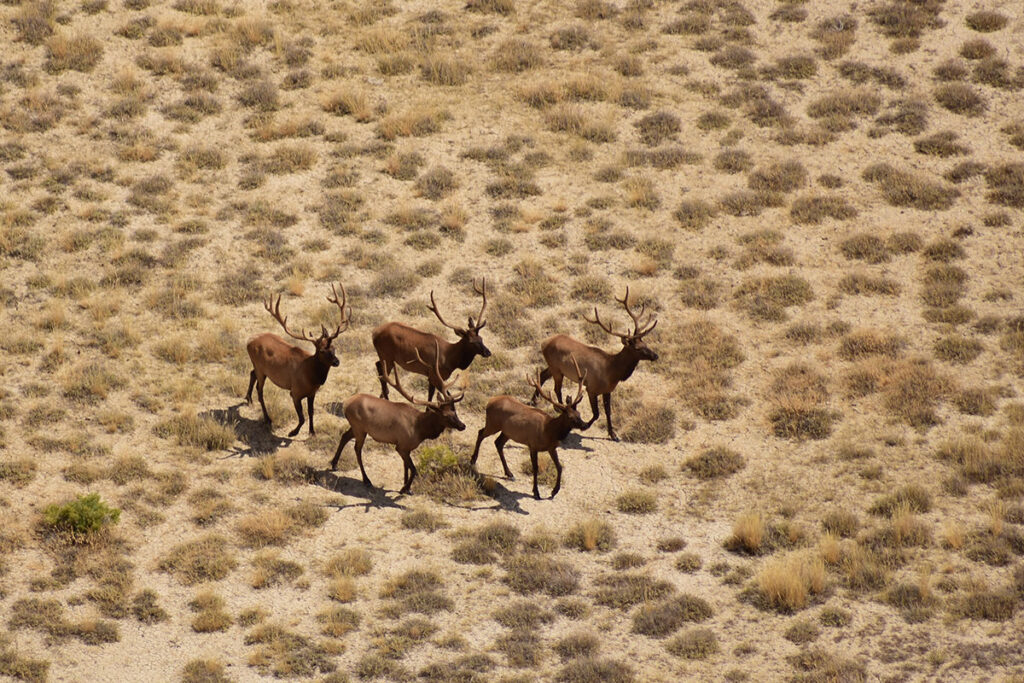
The ranches of the East Yellowstone Region deal with harsh weather, predators, and two distinct elk herds numbering more than 10,000 head in total. All of these factors bring unique challenges for viable ranching in the region. The elk, in particular, are one of the most complicated species for ranchers to deal with, and have the potential to bring the most hardship on the ranches, largely because elk in the Greater Yellowstone Ecosystem harbor brucellosis, a disease that can spread from elk to cattle and force a potentially costly and difficult quarantine.
Building off the Paradise Valley Brucellosis Compensation Fund, PERC and the East Yellowstone Collaborative began work in 2024 to establish a similar compensation program for the ranches in the eastern portion of the region. While the fund is structured similarly to that of the Paradise Valley, there are many nuances that make it unique to the place and context in which the ranches that cover it operate.
Over the course of 2024, PERC, the East Yellowstone Collaborative, and many ranch partners worked together to hone the structure of the fund in a way that would address the concerns of ranchers in the region. The partners also worked closely with the Wyoming Game and Fish Department and Wyoming Livestock Board. These two agencies provided invaluable feedback and context to the construction of the fund and will be instrumental to its functioning. The fund officially launched in January 2025.
For more information about Brucellosis Compensation Fund #009, see:
Shortly after the launch of the fund, cattle from two ranches in the priority area tested positive for brucellosis, and those ranches were subsequently issued quarantine orders. Both ranches were able to access the fund to pay for a portion of their quarantine expenses, in line with the agreed-upon structure. The fund was established with two different seasonal payment structures: a “winter” version between December and April, and a “summer” version between April and December. The two ranches’ quarantines spanned both the winter and summer windows, and payments were adjusted accordingly. Both ranches have since had their quarantine orders lifted. The funds paid to the ranches did not come close to covering 100 percent of the costs of quarantine. The money did, however, take a bit of the pain out of the quarantine order.
III. Lessons Learned
In creating the fund, ranches and ranching as a business are not monolithic even within the same region. The diversity of ranch operations and ranch businesses must be considered anytime a tool is being created to address the concerns and costs of ranches.
IV. Moving Forward
PERC and our partners will continue to monitor brucellosis in the East Yellowstone region and spread the word about the compensation fund. The fund still has the capacity to continue for two more years, as expected. PERC will continue to fundraise to meet the goals of the fund.
Project #001
Elk Occupancy Agreement
Petrich Ranch
I. Introduction
In the summer of 2021, PERC, the Greater Yellowstone Coalition, and the Petrich family of Emigrant, Montana, entered into an Elk Occupancy Agreement to conserve critical elk winter range for the Mill Creek Elk Herd. This was a first-of-its-kind conservation project for Paradise Valley, Montana, and PERC’s first Conservation Innovation Lab project.
In this Elk Occupancy Agreement, PERC and the Greater Yellowstone Coalition partnered to fund the construction of a 1.25-mile long fence in the northern portion of the Petrich Family Ranch to keep cattle out of a 500-acre area of elk winter-range, with the goal of reducing competition between elk and cattle for resources on the property. For their part of the agreement, the Petriches committed to keep the fence in good working order, manage invasive and noxious weeds in the winter-range area, and allow PERC to share the story of the agreement. The combination of these actions is designed to improve elk habitat in the area covered by the occupancy agreement, and help maintain the long-term financial viability of the ranch’s cattle and hunting operations.
For more information about Elk Occupancy Agreement #001, see:
Zane Petrich demonstrating the novel suspension fence built for the agreement.
II. Update
Since the start of the project, the Petrich family has observed flourishing native grass species, such as bluebunch wheatgrass, and a renewed abundance of wildlife, particularly elk, in the 500-acre occupancy area. The family has invested significantly in range health through noxious weed management and prescribed fire, and has replaced the entirety of the ranch’s fencing with a more wildlife-friendly design.
Before the agreement, cheatgrass, other non-native plant species with low forage value for wildlife, and encroaching conifers were common sights in the elk occupancy area. Elk searching for more nutritious food sources led to large herds occupying hay meadows or other areas where they were in close contact with cattle, increasing the risk of disease spread and competition for resources. Thanks to the hard work of the Petriches and some creative weed-spraying helicopter pilots, there are few remaining patches of non-desirable plants in the area.
Although the terms of this agreement seem simple, the benefits have been even bigger than expected. The wildlife-friendly fence has successfully kept cattle out of the elk winter-range area, allowing native forage to rebound and creating a significant benefit for the elk, mule deer, bighorn sheep and other wildlife that spend time on the ranch during their migrations. The suspension-style fence (which uses smooth wire and widely-spaced posts, allowing the fence to flex when animals contact it) is not yet included in Montana Fish, Wildlife and Parks or Rocky Mountain Elk Foundation fencing guides, but it has proven to be durable in spaces shared by cattle and elk, and could be used in areas more heavily trafficked by wildlife.
Petrich Ranch
III. Lessons Learned
Conservation success breeds additional interest in conservation. Through the Paradise Valley Working Lands Group, the Petrich family learned about PERC and began conversations that led to the Elk Occupancy Agreement. After the family entered the agreement, they shared their story with the rest of the landowners in the group, generating more interest and demonstrating that PERC is willing to put its money where its mouth is and put conservation projects on the ground. This project also demonstrates the value of piloting projects. Without first proving the success of ideas and building trust in communities, large-scale efforts are much more difficult to launch.
"As multi-generational ranchers, we were generally suspicious of conservation groups who seemed more interested in making life harder on us than supporting us. With PERC, however, we’ve found a partner committed to helping us manage our land to promote the land, the wildlife, and our ranch operation. The elk occupancy agreement and creation of the elk winter range has encouraged our family to do even more ranch-wide habitat projects to benefit both wildlife and our operations."
Zane Perich
IV. Moving Forward
The Petrich family’s work with PERC demonstrates that conservation projects can benefit both wildlife and ranching. The Petriches went beyond the terms of the occupancy agreement, and replaced the remainder of the ranch’s fencing, totaling roughly 7.7 miles, with the wildlife-friendly suspension design. This will increase the permeability of the ranch for wildlife movement while keeping their livestock in, and it will further reduce the headaches the family faces from repairing or replacing fences damaged by wildlife.
Project #002
Paradise Valley Brucellosis Compensation Fund
Paradise Valley
I. Introduction
In areas where wildlife and cattle share space, risk of disease transfer is high. Although ranchers in Paradise Valley, Montana, enjoy the wildlife that live on and pass through their properties, they admit that the risk of their cattle contracting diseases like brucellosis from wildlife keeps them up at night. If transmitted from elk to cattle, brucellosis not only causes abortion of fetuses, weight loss, and infertility, but it also brings a costly state-mandated quarantine that could financially ruin a ranch. To quarantine a herd, a ranch may need to erect new fences, provide supplemental feed, increase human labor on the operation, and increase veterinarian visits. One study estimated quarantine costs for a herd of 400 cattle in the Greater Yellowstone Ecosystem at nearly $150,000. This makes having an elk herd use a working ranch a lot less desirable. To mitigate this risk, PERC worked to create a new financial resource for ranchers to tap into, and in 2023,PERC established the Paradise Valley Brucellosis Compensation Fund—the first of its kind—to support ranchers if quarantining their cattle becomes necessary.
PERC established the Paradise Valley Brucellosis Compensation Fund based on extensive data collection and modeling as well as interviews and meetings with local landowners. PERC established the Fund with two goals: 1) provide a financial backstop to help ranchers weather the storm of a mandatory brucellosis quarantine and 2) demonstrate that the costs of a brucellosis quarantine can be shared by parties interested in supporting elk conservation. PERC and partners, including the Greater Yellowstone Coalition, Rocky Mountain Elk Foundation, Spruance Foundation, and Credova, seeded the fund to an initial $150,000. It is available to all cattle ranchers in the valley and is designed to cover 50 to 75 percent of a rancher’s quarantine-related costs—primarily hay—following a positive brucellosis test. The cost-sharing nature encourages ranchers to remain proactive and use best practices to protect against the disease. There is no formal enrollment process and no direct financial contribution requested from producers.
For more information about the Paradise Valley Brucellosis Compensation Fund #002, see:
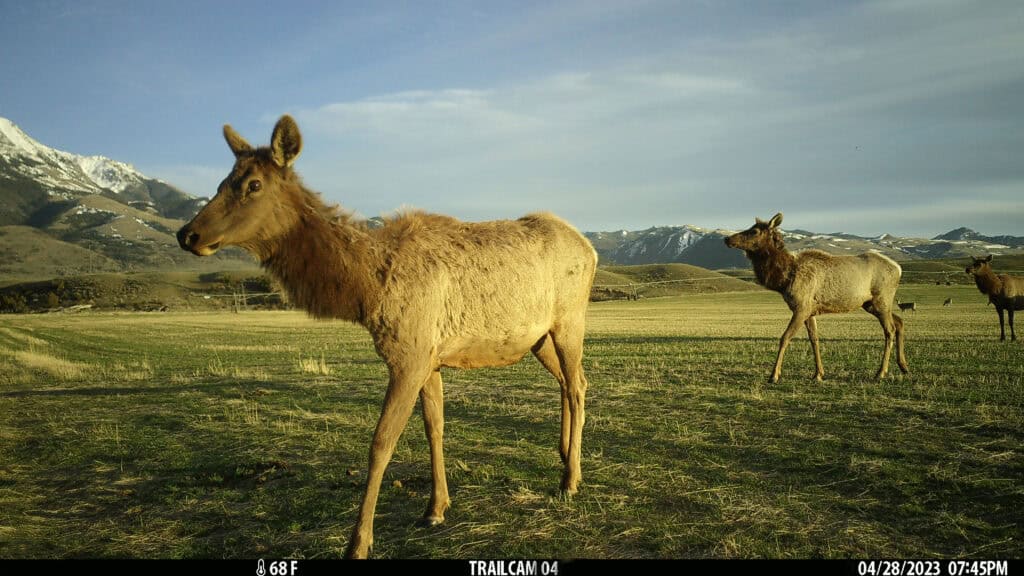
Hundreds of elk migrating through private ranch land
II. Update
In the first two years of the fund’s establishment in Paradise Valley, there were no cases of brucellosis reported to PERC. The fund, thankfully, remains untapped. PERC continues to stand ready to mobilize if a producer ever makes the call.
As part of the annual adjustments to the fund’s compensation and pricing structure, PERC works with hay producers in the valley to determine the expected average price that ranchers would pay for hay. For 2023, we set the per-ton base price of hay at $225; for 2024, that price was established at $175; in 2025, it was $150, reflecting the going price of hay and somewhat-reduced transportation costs given the local nature of the program and source. The hay price was used to determine the percentage of rancher costs that the fund would be able to cover. If hay prices rise, the fund covers a smaller portion of the overall costs faced by producers to avoid draining the fund with one or a few significant quarantine events.
Thanks to the hard work of the PERC fundraising team and partners, the compensation fund is fully capitalized at $150,000. The fund is entirely supported by donations from groups and individuals who benefit from the region’s vibrant elk herds. In January 2024, the ranchers of the Paradise Valley Working Lands Group recognized the contributors to the fund with bronze elk statuettes.
This flexible, private solution not only brings together a coalition of conservationists, hunters, ranchers, local businesses, and community members to protect ranching and elk but it also helps demonstrate the creativity, purpose, and potential of PERC’s Conservation Innovation Lab.
Elk bedded down in a cattle grazing pasure
III. Lessons Learned
Private working lands of Paradise Valley and beyond are vital for sustaining populations of elk and other wildlife. To maintain these lands, we need to partner with and support interested landowners whose properties provide benefits for elk and other wildlife, which subsequently benefit the public. Only by embracing private landowners as full and equal shareholders can we ensure working lands will continue to be counted on as part of a conservation portfolio.
Brucellosis was once a serious, expensive, and unmitigated risk to the ranchers of Paradise Valley. Through the fund, ranchers hopefully face less gut-wrenching fear when they see elk moving out of Yellowstone National Park and down onto their properties. We’ve learned that while so much great conservation happens at the individual ranch level, when we reduce the risks of the wildlife-livestock interface at a larger scale, we can increase conservation impact. When ranchers are less concerned about the presence of elk on their land, they can turn their attention to other important conservation actions, such as improving wildlife-friendly fencing or managing invasive plant species, and much more.
IV. Moving Forward
Every year, PERC will continue to adjust the payment rate to ranchers from the fund based on the average hay price in Paradise Valley. The hay price is cooperatively set in the winter months, when hay cutting is complete and ranchers are beginning to dip into their stores. Although producers in the valley have not yet withdrawn from the fund, it is a valuable resource when brucellosis rears its ugly head. The fund was originally established to be a three-year pilot, and that timeframe expires at the end of 2025. Since the fund provides a crucial resource for ranchers when needed, PERC and partners will renew it for another three years, from 2026 to 2029.
Seeing the opportunity and need for a similar financial backstop for ranchers on the eastern side of the Greater Yellowstone Ecosystem, producers in Cody, Wyoming, approached PERC about developing a comparable fund to address their specific needs. Following a similar process as the Paradise Valley Brucellosis Compensation Fund, PERC worked closely with Wyoming ranchers to develop the East Yellowstone Brucellosis Compensation Fund, which was launched at the beginning of 2025.
Overall, PERC has found significant value in addressing the risks wildlife pose to ranchers and land managers. Several publications have followed this work and led to a framework to address wildlife risks at larger scales.
Project #003
“Elk Rent” Payment for Presence Program
Emigrant Peak Ranch
I. Introduction
Nestled in the shadow of Montana’s towering Emigrant Peak, the Emigrant Peak Ranch provides high-quality habitat for wildlife, routinely hosting 400 to 500 elk during migration season, as well as large numbers of mule and white-tailed deer throughout the year. The concentration of wildlife on the ranch imposes costs on the Kinkie family, who have owned and operated the ranch for generations. The Kinkies have a deep-seated appreciation for the wildlife that grow and graze alongside their cattle, but their presence does not come without headaches for the family. Lost forage, damaged fences, and the threat of disease transfer, specifically brucellosis that can spread from elk to cattle, keep them up at night and on their toes during periods of high-wildlife traffic on the ranch.
In the fall of 2022, the Kinkie family entered into a payment for presence agreement with PERC and partner Grizzly Systems that compensates the ranch for the high-quality habitat it provides. Under the agreement, the family allows the partners to deploy and monitor time-lapse cameras equipped with artificial intelligence (AI) and powered by solar panels to document elk presence during the winter and spring months. The photos are used to calculate “elk days,” for which PERC compensates the landowners. In the agreement, an elk day is defined as any day during the monitoring period when 20 or more elk are documented by any of the deployed cameras or landowner-provided images. To account for extra-high elk-use days, a bonus award is given when 200 or more elk are documented in a single day.
For more information about Payment for Presence Pilot #003, see:
To easily capture the number of elk on the ranch at any given time, the program relies on game cameras installed in key locations throughout the property.
II. Update
The project has captured elk presence for three migratory seasons on the ranch: the winter/spring of 2022-23, the winter/spring of 2023-24, and the winter/spring of 2024-2025. In Year 1, during the 103 days between the first and last elk detection (February 14 – May 27), elk were detected 40 percent of the time (41 days), yielding 18 elk days, based on the terms of the agreement. In Year 2, during the 219 days of recorded elk presence (December 5 – May 13), elk were detected 42 percent of the time (67 days), and a total of 42 elk days plus a single “bonus” day (201 elk) were documented. Year 3 saw the implementation of upgraded technology, including motion-activated and infrared cameras, which were active continuously, instead of just during daylight hours. These cameras were able to capture more data than the time-lapse cameras, which are only active from dawn to dusk. The advanced camera setup captured a total of 41 elk days, along with three “bonus” days with over 200 elk each.
In the first year, the Grizzly Systems’ AI-equipped camera traps detected significant elk movement and activity, but calculating actual numbers proved difficult as one or more elk had to be close enough to trigger the cameras’ motion sensors. In the second year, PERC augmented the cameras’ traps with time-lapse cameras that snap photos every five minutes, aiming to capture a fuller extent of elk on the ranch. In addition, the time-lapse cameras captured fascinating and unique wildlife movements. In one example, over the course of a day, a series of photos shows an elk herd moving from nearby higher elevation down onto an irrigated field, then an elk is successfully harvested by a hunter, and the cameras capture various scavengers that follow, descending upon the carcass until it is picked clean.
As a result of the project, the sight of elk on the ranch now elicits less dread from the Kinkies. Elk still cause damage, and they can still spread brucellosis to the cattle on the ranch, but because the family knows that they can recoup some of the costs, the elk represent less of a looming hardship.
Elk captured on Emmigrant Peak Ranch
III. Lessons Learned
In addition to learning a great deal about trail cameras, we’ve gotten to witness the incredible wildlife activity captured by the watchful eyes of the cameras. This project has demonstrated to us that small investments can lead to big change. Total annual payments for the project are capped at $12,000, but the investment has led to dramatically improved relationships with ranchers in Paradise Valley and has created the opportunity to scale this idea to other geographies and contexts.
IV. Moving Forward
In the future, PERC will continue to experiment with camera technology, placement, and counting techniques to capture wildlife activity and trends so that PERC can put impactful conservation work on the ground. Additionally, PERC is partnering with WEST Consultants of Cheyenne, Wyoming, to automate elk counting using machine learning and artificial intelligence.
Project #004
Grizzly Conflict Reduction Grazing Agreement
J Bar L Ranch
I. Introduction
In 2022, PERC, in partnership with the National Wildlife Federation and the Greater Yellowstone Coalition, secured a U.S. Forest Service grazing permit for the J Bar L Ranch and Anderson family who manage the ranch. This permit was acquired after another ranch decided to stop grazing on that permitted ground in the Gravelly Range of Montana due to numerous conflicts between its herd and grizzly bears on the allotment. As part of this agreement, and to reduce the likelihood of bear-cattle conflicts, the Andersons agreed to modify their cattle herd management practices, grazing more cattle for a shorter period, starting later in the season, and conducting consistent range riding while cattle were on the allotment. The ranch further agreed not to seek lethal removal of grizzly bears if a conflict were to arise.
For more information about Grizzly Conflict Reduction Grazing Agreement #004, see:
The prior permittee faced grizzly-depredation rates as high as 19 cattle killed annually. They followed a more traditional cattle grazing approach, turning cattle out to the allotment in the early summer, then gathering them in the fall and counting their losses. This approach resulted in significant conflict and led the permittee and the Forest Service to consider retiring grazing on the allotment entirely.
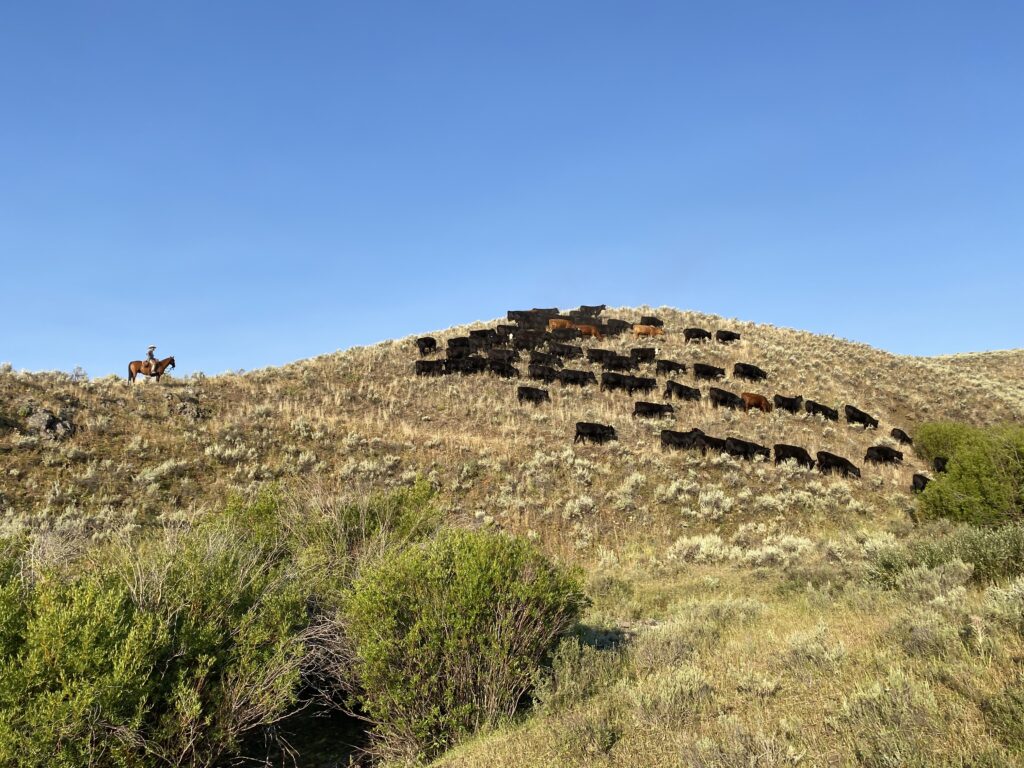
The Anderson family increased the number of cattle grazing on the allotment to roughly 1,200 individuals, and they switched the type of cattle from cow-calf pairs to yearling heifers, and for a shorter period of time. By grazing more cows, and without vulnerable calves, the ranch created a formidable herd, making it more difficult for grizzly bears to prey on individual animals. Through their intentional grazing practices, the Andersons have encouraged their herd to mimic the ebbs and flows of wild ungulates such as elk through the landscape—which has led to less conflict with grizzly bears and made for healthier, happier cows.
Since the agreement began and the Andersons changed the method of grazing management on the allotment, they have reported only one instance of confirmed or suspected depredation in the first year, none in the second, and three in the third. The range riders provide detailed reports of grizzly activity and grizzly-cattle interactions at the end of each season, giving PERC, other ranchers, and state bear biologists a clear picture of what happens on the allotment while cattle are grazing, and spurring ideas for further reducing grizzly-cattle conflict.
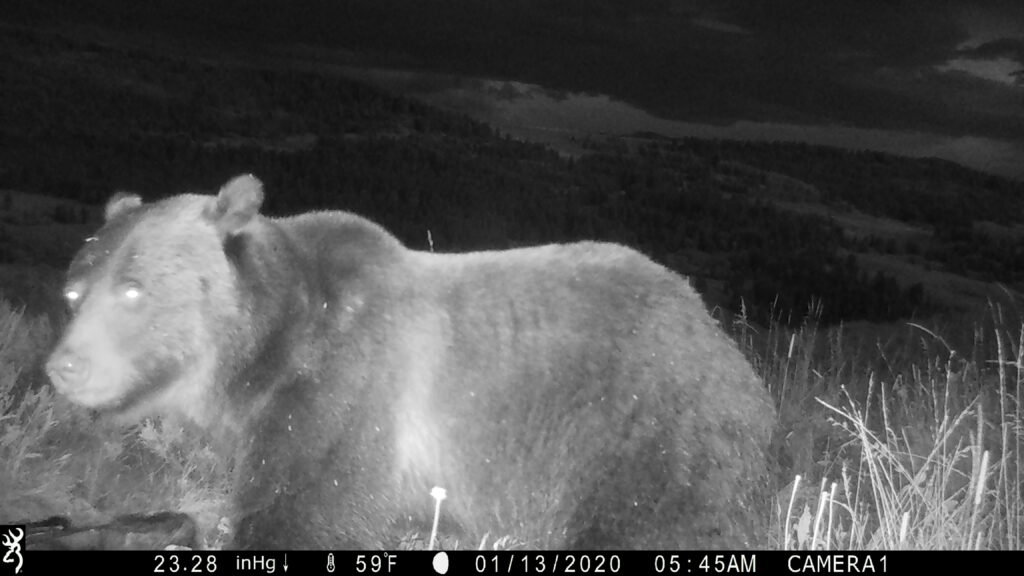
A grizzly bear spotted on the West Fork allotment
III. Lessons Learned
One major advantage of delaying the start of the grazing season is that cattle avoid the peak bloom of tall larkspur, which is toxic to cows and kills a significant number of cattle in Montana every year. By avoiding the larkspur bloom, cattle are less likely to die from ingesting the plant, resulting in fewer cattle carcasses on the landscape, eliminating a major attractant that can draw grizzly bears in from miles away.
Simple actions, such as shifting and shortening a cattle grazing season, can yield significant benefits for livestock operators and lead to important conservation outcomes. The Andersons are allowing their cattle to imitate many behaviors of elk, which have lived alongside grizzly bears for millenia. In addition to the benefits for livestock producers’ livelihoods, this technique gives grizzly bears additional room to roam. Changes in these ranching practices have not only led to improved conservation outcomes in this instance but also seem poised to improve livestock operations long-term by reducing stress on cattle and allowing for the adoption of an intensive, rotational grazing pattern.
IV. Moving Forward
One of the major issues the Andersons continue to face on the allotment is the state of the Forest Service’s fencing infrastructure. The dilapidated fences present challenges for the ranch’s grazing management by not upholding physical boundaries for cattle, requiring additional work from range riders to keep cattle in bounds, and resulting in lost cows at the end of the season. The family has used temporary electric fencing as a stopgap solution, but they need longer-term options. PERC, the Noble Research Institute, The Nature Conservancy, and the Andersons worked this year to deploy virtual fencing across the allotment and other portions of the J Bar L Ranch. Virtual fencing, which involves cows wearing GPS collars being trained to abide by a digital rather than physical boundary, is compatible with the flexible and adaptive management style the Andersons have adopted, and it will allow them to create precise exclusion zones around tall larkspur or other sensitive areas where the ranchers don’t want cattle to wander. In addition, cows wearing GPS collars will help range riders locate lost or deceased individuals quickly, further reducing grizzly bear attractants and bear-cattle conflict.
The virtual fencing system will also obviate the need for electric fencing on the allotment and will lead to additional conservation benefits, such as improving landscape permeability for wildlife by removing fences and restoring streambanks using adaptive exclusion zones in riparian areas.
Project #005
Virtual Fencing Conservation Pilot
McFarland White Ranch
I. Introduction
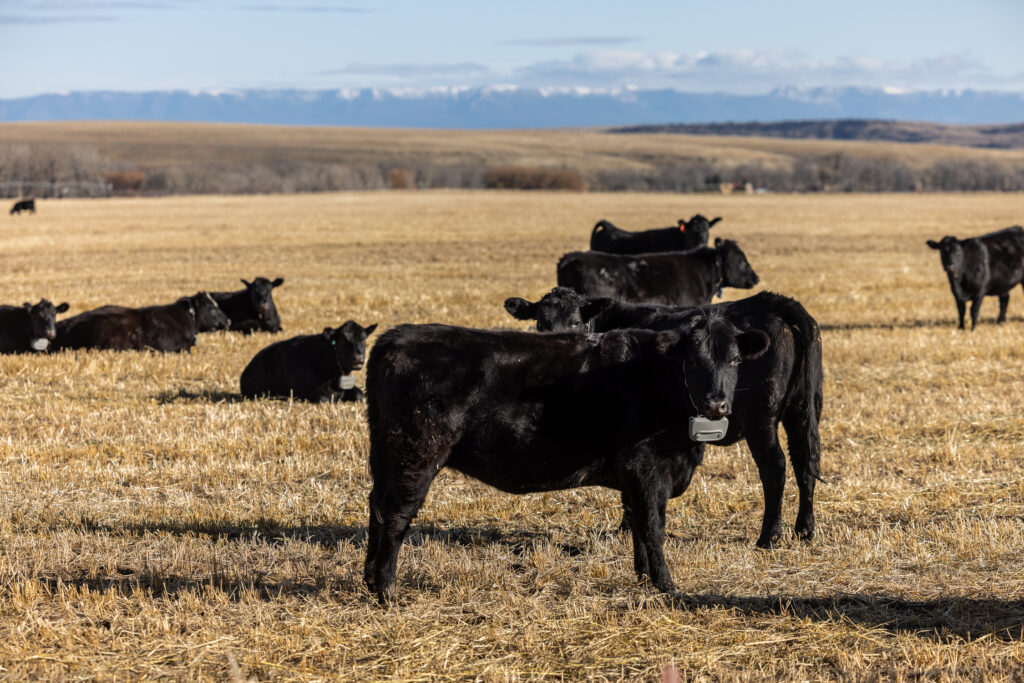
In the summer of 2023, the McFarland White Ranch of Two Dot, Montana, began a trial of a virtual fencing system. In addition to PERC, the endeavor was supported by the Rocky Mountain Elk Foundation, National Wildlife Federation, and National Fish and Wildlife Foundation, though all partners came to be involved with the project independently. Virtual fencing is an emerging technology that relies on a network of signal towers to relay information to GPS-equipped collars worn by cattle. The system allows ranchers to remotely create virtual barriers for their herd, enforced through auditory and, if necessary, electric shock stimuli that keep cattle within the boundary that the rancher sets.
Virtual fences may eventually replace internal cross fencing on ranches, eliminating portions of traditional barbed-wire infrastructure. Removing barbed wire will open the landscape and improve permeability for ungulates like pronghorn antelope and mule deer. The ranch collared about 2,000 cattle and placed six towers on the property to create a virtual network, which allows the ranchers to manage fences and monitor cattle locations from their desktops.
For more information about Virtual Fencing Conservation Pilot Project #005, see:
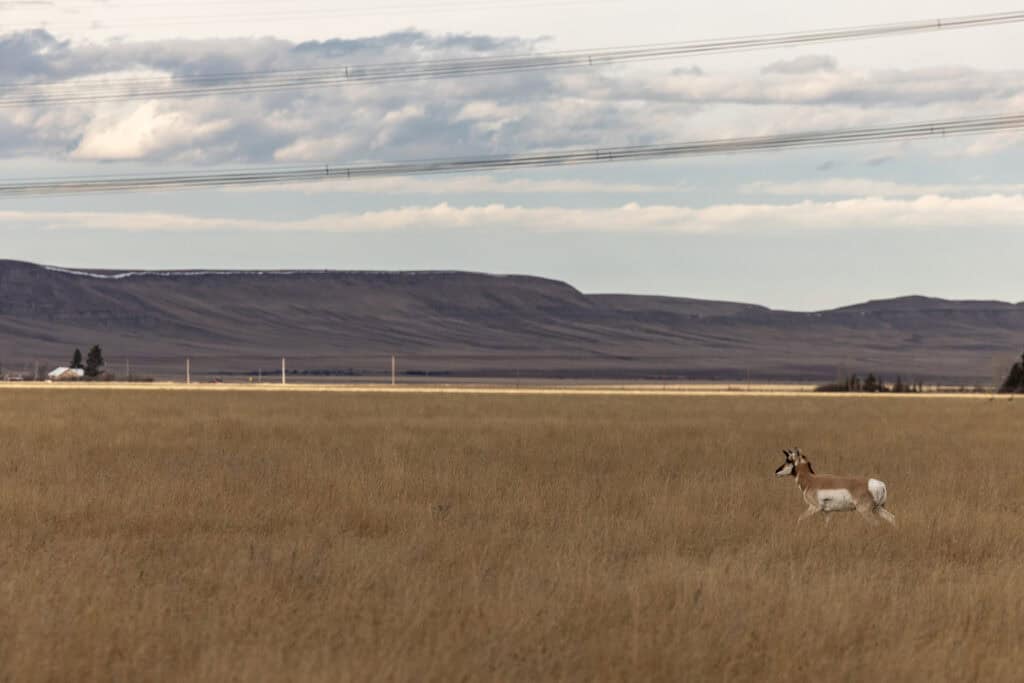
Pronghorn migrate through the McFarland White Ranch. Photo by Louise Johns.
II. Update
After one year of piloting the technology, the McFarland White Ranch faced insurmountable difficulties. Virtual fencing is still in its early years of development, and each trial leads to product enhancements. The ranch and the company that provided the virtual fence technology decided to part ways after one year of piloting the system. The ranchers were frustrated by technical hiccups and a customer service model that is fundamentally different from that of many farm or ranch support services. Many ranch support services rely on a network of trained staff that live near where their product is deployed and tend to solve problems in person. The virtual fence company tended to attempt to solve issues through remote and online means, which required the ranch to shift expectations. The virtual fence company was frustrated because the technology was being used in a new context, under unique management practices, and larger-than-expected landscapes.
Cattle wearing their GPS collars. Photo by Louise Johns.
III. Lessons Learned
There are seemingly endless opportunities that virtual fencing can afford to ranchers and conservationists. Hundreds of thousands of miles of barbed wire crisscross the West, and virtual fencing offers a unique and valuable alternative to the material that tamed the country. With a little creativity, ranchers and conservationists can come up with ways to use the technology and reimagine a future with less barbed wire on the landscape.
Most importantly, this project provided a reminder that new technologies come with a learning curve. The McFarland White Ranch was unique in its size, landscape, and management purpose. Most previous virtual fence projects were conducted on smaller ranches, in flatter landscapes, and with a management goal of intensively and rotationally grazing cattle. This project’s primary goal was to remove barbed wire to reopen the landscape for migrating pronghorn, and the ranch preferred an extensive approach to grazing cattle. There was a uniquely steep learning curve given the litany of special circumstances. Learning curves like these can be frustrating for ranchers and technology companies alike. This project is a good reminder that when deploying an emerging technology to a new context, open and productive communication and creating a shared understanding of goals and purposes from the beginning are crucial to success.
We were also reminded of the importance of creating a partnership with ranchers from the beginning. We didn’t fully account for the importance of ensuring the technology provider and the rancher had a shared vision, nor did we ensure the emerging technology met the rancher's needs first and foremost. While this emerging technology is exciting, we must walk before we run by understanding and aligning goals from the beginning and ensuring that the technology is the right fit for the project at hand. We are grateful for these lessons and will keep them at the forefront of our projects and partnerships in the future.
IV. Moving Forward
PERC continues to be excited about the opportunities that virtual fencing will bring for both conservation and ranching. PERC is working to identify other opportunities to learn about and help deploy virtual fencing in creative ways that will be successful for ranchers. After we have the chance to test the technology in a variety of contexts, we will be able to better tap into its many uses for conservation.
Project #006
Virtual Fence Conservation Fund
U.S.
I. Introduction
Since 2023, PERC has invested significantly in an emerging technology called virtual fencing. Virtual fencing is an innovative and adaptable tool that allows for more dynamic livestock management, while also opening the door for significant conservation benefits. The technology relies on GPS-equipped collars worn by livestock, which “herd” livestock away from digitally designated boundaries using sound and electric-shock signals. Collars also ping a livestock manager’s phone or computer through a network of towers or base stations placed around a landscape. The communication between a livestock manager’s phone or computer and the collars allows for more flexible, faster, and more efficient livestock management.
We see virtual fencing filling a niche as both a conservation tool and an incentive for farmers and ranchers to implement certain conservation practices. In June 2024, PERC and the Beyond Yellowstone Living Lab, with support from additional partners, hosted a workshop to discuss the future of virtual fencing and how to scale the technology. Part of the discussion in that workshop was around the need for more private philanthropic investment in pilots before other funding sources, including federal and state programs, would be comfortable investing significantly in the technology.
We also realized that conservation groups, as well as virtual fence companies, were not yet thinking about the huge potential conservation value of the technology, or the commercial opportunity of adding conservation groups as a new customer base. PERC stepped up by investing in the technology, reducing the financial risk for multiple early-adopter landowners while simultaneously demonstrating the market demand for the product that conservation can bring to the table. We can now proudly say that we are a leader in virtual fencing for conservation. We have helped grow a new market for the technology, have led by example by investing in it, and have worked to prove the conservation case for large-scale deployment of it.
In 2025, the Conservation Innovation Lab launched the Virtual Fence Conservation Fund, a fully privately funded pool of money for ranchers and other conservation partners who wanted to test virtual fencing to create conservation benefits. The fund received more than 180 applications from around the globe. PERC selected five recipients for funding. In addition to the five virtual fence projects the lab supported through the Virtual Fence Conservation Fund, we also supported three additional virtual fence projects, bringing our total annual investment in the technology to more than $400,000.
For more information about Virtual Fence Conservation Fund #006, see:
Cattle being collared at the Pitchfork Ranch in Wyoming.
II. Update
Successful applicants to the Virtual Fence Conservation Fund were notified in February, and several were able to deploy the technology in time for the 2025 summer grazing season. Others were delayed, but will attempt to deploy virtual fencing by the end of the year. Those who used the technology over the summer were generally pleased with the results. More use of the technology is needed to help us understand its current and future potential as a conservation tool before we can deploy it on a large scale. On several of the projects, PERC is working with research partners to study the conservation impacts of virtual fencing.
III. Lessons Learned
Many of the projects are still in the early stages of piloting the technology. So far, PERC has learned how to set clear expectations for ranchers using virtual fencing, for the tech companies involved, and for ourselves. As each of these projects progresses, and the ranchers using the technology gain a better understanding of its capabilities and limitations, we will track lessons learned and share them with the rest of the conservation community.
IV. Moving Forward
Research plans are in place for several of the projects, and research partners are equipped with everything they need to study the impacts of virtual fencing. PERC has committed to funding several additional virtual fencing projects over the course
Project #007
Paradise Valley Fence Fund
Paradise Valley
I. Introduction
Just outside of Yellowstone National Park, Paradise Valley, Montana, contains invaluable habitat for some of the country’s most iconic species, including deer, elk, moose, bighorn sheep, grizzly and black bears, and many more. These animals are best known for their presence in the park during the summer, providing massive benefits to visitors and the tourism economy. Less known is that they spend the rest of the year outside the park boundaries, on winter habitat that often lie on private lands. Although ranchers on private lands in Paradise Valley enjoy and value the wildlife, their presence also causes headaches for the ranchers. After a great deal of conversations and research in Paradise Valley, PERC found that ranchers consider elk damage to fences to be one of their main concerns about living with wildlife. Additionally, as grizzly bears continue to expand their range and abundance, there is a need to restrict bear access to attractants such as bone yards, bee hives, chicken coops, and apple orchards, to prevent human-bear conflicts.
To help mitigate these conflicts and costs, PERC established the Paradise Valley Fence Fund in January 2025. PERC and partners Sitka Gear, Greater Yellowstone Coalition, Rocky Mountain Elk Foundation, and Sprunance Foundation II seeded the fund to an initial value of $50,000. The fund offers several levels of support for fence damage:
Basic repairs: The fence owner wishes to undertake basic fence repairs without a wildlife-friendly design. The Paradise Valley Fence Fund will compensate 30 percent of total costs (time and materials) up to $3,000.
Fence Replacement: Given wildlife impacts to existing fencing, the fence owner wishes to replace current fencing with wildlife-friendly fencing to mitigate ongoing fence damage. The Paradise Valley Fence Fund will compensate 50 percent of total costs (time and materials) up to $5,000.
To prevent conflict with grizzly bears in the valley, the Paradise Valley Fence Fund also supports fencing bear attractants. PERC and interested ranchers work with Montana Fish, Wildlife and Parks (FWP) and other partners to construct electric fencing around bone piles, bee hives, and other attractants. The fund recently purchased $10,000 in electric fencing supplies from Murdoch’s Home and Ranch Supply which are held by FWP in Livingston and are being deployed in Paradise Valley to resolve active and potential bear conflicts. Ranchers have access to these supplies when working with FWP.
A simple solution for some fencing conflicts is to provide wildlife passage through existing gates when livestock are not present. As an open gate may be seen by some people as an invitation for them to gain access, the fence fund developed a custom “no-entry” gate sign and is distributing them free of charge to interested landowners.
For more information about Paradise Valley Fence Fund #007, see:
Since its establishment, the fence fund has supported several completed projects, including installing electric fencing around two bone piles on a ranch near Yellowstone River, erecting electric perimeter fencing around an apple orchard in Six Mile drainage, and constructing fencing around a chicken coop and nearby residence south of Big Creek. Moreover, several gate signs have been given to landowners in the valley who are already installing them.
III. Lessons Learned
During PERC’s conversations in Paradise Valley, ranchers emphasized the importance of reducing and preventing wildlife-fence conflict. Even if the fence owner is not ready to implement a wildlife-friendly design on their property, they are typically interested in improving fencing, resulting in positive implications for wildlife as they are able to cross new fencing better than old, dilapidated fences that often snag legs and antlers as they pass over or under.
IV. Moving Forward
The Paradise Valley Fence Fund was established in January 2025 as a three-year pilot. PERC and contributing partners will continue to assist Paradise Valley ranchers to repair fences after damage caused by wildlife and replace fences with wildlife-friendly models that make the landscape more permeable for wildlife and reduce damages for ranchers. In addition, PERC expects to fund more bear attractant fencing projects in the fall as hyperphagic bears search for food prior to hibernation, and will also seek to mitigate other bear-human conflicts as they arise.
Project #008
Elk Occupancy Agreement
Eagle Rock Ranch, Co
I. Introduction
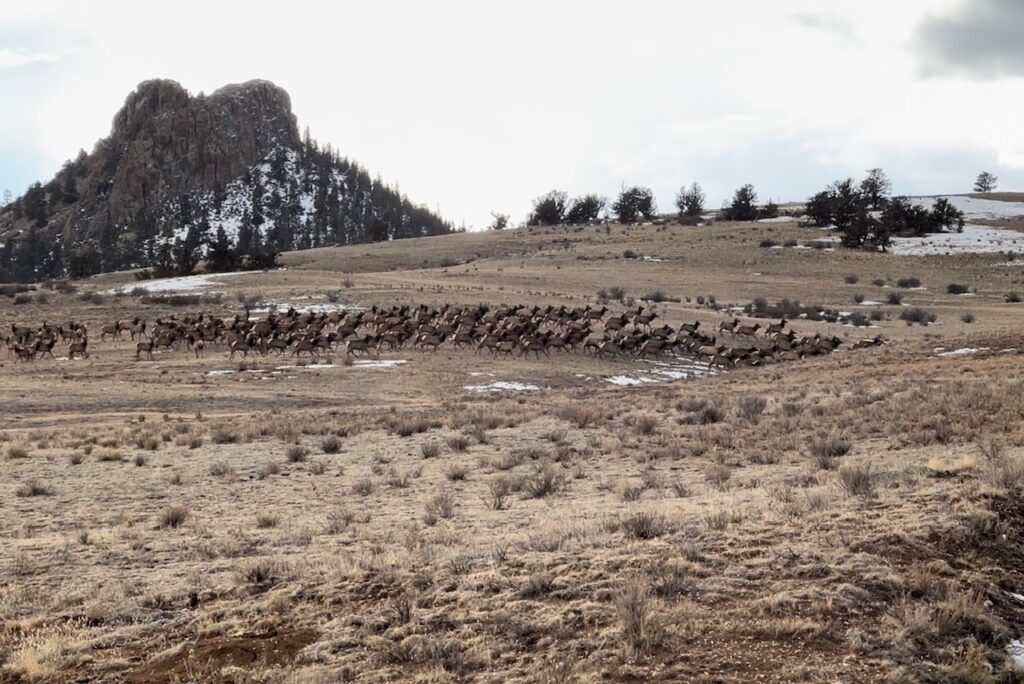
Colorado is home to both the world’s largest elk herd (300,000 strong) and some of the most productive agricultural landscapes in the Rocky Mountains. Too often, elk and land owners and managers end up competing, creating friction between the agricultural, conservation, and recreation communities. Ranches and the land stewards who maintain these working lands are at the center of much of that competition, because these landscapes provide much of the high-quality habitat for elk in this landscape. The Eagle Rock Ranch near Jefferson, Colorado, is no exception to that difficulty.
The Eagle Rock Ranch is a cattle and hay operation located between state and federal lands, with the ever-present threat of residential development not far away. Located just south of Kenosha Pass, the ranch also lies in a critical migration corridor for elk looking to avoid harsh winters at higher elevations. In 2024, the Gottenborg family who manages the ranch approached PERC and the Colorado Cattlemen’s Agricultural Land Trust (CCALT) to explore alternatives to reduce elk conflicts and find win-win solutions for elk conservation and agricultural viability. The partners came up with a first-of-its-kind solution for Colorado — an elk migration agreement.
Under the agreement, the Gottenborg family agrees to shift their grazing management practices to a rest-rotation pattern. This will allow them to continue grazing a viable cattle herd while leaving behind some forage for the migrating elk. PERC and CCALT will compensate the ranch for the value of that foregone forage. Additionally, the ranch has opted to modify several external and internal fences to facilitate easier elk migration through the ranch. The ranch is not trying to create an elk refuge; instead the focus is migration, by making sure the ranch is permeable enough that elk can enter one side and exit the other with minimal impediments, while refueling along the way.
For more information about Elk Occupancy Agreement #008, see:
A large elk herd gathers on the Eagle Rock Ranch property.
II. Update
The elk migration agreement was launched in the spring of 2025. Over the course of the summer grazing season, the Eagle Rock Ranch implemented the rest-rotation pattern of grazing, leaving approximately half of the ranch’s land ungrazed. The ranch will graze this ungrazed portion next summer, leaving the land that was grazed this year to rest and become a migratory pathway for the elk herd.
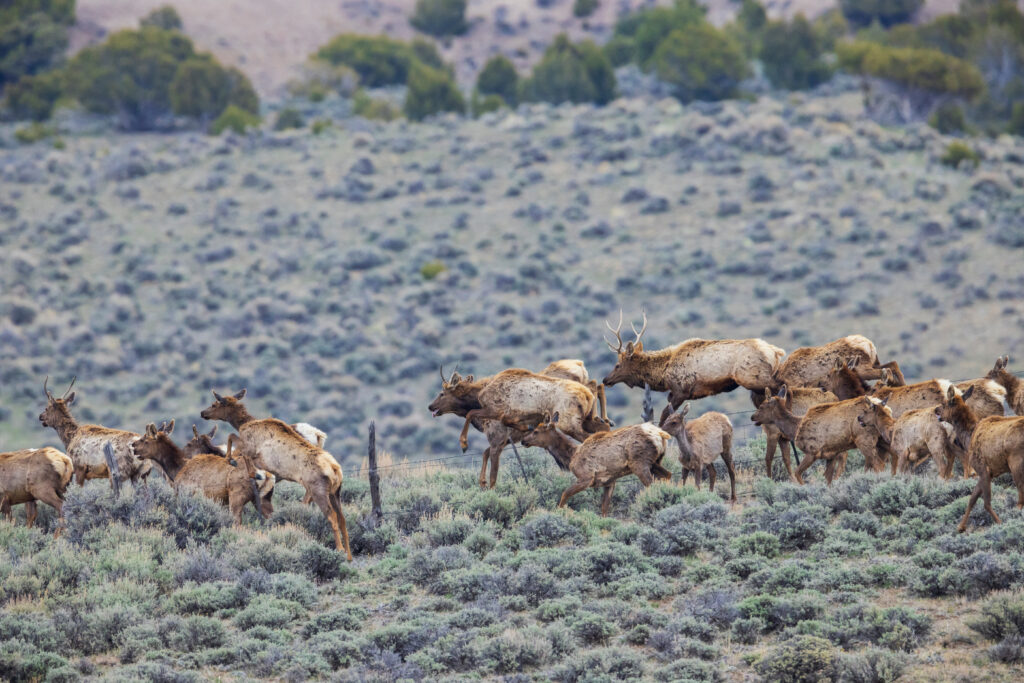
The presence of grazing cattle was monitored with trail cameras connected to a cellular network as well as site visits by PERC and CCALT team members. The ranch has agreed to modify certain fences to meet wildlife-friendly standards. One of the first fences to be modified runs along the road that bisects the ranch. There is one small draw that elk tend to use more than other areas. The ranch has constructed a section of fence that can be temporarily removed once cattle are no longer grazing in that field. The removed fence will offer a clear path through the fence for the elk, reducing the amount of time they spend on the roadway and reducing the likelihood that the elk will pass in a different area, where they might get tangled in the fence, damaging it and themselves in the process.
Elk herd crossing barbed wire fence, the type of migration the Eagle Rock Ranch is trying to facilitate with virtual alternatives.
III. Lessons Learned
Part of the Eagle Rock Ranch’s motivation for entering this project is the family’s interest in finding ways to conserve their land while maintaining their agricultural operations. PERC learned about the difficulties of ranching in Colorado due to the enormous and growing elk population of the state. There is a need to find more mutually beneficial solutions, and the ranchers and land managers are an excellent source of creativity and innovation. The conservation community should look to them for ideas more often.
IV. Moving Forward
PERC and CCALT will continue to monitor the rest-rotation style grazing plus temporary de-fencing that the Eagle Rock Ranch has offered to implement. The agreement was structured to be flexible and adaptable enough to address any new or emerging concerns as they arise. While we have no current plans to modify the agreement, the ranch managers take comfort in knowing that they will not be forced into untenable situations as a result of this agreement. We will know we are successful when the ranch managers have few fences to fix, fewer elk to cut out of fences, and a stable source of income to diversify their operation, while the elk continue to migrate successfully through the area.
Project #009
Brucellosis Compensation Fund
East Yellowstone
I. Introduction
To the east of Yellowstone National Park is an incredible and diverse landscape among the Absaroka and Beartooth Mountain Ranges. These mountains stretch between Wyoming and Montana and create stunning landscapes sweeping above 10,000 feet in elevation. Farther east, the landscape enters the Big Horn Basin, where mountains and pine trees give way to sagebrush and dry scrub. Connecting this landscape from west to east are some of the hardest working ranches in the western U.S., which manage a complex patchwork of federal, state, and private lands alongside abundant populations of large wildlife.
The ranches of the East Yellowstone Region deal with harsh weather, predators, and two distinct elk herds numbering more than 10,000 head in total. All of these factors bring unique challenges for viable ranching in the region. The elk, in particular, are one of the most complicated species for ranchers to deal with, and have the potential to bring the most hardship on the ranches, largely because elk in the Greater Yellowstone Ecosystem harbor brucellosis, a disease that can spread from elk to cattle and force a potentially costly and difficult quarantine.
Building off the Paradise Valley Brucellosis Compensation Fund, PERC and the East Yellowstone Collaborative began work in 2024 to establish a similar compensation program for the ranches in the eastern portion of the region. While the fund is structured similarly to that of the Paradise Valley, there are many nuances that make it unique to the place and context in which the ranches that cover it operate.
Over the course of 2024, PERC, the East Yellowstone Collaborative, and many ranch partners worked together to hone the structure of the fund in a way that would address the concerns of ranchers in the region. The partners also worked closely with the Wyoming Game and Fish Department and Wyoming Livestock Board. These two agencies provided invaluable feedback and context to the construction of the fund and will be instrumental to its functioning. The fund officially launched in January 2025.
For more information about Brucellosis Compensation Fund #009, see:
Shortly after the launch of the fund, cattle from two ranches in the priority area tested positive for brucellosis, and those ranches were subsequently issued quarantine orders. Both ranches were able to access the fund to pay for a portion of their quarantine expenses, in line with the agreed-upon structure. The fund was established with two different seasonal payment structures: a “winter” version between December and April, and a “summer” version between April and December. The two ranches’ quarantines spanned both the winter and summer windows, and payments were adjusted accordingly. Both ranches have since had their quarantine orders lifted. The funds paid to the ranches did not come close to covering 100 percent of the costs of quarantine. The money did, however, take a bit of the pain out of the quarantine order.
III. Lessons Learned
In creating the fund, ranches and ranching as a business are not monolithic even within the same region. The diversity of ranch operations and ranch businesses must be considered anytime a tool is being created to address the concerns and costs of ranches.
IV. Moving Forward
PERC and our partners will continue to monitor brucellosis in the East Yellowstone region and spread the word about the compensation fund. The fund still has the capacity to continue for two more years, as expected. PERC will continue to fundraise to meet the goals of the fund.