
Why economic understanding is an essential ingredient for life in today’s society.
Author Archives: admin
The Catskills Parable

The Economist magazine recently observed that natural ecosystems have more economic value than many people think. It reported that in 1997 the government of New York City faced a choice: either to install a new water filtration plant at a cost of $4–6 billion, with $250 million a year in operating costs, or spend muchContinue reading “The Catskills Parable”
National Heritage Areas

Concerned about the creeping uniformity of modern suburban life, many people are seeking a renewed ?sense of place? in their communities. The popularity of historical societies and preservation projects is a sign of this trend. Some people have discovered that adding the words ?nationally significant? to their area or region can result in millionsContinue reading “National Heritage Areas”
Success Overdue at The Quincy Library
Enthusiasm surged recently in southwestern Washington when a community coalition announced that it had come up with a plan for logging Gifford Pinchot National Forest that was supported by environmentalists and industry officials alike. “We’ve identified the common ground . . . and hope the Forest Service will use this model,” said coalition memberContinue reading “Success Overdue at The Quincy Library”
What Ever Happened To Smart Growth

“Smart growth” policies, which became popular nationwide during the 1990s, are regulations designed to reduce suburban sprawl and control growth. They encourage people to live close together within walking distance of shops and offices. One goal is to reduce the use of the automobile; another is to create neighborhoods full of interesting “streetscapes”; andContinue reading “What Ever Happened To Smart Growth”
How To Avoid Tax Cheating

One of the most useful, cost-effective methods of conserving land in America is in serious crisis. A series of scandals has revealed major abuses of conservation easements–”a legal tool increasingly used to protect private land from development. Landowners who donate easements to nonprofit conservation groups promise that the land will not be used forContinue reading “How To Avoid Tax Cheating”
The Owens Valley ‘Water Grab’

Buying or selling water faces serious hurdles. An infamous episode in California can help us understand what they are so that entrepreneurs can begin to overcome them. Gary Libecap, an economic historian at the University of Arizona, studied the Los Angeles Water Board purchases of land and water in Owens Valley, California, between 1905Continue reading “The Owens Valley ‘Water Grab’”
Ten Key Elements of Economics
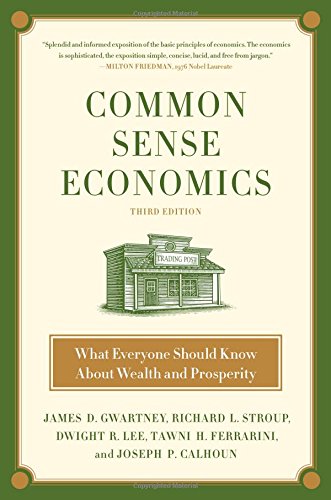
The Insider Spring 2005 By James Gwartney, Richard L. Stroup, and Dwight R. Lee 1. INCENTIVES MATTER. All of economics rests on one simple principle: that incentives matter. Altering incentive, the costs and benefits of making specific decisions, alters people’s behavior Understanding incentives is an extremely powerful tool for understanding why people do the thingsContinue reading “Ten Key Elements of Economics”
Environmental False Alarms
The Weekly StandardApril 25, 2005 By Terry L. Anderson In his new book Collapse, Jared Diamond begins with a chapter on my home state of Montana. Although painting a romantic picture of “Big Sky Country,” he decries environmental tragedies including toxic mining waste, forest fires, soil exhaustion, water shortages, and invasive species. Diamond blames theseContinue reading “Environmental False Alarms”
Vision through a Narrow Lens
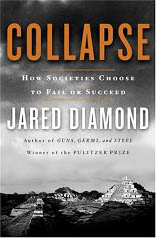
Energy & Environment Vol. 16 No. 3&4 2005 By Jane S. Shaw Pulitzer Prize-winning author Jared Diamond’s new book Collapse: How Societies Choose to Fail or Succeed argues that past societal collapses have occurred in large part because the societies failed to adapt to changing environmental conditions. He warns that modern societies and civilization tooContinue reading “Vision through a Narrow Lens”