
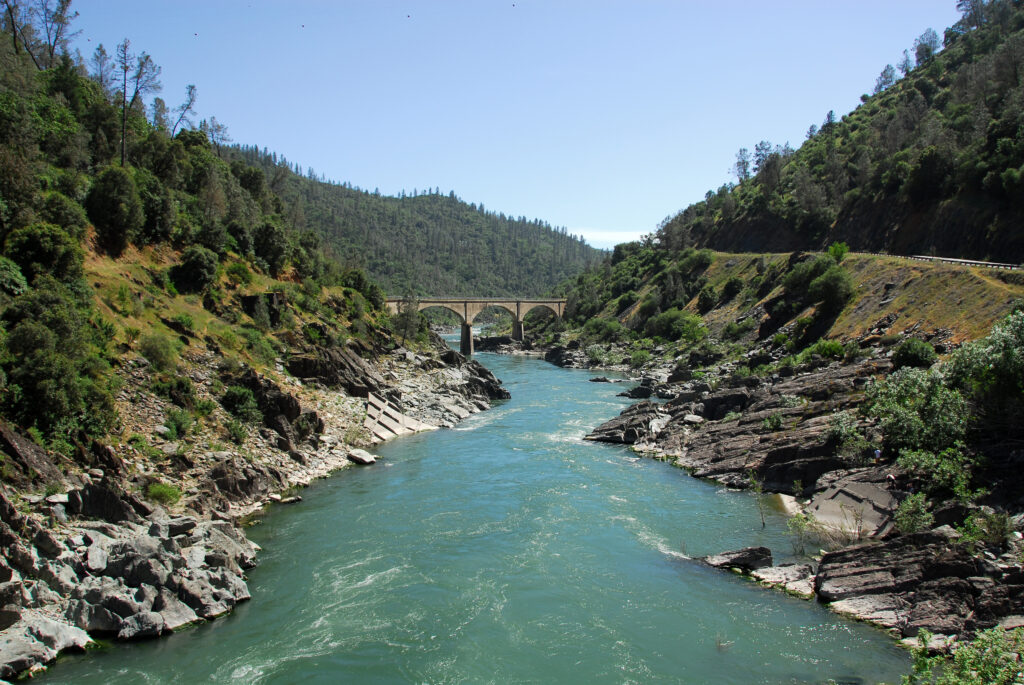
Restoring flows to California’s rivers is a worthy goal. But in a water-scarce state, lasting conservation requires incentive-driven, voluntary efforts, not litigation that upends centuries of water law. It involves careful balancing among fish, wetlands, farms, cities, and using tools that bring people together to solve hard water conflicts.
That principle is at the center of PERC’s amicus brief in Bring Back the Kern v. City of Bakersfield, now before the California Supreme Court. PERC filed the brief through the generous pro bono representation of O’Melveny & Myers LLP.
The dispute involves Fish and Game Code section 5937, a California statute that requires dam owners to allow sufficient water to pass downstream to keep fish below the dam in good condition. The plaintiffs argue that this statute creates a categorical command: water must be released for below-dam fish, without considering whether that use is reasonable in light of competing demands for the same limited supply.
PERC’s brief argues that California law does not work that way. For nearly a century, Article X, Section 2 of the California Constitution has required that all water uses be reasonable and beneficial. That includes water for fish and other public trust uses. This requires courts to ask whether a proposed release under Section 5937 is reasonable after considering the facts and other beneficial uses at stake.
That kind of balancing is especially important for conservation. Competing water uses may support wetlands, migratory birds, threatened species, or other high-value habitat. A rigid rule requiring water to pass downstream for “any fish” could prevent courts from considering whether the release benefits native trout or invasive carp, or harms more important habitat elsewhere in the watershed.
The same categorical approach could also destabilize California’s water rights system. Senior water rights provide the certainty that farms, cities, water districts, and conservation groups need to plan and invest. If Section 5937 lawsuits can be used to bypass that priority system, litigation could replace voluntary water transfers as the main mechanism for reallocating water in many watersheds.
California already has a better path. State law encourages voluntary water transfers and allows water rights to be dedicated to instream flows. Those tools can restore streams while respecting property rights, local tradeoffs, and the information that comes from willing buyers and sellers.
The question before the Supreme Court of California is not whether to restore flows to the Kern River, but how. PERC’s brief explains that while a rigid rule may seem appealing in a particular case, it would, in the long run, undermine water rights, voluntary conservation, and the environment.