This special issue of PERC Reports explores the next wave of solutions for our national parks.
Fort Welch, just outside Petersburg, Virginia, has exactly one review on Google Maps—a solitary 5-star rating, referencing “another overlooked bit of history.” Go there today, and it would be a surprise if you saw another human soul at this American Civil War site. Despite the area in and around Petersburg being home to the final, dramatic acts of the war, Fort Welch is mostly frequented these days by impassioned history nerds and diehard Civil War buffs.
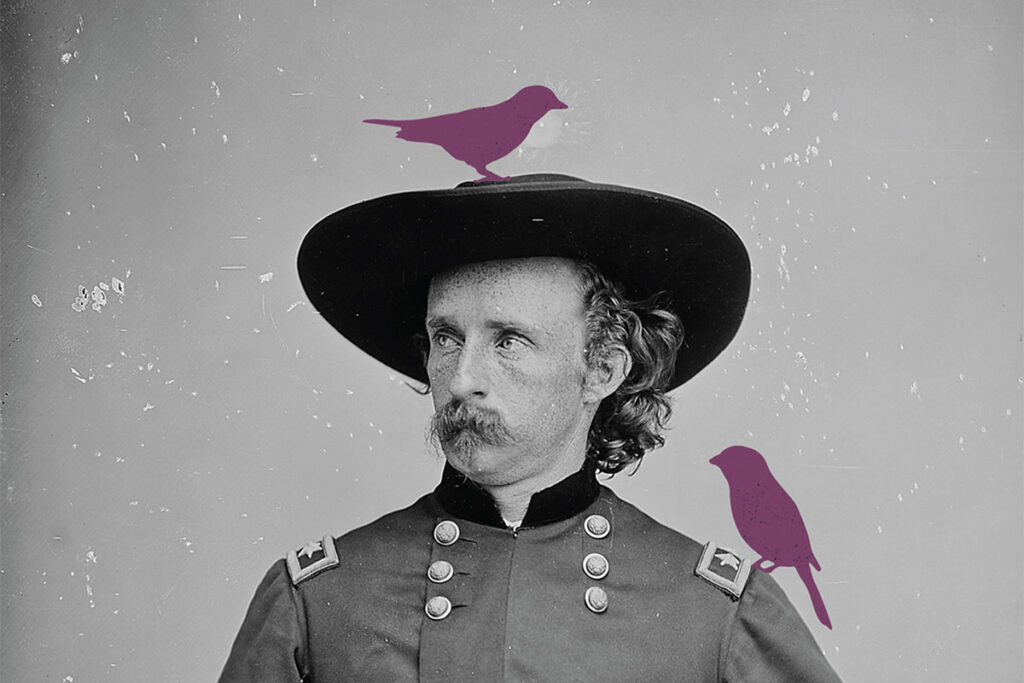
The fort’s namesake is as obscure as its location. Named after Colonel Norval E. Welch—the “coward” colonel who allegedly lost his nerve during the climactic moments of the Battle of Gettysburg, while commanding the 16th Michigan Infantry Regiment on Little Round Top—one could hardly be blamed for failing to grasp why a military installation would be christened after such a soldier. But Welch’s story didn’t end at Little Round Top. After a period back home in Ann Arbor, Michigan, to recuperate his nerves and his reputation—Welch was likely suffering from what we would now recognize and treat as PTSD—he returned to the front lines and led his men at the Battle of Peebles Farm near Petersburg on September 30, 1864.
Despite his enlistment having technically just expired, Col. Welch, in an attempt to inspire his troops—and likely restore his honor—launched himself over a Confederate redoubt during the battle, as he dramatically called out, “On boys, and over!” For his efforts, he received two bullets in his skull and instant martyrdom as a hero. And, of course, the eponymous fort that stands as a silent memorial to his sacrifice.
Preserve and Conserve
Were it not for private land conservation efforts, Col. Welch’s Fort, and perhaps his story, would be permanently lost in the mists of time. The American Battlefield Trust (ABT) has to date acquired close to 60,000 acres of former American battlefield sites, including the grounds upon which Fort Welch rests. ABT and other like-minded historic preservation organizations have saved swaths of hallowed grounds, spanning battle sites from the Revolutionary War, Civil War, and War of 1812, and in geographical locations from Massachusetts to Florida to New Mexico. But just like Col. Welch’s story didn’t end at Little Round Top, the story of American battlefield conservation doesn’t end with historic preservation.
Increasingly, the symbiotic relationship between historical battlefield preservation and environmental conservation is being recognized by groups on both sides of the equation. For years, the National Park Service at sites like Gettysburg—with its over 6,000 Google Maps reviews, as of this writing—has pioneered the restoration of battlefield terrain to its natural landscape at the time of the battle. At Gettysburg, this has not only included landscaping efforts to rehabilitate historic habitats—like the famous Peach Orchard—but also the removal of human-made structures like motels and golf courses (and even the original Gettysburg NPS visitor center, which was appallingly sited over a key point in the Union line).
But it is at battlefields farther off the beaten path—places like Fort Welch, which are only accessible by foot and are sparsely visited compared to the throngs that converge on Little Round Top each year—where the true impact of battlefield environmental conservation can be seen.
On the grounds around Fort Welch and the so-called Breakthrough point at Petersburg, ABT has preserved hundreds of acres on which it has removed postbellum buildings (such as a defunct hog farm) and eradicated a host of invasive species that had taken root on the land. In turn, the trust replanted natural grasses and restored wetlands with vegetative tree buffers, all of which reclaimed natural habitat for the Bachman’s sparrow and the spotted turtle, both species of concern in the region.
Increasingly, the symbiotic relationship between historical battlefield preservation and environmental conservation is being recognized by groups on both sides of the equation.
ABT has also preserved over 25,000 acres and a million linear feet of rivers and streams in the fragile Chesapeake Bay ecosystem. As one small example, the benefits of these efforts can be appreciated in the incidental protection of so-called “witness trees” in the bay’s watershed. Witness trees—called such due to being old enough to have seen the fighting at the Civil War battle site they overlook—have been cited as key players in America’s bald eagle recovery of the 1970s-90s, given that eagles show a marked preference for nesting in the branches of these towering trees. While many are finally dying of natural causes, they would have assuredly succumbed to the human axe decades prior had they not been protected.
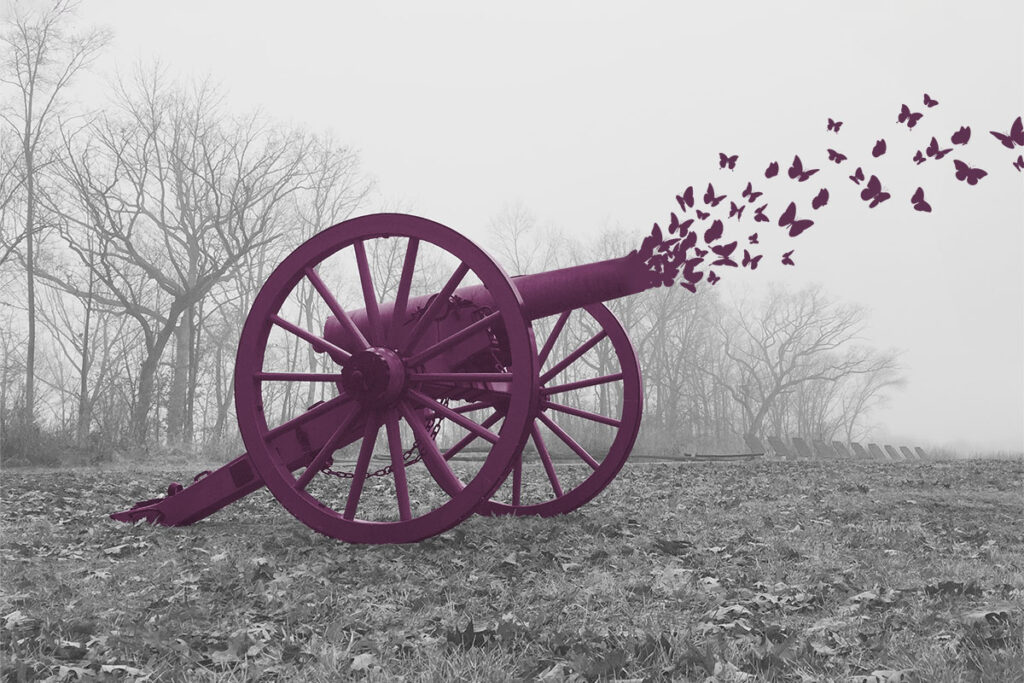
Farther to the West, at Perryville Battlefield in Kentucky, a project that originated with a small planting of 20 acres of native grasses sparked a notable increase in wildlife diversity, with the resurgence of birds, butterflies, and other native plants. The success of the endeavor eventually unlocked a federal grant and an expansion of these native grass plantings, culminating in sightings of northern short-eared owls, which are listed as threatened or endangered in seven eastern U.S. states.
Nothing may attest to ABT’s dedication to environmental stewardship more than the presence of an on-staff conservation biologist to head the trust’s ecosystem restoration endeavors, or its quarterly “The Nature of History” newsletter, which highlights its conservation efforts. (Moreover, ABT uses an Aldo Leopold quote as one of its rallying creeds.)
Beyond habitat restoration, battlefield preservation efforts have played perhaps an even more critical role in saving countless historic sites from turning into shopping center parking lots—particularly up and down the East Coast. In 2008, Walmart was planning to build a superstore on grounds that were part of the famed Battle of the Wilderness during Ulysses S. Grant’s 1864 Overland Campaign. ABT (then known as the Civil War Trust) partnered with local battlefield preservation organizations, such as Friends of the Wilderness and Preservation Virginia, to persuade the company to relocate its megastore outside of battlefield grounds. Walmart then donated the original 50 acres of land to the Commonwealth of Virginia, in a decision that was cited as a win-win for all involved.
To be sure, battlefield preservation is not some pure Rothbardian free-market panacea for environmental conservation and cooperation. ABT has adroitly blended legal challenges alongside more cooperative conservation efforts—including in the aforementioned Walmart relocation—while groups like the National Parks Conservation Association have more exclusively relied upon direct advocacy to save battlefield sites, rather than purely cooperative initiatives.
Groups like ABT also harness government grants alongside their private donations, as evidenced by Virginia Gov. Glenn Youngkin’s recent announcement of close to $4 million in grants to historic preservation groups to protect battlefields across the state. Despite its deployment of government funds, ABT nonetheless relies to a great extent on private contributions and proudly declines to take government money for its operating expenses. Nor does it have a hefty endowment of funds sitting in bank vaults, given that, in its words, “there is no time” to waste in saving threatened battlefields.
Private Reinforcements
Perhaps the most welcome impact of private battlefield conservation organizations is their ability to act as a force amplifier to the chronically underfunded National Park Service. ABT claims that it has saved more than four times the amount of battlefield lands as the federal agency, and often this land is in close proximity to or attached to existing park units.
Near Fort Welch, for instance, National Park Service land connects with the ABT land upon which the fort rests. The ABT land, in turn, connects with battlefield land owned by Pamplin Historical Park and the National Museum of the Civil War Soldier, the largest privately owned civil war historical site in the country. (Pamplin Park acquired its land when a wealthy businessman and philanthropist, whose relatives owned the land during the Civil War, purchased it and established the park in the early 1990s.)
Forty-some miles to the north, at Gaines Mill Battlefield, in Hanover County, Virginia, the National Park Service owns 60 acres of battlefield ground, while ABT has saved 363 acres at the site. The two tracts are conjoined, so a would-be hiker could park in the park service’s lot, walk the national park trails, and then “extend” his or her hike into the larger tract of ABT land.
A national park franchise setup entails a private entity maintaining ownership of the park land but managing it in accordance with agency rules and guidance.
Sadly, battlefield conservation losses have been nearly as frequent as the wins, underscoring the immense development pressure in states like Virginia. The famed “unfinished railroad cut” that Gen. James Longstreet used to devastating effect against the Union Army in the Battle of the Wilderness sits in the middle of a subdivision—and as of your correspondent’s 2022 visit to the area, the remaining vestiges of the railroad cut seem to lie in the path of an expanded phase of development. The land underlying the Battle of Haw’s Shop was recently lost to a planned 24-unit development featuring homes selling north of $600,000. The looming data center rollouts along the East Coast may pose the next great threat to battlefield land.
These setbacks underscore the need for continued fresh thinking where battlefield preservation dovetails with environmental conservation. Given the already close-knit relationship between the National Park Service and organizations like ABT, concepts like the franchise model deserve greater consideration. As laid out by PERC researchers, a national park franchise setup entails a private entity maintaining ownership of the park land but managing it in accordance with agency rules and guidance.
Battlefield sites could provide some of the most promising opportunities for a franchise model, given that historic preservation organizations would potentially be ideally suited candidates to step into a franchisee role. To provide funds for park maintenance, franchisees could employ a system of modest user fees, which visitors to the park could pay upon entrance. (Such a “toll” would be unlikely to deter your average Civil War enthusiast, many of whom make a hobby out of touring every battle site they can find.)
While such a model does not currently exist at a Civil War battlefield park—and according to PERC, there are only eight such national park units in the country that are jointly managed by the park service and private partners—there are at least some noteworthy examples of private-public partnering between the National Park Service and battlefield nonprofits. Arrangements like Cedar Creek Battlefield Foundation’s operation of the battlefield museum and visitor center at Cedar Creek and Belle Grove Park in the Shenandoah Valley show how private partners can augment existing agency services. This type of setup could be readily expanded to a full-on franchising model, if not at Cedar Creek, then at similar battlefields around the country.
Devastation to Redemption
In recent years, historical scholarship has begun to highlight the immense and devastating environmental consequences of the American Civil War. The Union and Confederate Armies consumed an estimated 400,000 acres of forests annually just to provide themselves with firewood, and the war and its aftermath have been blamed for everything from ushering in an era of river poisoning to the extinction of the passenger pigeon.
Paradoxically, there are few places in the United States today where it is easier to savor nature than a Civil War battlefield.
Now, over 150 years later, this bill of environmental indictment is being counteracted by battlefield preservation organizations seeking to save America’s treasured historical landmarks and conserve its environmental ecosystems. As historian Ted Widmer—after an extensive recounting of the Civil War’s environmental destruction—put it: “Paradoxically, there are few places in the United States today where it is easier to savor nature than a Civil War battlefield.”
Due to “generations of activism,” Widmer lauds an “extensive network of fields and cemeteries” that have been protected, which he says create “beautiful oases of tranquility” that have become “precisely the opposite” of what they once were during the war. In other words, the story didn’t end with the battle-desecrated landscape Americans found themselves living in at the war’s conclusion. Nor has it ended in the face of modern development threats, like those in central Virginia. Rather, like Col. Welch and his fort, the story is still being written, and it can still be redeemed.