 If you want to know why American Indians have the highest rates of poverty of any racial group, why suicide is the leading cause of death among Indian men, why native women are two and a half times more likely to be raped than the national average and why gang violence affects American Indian youth more than any other group, do not look to history. There is no doubt that white settlers devastated Indian communities in the 19th, and early 20th centuries. But it is our policies today—denying Indians ownership of their land, refusing them access to the free market and failing to provide the police and legal protections due to them as American citizens—that have turned reservations into small third-world countries in the middle of the richest and freest nation on earth.
The tragedy of our Indian policies demands reexamination immediately—not only because they make the lives of millions of American citizens harder and more dangerous—but also because they represent a microcosm of everything that has gone wrong with modern liberalism. They are the result of decades of politicians and bureaucrats showering a victimized people with money and cultural sensitivity instead of what they truly need—the education, the legal protections and the autonomy to improve their own situation.
If we are really ready to have a conversation about American Indians, it is time to stop bickering about the names of football teams and institute real reforms that will bring to an end this ongoing national shame.
Acknowledgments
When people ask me how I came to write a book about American Indians, I can only say anger. For years, I had read about the poverty, suicide, abuse, and alcohol and drug problems on reservations with a deep sense of sadness. I had assumed, as many readers had, that little could be done about these problems. But when I attended a conference at the Property and Environment Research Center in 2013, it became clear that things were both more and less hopeless than I had imagined.
The people I met there — a group of incredibly smart, tenacious professors, leaders, and reformers — had spent their lives fighting for people to fix a broken system in the face of long odds. I am indebted to Terry Anderson for allowing me to be a part of that group.
Meeting and getting to know Ivan Small, Ben Chavis, Manny Jules, and André Le Dressay has been a rare privilege, and I cannot thank them enough for the time they spent with me and the efforts they expended to show me their hardest problems and their best solutions. I can only hope I have told their stories with the care they deserve.
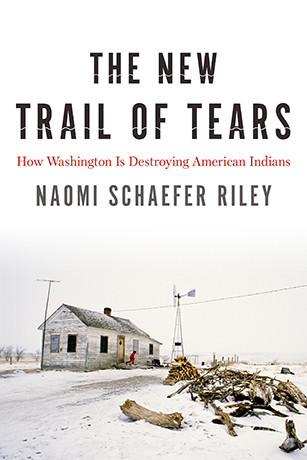
The New Trail of Tears is available from Encounter Books.