
| Ushers in the Role of Economics [Currently out of print] Edited by Jane S. Shaw
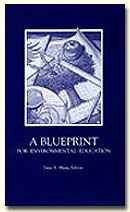
A Blueprint for Environmental Education, fills a critical void in the field of environmental education. Just published by PERC (the Property and Environment Research Center), it offers a road map for introducing economics to environmental education. It shows how this controversial field can adopt more realism and foster critical thinking in students. The Blueprint, edited by Jane S. Shaw, brings together lively essays by educators and economists who point out current problems with environmental education, introduce economics as a solution, and illustrate the relevance of economics. Among the essays are: “What a Teacher Wants,” a plea by Kathryn Ratté for environmental materials that look at the choices facing “real, identified” people such as an Amazon basin family deciding whether to homestead a rain forest plot or an African family deciding whether to protect elephants; Jack Stauder’s now-famous “Changing Course,” first published in Liberal Education, in which he sets out to discredit Rush Limbaugh’s views of environmental issues and comes away with a more complete understanding; “Is Free Market Environmentalism ‘Mainstream’?” Terry L. Anderson and Jane S. Shaw’s discussion of current views about market approaches to environmental issues; “Environmental Protection and Markets,” Richard Stroup’s explanation of how markets do more for the environment than most people think; “Realistic Education,” by Terry L. Anderson, Jane S. Shaw, and Donald R.Wentworth, which outlines a sensible blueprint for reform. Other essays are by Holly Lippke Fretwell, Jo Kwong, Donald R. Leal, Michael Sanera, and Mark C. Schug. The editor, Jane S. Shaw, is also coauthor with Michael Sanera of Facts, Not Fear (Regnery). |
A Blueprint for Environmental Education
Date
Topics
Related Content
-

It’s Time to Make the Endangered Species Act Work Better for Recovery
PERC testifies before the Senate on pragmatic solutions to boost species recovery under the ESA.
-

New PERC Report: Transferable Tax Credits Expand Participation in Conservation Easements
Research shows market-based reforms make conservation easements more accessible for farmers and ranchers while protecting higher-value lands.
-
Trading Green
How transferable tax credits supercharge conservation easements